
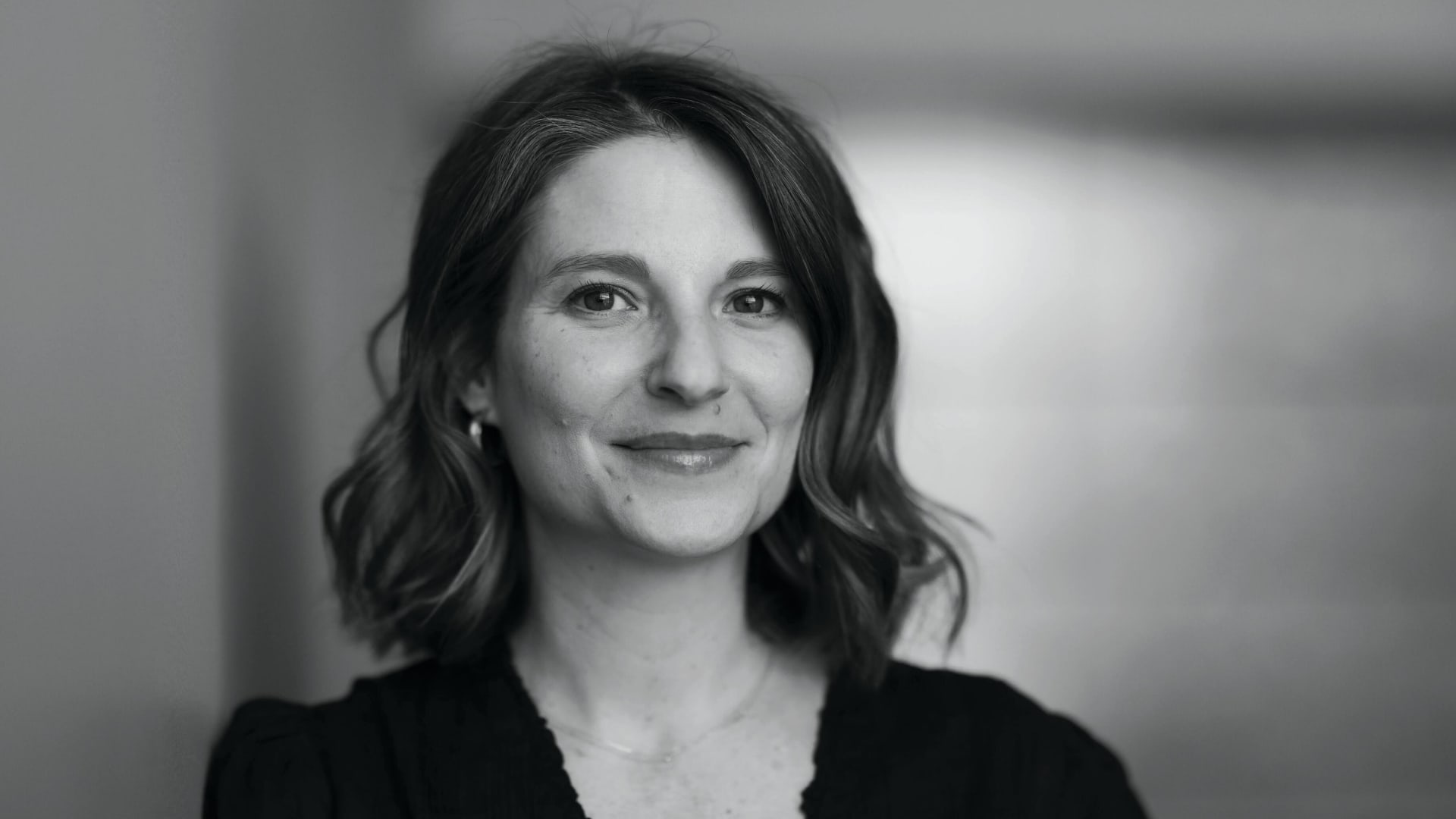
Kristin Collier
Courtesy: Emily Baxter
When Kristin Collier applied for a credit card at age 22, she said, she was surprised to learn that her application was denied. That’s when she discovered that there was over $200,000 in debt under her name that she didn’t know anything about — including several student loans and credit card balances.
Soon, she learned something else even more troubling: Her mother, who was grappling with a gambling addiction, had taken out nearly all of the loans without her consent. CNBC reviewed legal documents in which Collier’s mother admitted to borrowing the money using her daughter’s name.
In Collier’s new book, “What Debt Demands: Family, Betrayal, and Precarity in a Broken System,” she tells the story of her decadelong attempt to remove those fraudulent debts from her record, how the experience affected her relationship with her mother, and the role debt plays in so many Americans’ lives.
CNBC interviewed Collier about her experience. The interview below has been edited and condensed for clarity.
When I thought of my future, all I could see was more debt.
Annie Nova: How did you feel when you learned your mother had taken out all this debt in your name?
Kristin Collier: I felt that my mother had chosen the casinos over me, which was not the case. It took a broader understanding of addiction and of the student loan industry’s predation to recognize the harm that was also done to her.
But this debt fractured our relationship and made it hard for me to trust her. At the debt’s peak, I owed $2,000 a month. I had to work multiple jobs to make these payments, and when I thought of my future, all I could see was more debt.
AN: I’m curious about what harm you believe was done to your mother.
KC: She should not have been able to take out those loans. Had the private student loan industry acted responsibly, they would have noticed something was off with my credit history. The amount of money borrowed far exceeded what I ever would need to attend a public university in state. Someone should have rejected the fraudulent loan application, and through that rejection, spared my mother and me.
AN: What connections do you see between gambling and debt?
KC: The gambling industry is incredibly predatory. Most of a casino’s revenue is generated from slot machines, and much of the slot machine revenue is generated from a small subset of gamblers. Casinos design an entire ecosystem around funneling people toward these machines and keeping them on these machines past their pain points. They use every available tool to extract money, and this experience creates debt and sometimes it also creates addicts.
She should not have been able to take out those loans.
AN: Do you know how your mother spent the money she borrowed?
KC: I’m not sure exactly how the loan money was used. Most of it, I imagine, went to the casinos to win back what had already been lost. It’s possible that some of it was used to keep the family afloat — helping to pay for the mortgage, for example — because the rest of [the family’s] money had already been gambled away.
AN: Did you know your mother had a gambling addiction?
KC: My mother’s addiction seemed to have started around the time I began college, which means that I was mostly away from home during the years it was the worst. While I sensed that we had less money than we had when I was younger, I didn’t understand that addiction was at the heart of it.
AN: Why was the debt so hard to get taken off your record?
KC: Because I was unwilling to use the criminal legal system. As a result, it was a huge challenge to get the loan companies to work with me, or even, at times, to talk to me.
Courtesy: Blanca Aulet | Hachette Book Group USA
AN: How did you finally get it scrubbed?
KC: After 10 years of refuting this debt, I used the bankruptcy process to force a conversation, and my mother, the lenders and I signed paperwork that removed the debt from my name. In some ways, I was lucky, because bankruptcy is not a pathway to relief for most student borrowers.
AN: How did the debt impact your health?
KC: In my early 20s, living in New York City, and being harassed by debt collectors, I was sick all the time. I had ulcers and UTIs and stomach infections. I think the stress of living with unpayable debt was showing up in all these illnesses.
Debt payment is always a cruel calculation.
AN: How does debt become a family problem?
KC: A family with fewer resources will very likely translate to more debt for their student, and maybe for the parents, too, if they take out a Parent Plus Loan. So, debt is first determined by family and then often shared by the family. This is the case because we do not have universal free higher education, the only funding model that would make education a state “problem” rather than a family one.
In my case, this debt harmed all of us. With interest rates over 10%, we were throwing our very hard-earned paychecks toward a growing debt burden. There was very little extra income for leisure or for other kinds of familial care, to save for retirement or for housing, or for when my father became sick, all of his cancer treatment. Debt payment is always a cruel calculation; what goes toward loans does not go elsewhere.
AN: For your book, you spoke to other people with debt. What are some of the biggest psychological impacts of the loans?
KC: We are told that debt comes from financial recklessness and immorality. So, of course, when faced with unpayable debt burdens, people feel bad about it, as if they are to blame. Anxiety comes from the incessant pressure of juggling finances in such a way to try to make monthly payments. People worry about what will happen when there is a housing crisis or a health crisis. And sometimes there is. They have to live with anxiety from their debt week after week, and year after year.
AN: You write about your daughter in the book. How will you try to protect her from debt?
KC: I’m going to keep pushing for free public higher education, which is the surest way to protect her and to protect everyone from going into debt.
My husband and I work in nonprofits and as educators, and though we will do our best to save for college, saving up enough money is not an option for us or for most Americans, unless something about the system significantly shifts. It’s too expensive. So I might not be able to keep her from going into debt for an education, as much as I want to.