
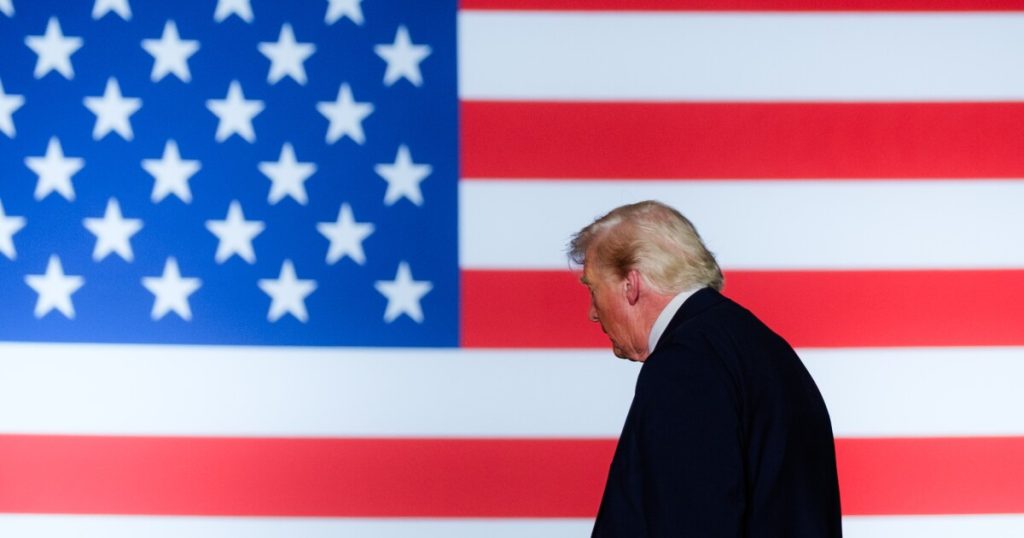
At the end of each year, the editorial staff at American Banker predicts who will have the biggest impact on the banking industry in the year ahead. For 2025, we chose
Processing Content
See who we chose this year:
Allison Robbert/Bloomberg
Michael Barr
Governor, Federal Reserve
Heading into 2025, it looked like Michael Barr — who had been sworn in as the Federal Reserve vice chair for supervision in 2022 — would be spending the year
In January, Barr announced that he
The administration chose the latter, nominating

Mike Bell
Attorney, Honigman
Mike Bell predicted, correctly, that 2024 would see a record number of credit unions buying banks. That year, there were an unprecedented
Bell, an attorney at the Michigan law firm Honigman, has advised on dozens of M&A deals of this kind. The forces that motivate credit unions to buy banks — such as the need for greater scale, efficiency and digital capabilities — are all still there, he said. But in 2025, external factors — including uncertainty over tariffs and interest rates — caused a pause in dealmaking.
“We had certain political and economic upheavals that took everybody’s focus,” Bell said. “None of those things in themselves, I think, actually matter to the M&A marketplace … but they’re big enough things in our economy and world today that they are distractions.”
In the second half of the year, Bell noticed a thaw in that frozen activity. And looking ahead, he’s confident that 2026 will be the year 2025 should have been, with credit unions acquiring banks at record rates once again — assuming “an act of God or massive political distractions” don’t gum up the works. That may be a big assumption, but Bell is confident in the currents flowing beneath the storm.
“That activity will happen. It’s driven economically,” Bell said. “The question is when.” — Nathan Place

Michelle Bowman
Vice Chair for Supervision, Federal Reserve
Federal Reserve Vice Chair for Supervision Michelle Bowman did not have that title when 2025 began, and her path to obtaining it was more straightforward than many expected.
Bowman, who was first
While it was plain to see in late 2024 that former Fed Vice Chair for Supervision Michael Barr would get little traction for his views in the Trump administration, it was unclear to what lengths the administration would go to replace him or how much resistance Barr would mount to being replaced. What had been feared to be a lengthy power struggle instead amounted to little; Barr resigned as top regulator in such a way as to make Bowman his almost inevitable successor.
Bowman, for her part, has jumped into the role

Raymond Chun
CEO, TD
TD Bank Group spent 2025 cleaning up, after pleading guilty to historic compliance crimes in the U.S. the previous year. U.S. regulators hit the Canadian bank with an asset cap to its American operations and fined it $3.1 billion.
Raymond Chun, who became president and CEO of the bank in February, inherited the mess, and its cleanup. And the bank has largely kept out of the spotlight as it works to restructure its stateside business and beef up its anti-money-laundering controls.
Executives said in December that TD had completed the “majority” of its U.S. AML remediation, though compliance efforts will likely remain the focus through 2026 and 2027.
But Chun said on the company’s earnings call in December that, broadly, he sees momentum “in every single one of the businesses” at the bank. — Catherine Leffert

David Cody and Luke LaHaie
Co-CEOs, Newity
David Cody and Luke LaHaie have helped turn Northeast Bank in Portland, Maine, into an unlikely SBA-lending powerhouse. Propelled by its partnership with Newity, the Chicago-based fintech Cody and LaHaie lead as co-CEOs, the $4 billion-asset Northeast finished the SBA’s 2025 fiscal year, which started Sept. 30, 2024, as the nation’s
The 7(a) program is SBA’s flagship, offering guarantees of up to $5 million on loans originated by banks and other eligible lenders. Newity serves as the 7(a) origination engine for Northeast.
Northeast’s results validate LaHaie’s prediction last year that the two partners could originate 600 loans a month on a regular basis. SBA has grown into a significant profit center for Northeast. Interest income and gain-on-sale proceeds from 7(a) loans totaled $7.6 million in the three months ending Oct. 31, up 31% over the same period in 2024. — John Reosti

Jamie Dimon
CEO, JPMorganChase
Dimon has moved markets this year for banks, and the finance sector at large, as he’s done for most of the 20 years he’s been CEO of America’s largest bank.
This October, he warned of “cockroaches” that may emerge in the private credit sector after a few one-off events hit banks with losses in the fall. For the next two weeks, analysts and investors were scouring banks’ financials for any signs of such cracks.
In May, he said tariffs may inflict more pain than the markets were accounting for. Shortly after, President Donald Trump announced a pause on the trade policy plans.
In the last year, Dimon has also shifted the industry’s outlook by opining on crypto, work-from-home culture and artificial intelligence. But in 2025, while he has said he thinks the economy has remained resilient, Dimon once again cautioned that the strength of the U.S. was of the utmost importance.
“The success of JPMorganChase has always been predicated on the success of the United States of America and the health of the world, particularly the strength of free and democratic countries,” Dimon said. — Catherine Leffert

Richard Fairbank
CEO, Capital One Financial
Fairbank’s big bet — that Capital One could win regulatory approval for the Discover acquisition — paid off in 2025.
Trump’s return to the White House led to a less restrictive approval process for bank mergers, and the Capital One-Discover deal was waved through in April 2025, less than three months after the change in presidential administrations.
The megadeal turned Capital One, which Fairbank cofounded in 1994, into the eighth-largest U.S. bank holding company. Fairbank’s next challenge will be to build Discover’s relatively undersized payments network into a viable competitor to Visa and Mastercard. — Kevin Wack

Umar Farooq and Max Neukirchen
Co-heads of payments, JPMorganChase
JPMorganChase made a big step this year by moving JPMD, the
While the bank has long used a private blockchain, its move to Base, a Coinbase-affiliated blockchain, has the potential to deliver digital assets to a far broader mix of payments and users — another major step toward bringing on-chain finance to the mainstream. The strategy is one of the first major moves under the leadership of Umar Farooq and Max Neukirchen, who became the bank’s
“JPMorgan’s expanded use of JPMD confirms a reality the industry can no longer ignore: Stable-value digital assets are becoming the new clearing layer of global commerce,” Monica Eaton, founder and CEO of Chargebacks 911, told American Banker in an earlier interview. “This is not a crypto experiment. It is an efficiency strategy.” — John Adams

Jane Fraser
CEO, Citi
Jane Fraser, CEO of Citi, entered 2025 on a positive note: Analysts, including some of Citi’s harshest critics, were viewing the bank in a positive light, predicting that its stock and earnings were positioned to increase throughout the year, barring an economic recession.
Fraser, the only woman running a Wall Street bank, and her team kept moving forward with
In 2025, Fraser completed her first year as chair of the Financial Services Forum, a trade organization whose members are the CEOs of the eight largest financial institutions in the country. Citi’s board of directors
This fall, she was once again named

© Mort Tucker Photography
Tom Fraser
CEO, First Mutual Holding Company
For Tom Fraser, CEO of First Mutual Holding Co. in Lakewood, Ohio, 2025 was a year of quiet progress.
The $3.2 billion-asset First Mutual’s Cincinnati-based bank subsidiary, Warsaw Federal Savings & Loan, raised nearly $5 million in capital during the year. That total included investments from the Mission Driven Bank Fund and the Wheeling, West Virginia-based Wesbanco. The infusions boosted Warsaw Federal’s core capital ratio to 12.83% on Sept. 30, up from 7.30% a year earlier.
Wesbanco’s investment, announced in June, was part of a $5 million private placement. Such transactions are common for stock-traded banks, but they’re rare for depositor-owned mutual institutions like Warsaw Federal. Fraser and other mutual banking advocates hope the Warsaw Federal private placement can serve as a template benefiting other depositor-owned banks going forward. —John Reosti

Travis Hill
Chair, Federal Deposit Insurance Corp.
Newly minted Federal Deposit Insurance Corp. Chair Travis Hill may be the most recent regulator to be confirmed by the Senate, but he’s been on the job longer than any other.
When former FDIC Chair Martin Gruenberg stepped down upon President Trump’s inauguration in January, Hill — then serving as FDIC vice chair — took the reins. That much was expected; as the top Republican on the FDIC board and former aide to Jelena McWilliams when she was the chair, Hill represented a known quantity to the administration and one they could leave in place while they focused on filling more critical vacancies.
Since assuming control, Hill has expressed
But with that nomination and confirmation now secure, Hill will wield considerable influence on forthcoming interagency rules, such as the forthcoming Basel III Endgame capital proposal, ongoing efforts to bring crypto into the regulatory perimeter and implementation of the recently passed stablecoin legislation. — John Heltman

Gunjan Kedia
CEO, U.S. Bancorp
After nearly a year as U.S. Bancorp’s president, Kedia took over as CEO in April 2025, succeeding Andy Cecere.
Her first eight months on the job coincided with the enactment of the Genius Act and the subsequent embrace of digital assets by many banks, including U.S. Bancorp.
The Minneapolis-based company
U.S. Bancorp was also named
“If it creates value for the clients, you should lean into it, and not try to defend an old product or an old business model,” Kedia

Thomas Kurian
CEO, Google Cloud
Though perhaps modest, Google Cloud CEO Thomas Kurian made a mark on banks this year through a steady flow of cybersecurity threat intelligence out of Mandiant, a division of the cloud services provider.
No revelation matched the seismic impact some Mandiant reports (on SolarWinds, for example) have made in the past, but the company’s research remains vital to high-value targets such as banks.
This year, Google Cloud flagged a variety of groups, including one of North Korean IT workers infiltrating tech roles to conduct espionage and another group that used stolen credentials to breach data clouds at tech vendor Snowflake. — Carter Pape

Robert Lighthizer
Former U.S. Trade Representative
The U.S. trade representative during the first Trump administration did not land a formal role in the second one.
Lighthizer was a key architect of Trump’s tariff policies from 2017 to 2021, but he spent 2025 on the outside looking in. Meanwhile, the president selected Scott Bessent, a Wall Streeter who had voiced less skepticism about free trade than Lighthizer, as Treasury secretary.
Still, the 78-year-old Lighthizer has continued to have an undeniable influence on Trump’s trade policy. Jamieson Greer, a Lighthizer
At the end of 2025, though, it remains unclear just how committed Trump is to Lighthizer’s vision of a revamped U.S. economy that’s much more reliant on domestic manufacturing. — Kevin Wack

Jonathan McKernan
Under Secretary for Domestic Finance, U.S. Treasury
When Donald Trump was reelected in 2024, Jonathan McKernan — the
McKernan
Since settling into that role, McKernan has served as a top advisor to Treasury Secretary Scott Bessent and offered his views on a range of banking issues, most

Brian Moynihan
CEO, Bank of America
Moynihan’s bank got back to growing its business in 2025, as lending has slowly started to pick back up, and the investment banking unit has delivered the company stronger earnings. The shifting regulatory environment also favored big banks, whose leaders have long spoken out against steeper capital requirements.
Politics also seemed to seep into Bank of America’s day-to-day more in the last year. Tariffs put pressure on the company’s business clients for a time, though Moynihan said he would take some trade policy hits if they came with some easing up of regulations.
President Donald Trump also called out Bank of America, and JPMorganChase, as offenders in the administration’s fight against so-called political debanking. Moynihan has said that many of the business decisions banks make are due to guidance from regulators.
Moynihan signaled he plans to stay in the top spot at the bank for at least another five years. The 66-year-old, who’s been CEO since 2010, said that an executive shuffle in September will help the bank “further build and deliver our capabilities across the globe,” but Moynihan will keep his role through the end of the decade. — Catherine Leffert

Satya Nadella
CEO, Microsoft
Under Satya Nadella’s leadership, Microsoft did not escape antitrust scrutiny from the Trump administration this year — a win for banks looking to rein in consolidation in the cloud services market. The FTC reportedly advanced a sprawling probe of the company’s cloud and AI licensing practices.
As for cybersecurity, China-based actors reportedly exploited a pair of zero-day vulnerabilities in the company’s software to deploy ransomware against roughly 100 of Microsoft’s customers over the summer. However, no banks publicly disclosed impacts — another win for banks, which rely on their vendors to support a strong cybersecurity posture. — Carter Pape

Joseph Otting
Chair, president and CEO, Flagstar Bank
Joseph Otting, the ex-comptroller of the currency who is now leading Flagstar Bank, entered 2025 with a massive challenge: pulling off a turnaround plan to save the struggling bank.
The job isn’t complete, but analysts say the Long Island-based Flagstar is now stable after nearly collapsing in the spring of 2024. The company is diversifying its loan portfolio to include more commercial-and-industrial loans and fewer multifamily and commercial real estate loans.
It’s been hiring more C&I bankers, improving its margins and controlling its expenses. As of the third quarter of this year, it still hadn’t returned to profitability, but its quarterly losses have grown smaller each quarter. As of early December, its share price was up more than 30% year to date.
This year, Otting
“People might say, ‘Wow, here’s the former comptroller of the currency eliminating the holding company. That’s a big statement,'” he said. “How many other banks will take this approach?” —Allissa Kline

Jerome Powell
Chair, Federal Reserve
The chair for the Federal Reserve is typically — but
Powell’s journey to the top of the U.S. central bank was unexpected but also a testament to Powell’s persistence. When he joined the Fed as a member of the board of governors in 2012, Powell was something of an afterthought; Powell, a Republican, was
But while all those other Fed governors have moved on, Powell has stayed in place, ultimately
But in the last full calendar year as chair, Powell has withstood
Whether Powell

Charlie Scharf
CEO, Wells Fargo
Charlie Scharf told investors at the recent Goldman Sachs U.S. Financial Services Conference that “the world is our oyster now.”
His exuberance is understandable.
Scharf had one of the best years of any major bank CEO in 2025. In June, banking regulators
Looking forward, Wells Fargo appears to be entering 2026 with wind in its sales. Commenting Dec. 9 at the Goldman Sachs conference, Scharf hinted at the likelihood of a deposit spike, noting that the lifting of the $1.9 trillion deposit cap frees the company to pursue deposits it had previously been forced to cede to competitors. At the same time, Wells Fargo is targeting a new,

Getty Images via Bloomberg
Taylor Swift
Pop superstar; owner, Taylor Swift Productions
For Taylor Swift and AI, it’s been no love story. And her experience foreshadowed that of many bankers.
In late 2024,
By the time American Banker conducted its

Donald J. Trump
President, United States of America
Certainly, presidents wield a great deal of power in any administration. But perhaps no single person has influenced the banking industry more in 2025 than President Trump has in the first year of his second term.
Trump’s biggest impact has been in replacing the Biden administration’s skeptical approach to integrating cryptocurrency into the broader financial system with a relatively unqualified embrace of digital assets. Trump signed an
Crypto firms have gotten the message, with a number of firms submitting applications to the Office of the Comptroller of the Currency to obtain national trust charters since the beginning of the year, with
But while the Trump administration’s embrace of crypto has

Elizabeth Warren
U.S. Senator, Massachusetts
Senator Elizabeth Warren’s influence over the banking industry this year has been limited by Republicans’ unified control over the government, but that hasn’t stopped her from banging the drum against the Trump administration’s deregulatory push.
Central to that rollback is the
Warren has also been

Tierney L. Cross/Bloomberg
Kevin Warsh
Former governor, Federal Reserve
Former Federal Reserve Gov. Kevin Warsh, a confidant of President Trump, has been on the short list to serve as the next Fed chair
Warsh, now serving as a visiting scholar at Stanford University, does not yet have a role in the Trump administration. He has, however, been floated as a potential replacement for Fed Chair Jerome Powell when his term expires in May 2026, alongside White House National Economic Council Chair Kevin Hassett and Fed Gov. Christopher Waller.
President Trump

Xi Jinping
General Secretary, Chinese Communist Party
Under Xi Jinping’s leadership in 2025, state-affiliated threat actors in China used Anthropic’s AI coding assistant to automate a cyber espionage campaign that targeted tech firms, government agencies, chemical manufacturers and financial institutions, according to
The cybersecurity community
At a minimum, the report and China’s