
- Key insight: Congress faces renewed pressure to update bank rules shaped by the 2023 midsize bank failures, set rules for the crypto industry and resolve disputes over regulatory authority.
- What’s at stake: Most 2026 fights center on tech and crypto, as well as deregulation and deposit insurance.
- Forward look: The first months of the year are likely Republicans’ last chance to push through big crypto or bank policy bills before the 2026 elections.
WASHINGTON — When Congress adjourned for its holiday recess last week, lawmakers left several key banking policy debates behind. When they come back in January, there will be a tight legislative window for those issues to be put to rest.
Processing Content
President Donald Trump has made both
But while those issues dominate the president’s attention, other, more core bank issues are also on the table.
Here are the five top legislative battles for bankers to watch in 2026.
Bloomberg News
Crypto market structure
Negotiations between Democratic and Republican senators over which agencies will play which role in regulating the cryptocurrency market will continue in the new year. The office of Senate Banking Committee Chairman Tim Scott, R-S.C., said in a statement that a markup on Senate market structure legislation will happen in early 2026.
One of the major issues at play in market structure legislation is what bank lobbyists are calling a
“Without an explicit prohibition applying to exchanges, which act as a distribution channel for stablecoin issuers or business affiliates, the requirements in the GENIUS Act can be easily evaded and undermined by allowing payment of interest indirectly to holders of stablecoins,” the Bank Policy Institute said in a statement urging Congress to explicitly prohibit this practice in market structure legislation. “These arrangements between stablecoin issuers and affiliates or exchanges, often jointly and explicitly marketed to consumers, will undermine the GENIUS Act’s prohibition regarding payment of interest and yield.”
Bankers were promised that this issue would be addressed in market structure legislation, with Republican lawmakers telling them that stablecoin legislation needed to be passed quickly and particulars could be debated out in market structure talks, according to multiple people familiar with discussions. The issue was a point of contention earlier this month as both bank CEOs and crypto company leaders went into meetings with both Democratic and Republican lawmakers about the upcoming legislation. The Financial Services Forum — which represents the biggest banks — recently created a 501(c)(4)

Bloomberg News
Deposit insurance
Deposit insurance reform is another hot topic that some well-connected lawmakers want to push through next year.
Sen. Bill Hagerty, R-Tenn., was the co-author of a bill that would raise the deposit insurance limit to $10 million for noninterest bearing business accounts. It’s part of a series of reforms that lawmakers want to implement in the aftermath of the Silicon Valley Bank crisis, and one that both the largest and some of the smallest banks oppose. The largest banks would not get the expanded deposit insurance accounts, and some of the smallest say that the cost of increasing the limit would ultimately come back on them in the form of assessment fees.
On one hand, the Hagerty bill, proposed alongside Sen. Angela Alsobrooks, D-Md., has powerful backers. It’s supported by the Treasury Department, according to two people familiar with the bill, and has picked up support among bank lobbying groups, including the Independent Community Bankers of America. At the very least, few bank lobbying groups are vocally opposing the idea or the specific proposal.
On the other hand, the House Financial Services Committee chairman and other key Republican House members suggested that the

Failed bank reform
Legislation to modify how regulators resolve failed banks is gaining bipartisan traction in the House ahead of 2026. In a December markup, the House Financial Services Committee unanimously advanced a set of bills that would give the Federal Deposit Insurance Corporation more flexibility in the failed-bank bidding process.
Under current law, the FDIC generally must choose the resolution option that imposes the lowest present-value cost on the Deposit Insurance Fund, unless a systemic risk exception applies. One Republican-authored bill by Rep. Mike Flood, R-Neb., would allow the FDIC to waive the least-cost test in situations where strict application would increase industry concentration, a move supporters contend could broaden the field of potential acquirers and reduce future consolidation.
House Financial Services Committee ranking member Rep. Maxine Waters, D-Calif., backed the measure on the condition of a provision that would curb the largest banks from “gaming” the bidding process.
Other proposals advanced in the committee include a requirement for the FDIC and OCC to study alternative bidding mechanisms and a bill to limit concentration exception use unless deemed necessary by regulators.

Bloomberg News
Interest on reserves
The Federal Reserve’s payment of interest on reserve balances is expected to remain under scrutiny in 2026, particularly following renewed attention to legislation sponsored by Senator Ted Cruz, R-Texas.
Cruz’s bill would limit the Fed’s authority to pay interest on reserves, arguing that the practice benefits large banks and contributes to the central bank’s operating losses.
Critics of interest on reserves say the policy discourages lending and distorts money markets, especially in an environment of elevated rates. Cruz and other supporters frame the issue as one of fairness and accountability, pointing to billions of dollars paid to banks while the Fed posts losses.
The Fed has pushed back, arguing that interest on reserves is essential to implementing monetary policy in an ample-reserves framework. Fed officials warn that limiting the tool could impair rate control and increase volatility in short-term funding markets. Banking groups have echoed those concerns, cautioning that changes could have unintended consequences for liquidity management.
While Cruz’s bill faces long odds of passage, it got farther than many Congress-watchers expected, and is emblematic of the kinds of changes that the furthest right-wing of the Republican party
Bloomberg News
Fair access
The fair access debate in 2026 is centered on whether federal law should limit both regulators and banks from cutting off services to certain categories of lawful customers, a topic that has sparked intense interest on Capitol Hill.
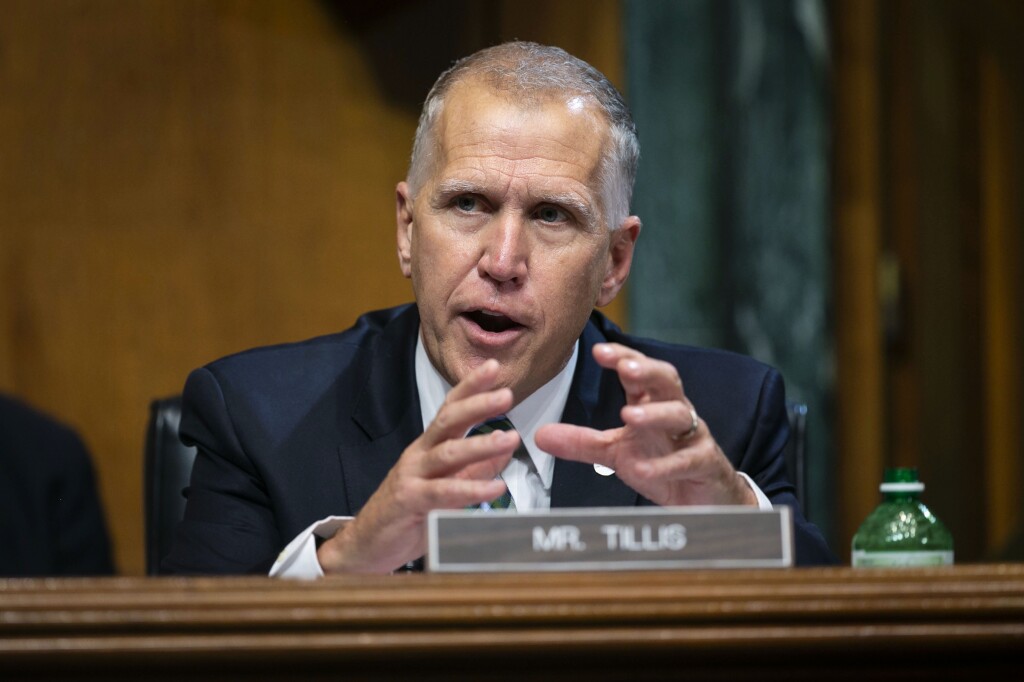
Senate Banking financial institutions subcommittee Chairman Thom Tillis, R-N.C., has circulated a discussion draft of the Ensuring Fair Access to Banking Act, which he said would establish a federal fair access standard and explicitly prohibit banks with more than $100 billion in assets from denying services based on nonbusiness related reasons, including actions protected by free speech or company type. Under the draft, enforcement would extend to regulators, with agencies required to pursue relief if banks violate the fair access rule.
Throughout a hearing on the legislation, Tillis and Sen. Kevin Cramer, R-N.D., who has introduced fair access legislation in the past, balanced placing the blame for debanking on both the regulators and banks themselves. While much of the Republican anger over debanking has been pointed at regulators, whom they accuse of using reputational risk to cut certain companies like crypto firms out of the banking system, lawmakers have also been unequivocal that they
Tillis is out of Congress at the end of 2026 since he won’t seek reelection in the upcoming midterms, but the ideas in this legislation will continue to be in discussion. His discussion draft included text from Scott’s debanking bill, and Cramer and other Republicans are looking to keep the issue alive, especially since it’s made it into national political narratives.