
Bloomberg
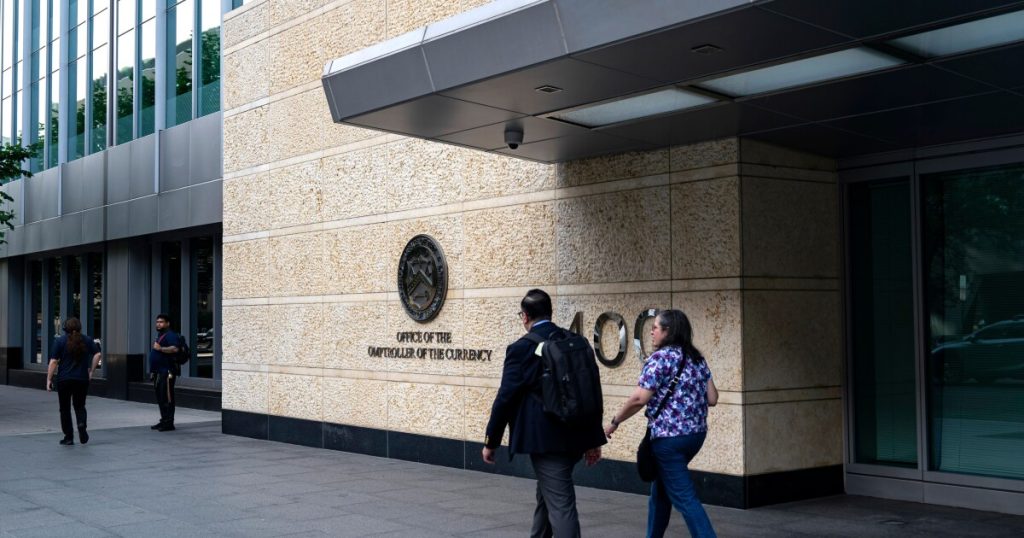
The Office of the Comptroller of the Currency’s
Processing Content
The next step after conditional approval is the “in-org” phase during which the OCC conducts a field examination before granting a full charter approval. By requiring that Erebor submit its operational architecture subject to the OCC’s review, the agency may be signaling that the conditional approval process may no longer function as a “wink, wink” indication that a bank will officially open so long as it raises capital. Instead, the business plan and operational model introduced as part of the initial application may face additional review during this in-org phase.
Charter seekers, also called organizers, must demonstrate operational readiness to the OCC before officially getting the coveted national bank charter. While the need to show operational readiness has not changed, the OCC’s conditional approval of Erebor highlights a shift in the depth and timing of the in-org phase that is noteworthy for any de novo applicants, especially those with digital assets as a core part of the business plan.
Historically, in an almost
With the novel charters of the early 2020s, the OCC took this same deliberative approach. The typical robust reviews before issuing a conditional approval seemed counterproductive for novel bank and digital asset concepts. And in the past few years, the OCC saw few novel applicants make it to the in-org phase. So much so that that step was nearly forgotten in the life of a charter.
By shifting robust vetting of de novo charter business plans and operations to the in-org phase, the OCC is creating clearer bifurcation of the initial legal and policy standards review from the “examination” phase. Shifting the operational framework review to the in-org phase also enables the OCC to use its expert staff and resources more efficiently amidst the influx of applications for de novo full and trust bank charters. In the current environment, this move also aligns with the OCC’s move toward risk-based supervision. For many applicants, the OCC is more likely to utilize this in-org period to conduct focused deliberation and tailoring of regulatory expectations to each applicant’s operational architecture.
During the in-org phase, new bank organizers get to directly interact with OCC supervisory staff, including through a field examination. While this direct engagement during the in-org phase is not new, there is now a heightened expectation for active engagement by the organizers leading the charter efforts to prove their business plan and demonstrate safe and sound operability. With that heightened expectation, organizers should focus on capital, risk management and their relationship with the OCC.
During the application phase, the OCC will have reviewed the proposed capital as a preliminary measure. The initial measure of capital from application review to “Day 1” opening may be less sticky than it has been in the past. As the OCC digs into the operational architecture during the in-org phase, the pro forma capital presented in the application may not satisfy regulatory expectations. And with digital asset charters, which often present off-balance sheet assets where capital ratios are not dispositive, the initial capital benchmark may be even less reliable. That lack of a capital benchmark may impact the bank’s ability to raise capital. Investors may perceive the conditional approval as less of an authoritative indicator of success and, therefore, value. Thus, organizers need to be prepared to have a continuing dialogue on capital.
The level of capital will be directly correlated to risk, including operational risk and risk management. As organizers meet with supervisory teams to move forward and receive final approval, it will be critical to present strong risk assessments and risk management plans that support the proposed capital and operations. Importantly, bank organizers have 18 months from the date of the OCC’s conditional approval (absent an extension from the OCC) to present an operational architecture that meets the OCC’s standards for operating a national bank. There is no guarantee the OCC will provide a “no supervisory objection” before the conditional approval times out.
Organizers’ ability to ultimately succeed in the in-org phase will depend on their ability to build rapport with the OCC through clear communication and by demonstrating alignment with regulatory expectations. Given the novelty of many of the charters, there will be setbacks. In forming a new bank, it will be imperative that organizers demonstrate resiliency as well as regulatory alignment amidst those setbacks while actively calibrating operations to meet regulatory expectations. Adopting a transparent and receptive relationship with the OCC in the midst of pivoting will lay a solid foundation for success and a smoother transition into a regulated environment.
The in-org phase offers an early opportunity to build trust with the OCC, educate examiners on novel products and receive feedback from experienced examiners. Many organizers may transition through the in-org phase seamlessly depending on their business plans and transparency with the regulators. To succeed during this phase, organizers should change their focus to demonstrate they can meet the OCC’s expectations and get the coveted final approval to open as a bank.