
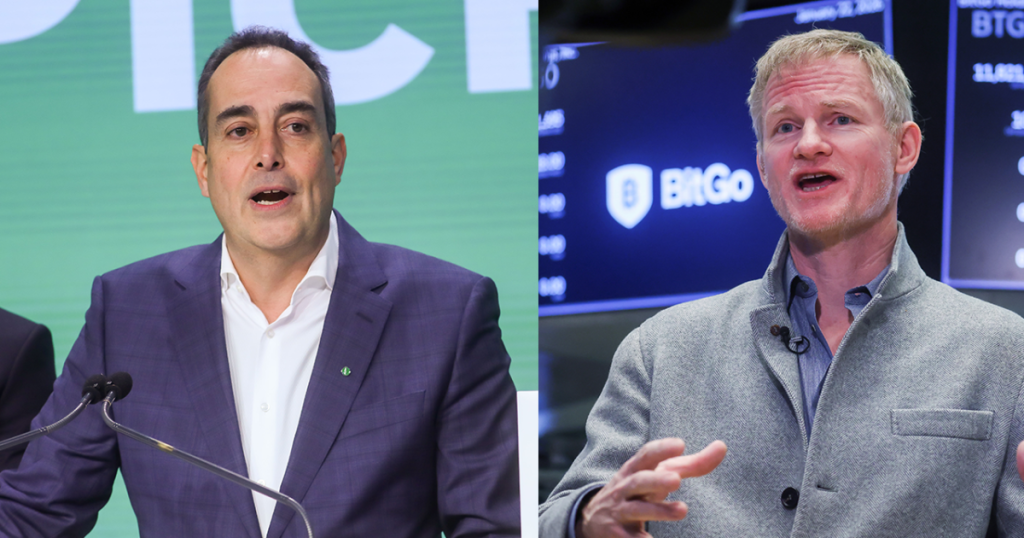
- Key insight: Macroeconomic conditions impacted the first two fintech IPOs of the year, BitGo and PicPay.
- Expert quote: “The partial government shutdown has increased near-term uncertainty and contributed to volatility, but investor demand for quality issuers remains.” — Mergermarket’s Cristiano Dalla Bona
- Forward look: Now that partial gov shutdown has ended, look for potential rallies in the fintech IPO market.
The first two fintech IPOs of the year started strong by raising hundreds of millions on their opening days, but lost momentum shortly afterwards as a temporary partial government shutdown and other macroeconomic conditions brought uncertainty into the market.
Processing Content
Digital asset custodian
BitGo priced its offering at
Both firms saw increases in share price on the first day of trading, but both also experienced a decrease in the following days.
Research notes from IPO firm Renaissance Capital noted that “crypto infrastructure player BitGo priced above the range, but returned -19% by Friday” and “Brazilian fintech PicPay priced at the high end, historically a sign of strong demand, yet still traded down” by the end of the week.
Bill Smith, founder and CEO of Renaissance Capital, said that “pricing up usually means a hot deal” but that traders “bet on a quick pop that didn’t materialize.”
A Renaissance Capital research note from the week of BitGo’s debut said that the IPO market declined by 1.8% as “geopolitical shocks caught up with stocks,” and a research note from the following week, when PicPay debuted, said that the IPO market declined by another 5.5%.
“It didn’t help that the Fed
Shortly after the two IPOs, the government went into a partial shutdown on January 31 and the SEC reduced its operations in a similar fashion to
According to Josh Bonnie, co-head of Simpson Thacher’s global capital markets practice, staff members at the SEC worked with a number of IPO issuers in anticipation of the government shutdown to finalize their registration statements and declare them effective ahead of the start of the partial shutdown “to enable these companies to move forward with their IPOs notwithstanding the shutdown.”
“The SEC did what they could to keep the IPO market open for the near term,” Bonnie told American Banker.
Cristiano Dalla Bona, co-head of North America equity capital markets for Mergermarket, told American Banker that current short-term price movements are “less down to issuer fundamentals and more a function of broader risk sentiment and liquidity conditions… The shutdown has coincided with a choppier macro backdrop, including geopolitical concerns, which can weigh on the early aftermarket trading.”
For other firms looking ahead to an early 2026 IPO, according to experts, the opportunity hasn’t fully disappeared yet despite current market conditions.
“The partial government shutdown has definitely increased near-term uncertainty and contributed to volatility, but so far it has not shut the IPO window,” Bona said. “Investor demand for quality issuers remains.”
Aisha Chandraker, head of fintech research for CB Insights, told American Banker that fintechs don’t have “a straightforward landscape” at the moment, but fintech IPOs overall outpaced broader market activity last year, according to
“We saw mixed results following the recent IPOs from Chime and Klarna last year,” she said. “Ultimately there are success stories on both sides, like