
Close Menu
  • Home
  • Finance News
  • Personal Finance
  • Investing
  • Cards
    • Credit Cards
    • Debit
  • Insurance
  • Loans
  • Mortgage
  • More
    • Save Money
    • Banking
    • Taxes
    • Crime
What's Hot

Illinois judge rules in favor of swipe fee ban on sales tax and tips

February 11, 2026

Alphabet set to raise over $30 billion in global debt sale: sources

February 11, 2026

Before shrinking the Fed’s balance sheet, Warsh has other work to do

February 11, 2026
Facebook X (Twitter) Instagram
Smart SpendingSmart Spending
Subscribe
  • Home
  • Finance News
  • Personal Finance
  • Investing
  • Cards
    • Credit Cards
    • Debit
  • Insurance
  • Loans
  • Mortgage
  • More
    • Save Money
    • Banking
    • Taxes
    • Crime
Smart SpendingSmart Spending
Home»Banking»Before shrinking the Fed’s balance sheet, Warsh has other work to do
Banking

Before shrinking the Fed’s balance sheet, Warsh has other work to do

February 11, 2026No Comments6 Mins Read
Facebook Twitter LinkedIn Telegram Pinterest Tumblr Reddit WhatsApp Email
Before shrinking the Fed’s balance sheet, Warsh has other work to do
Share
Facebook Twitter LinkedIn Pinterest Email

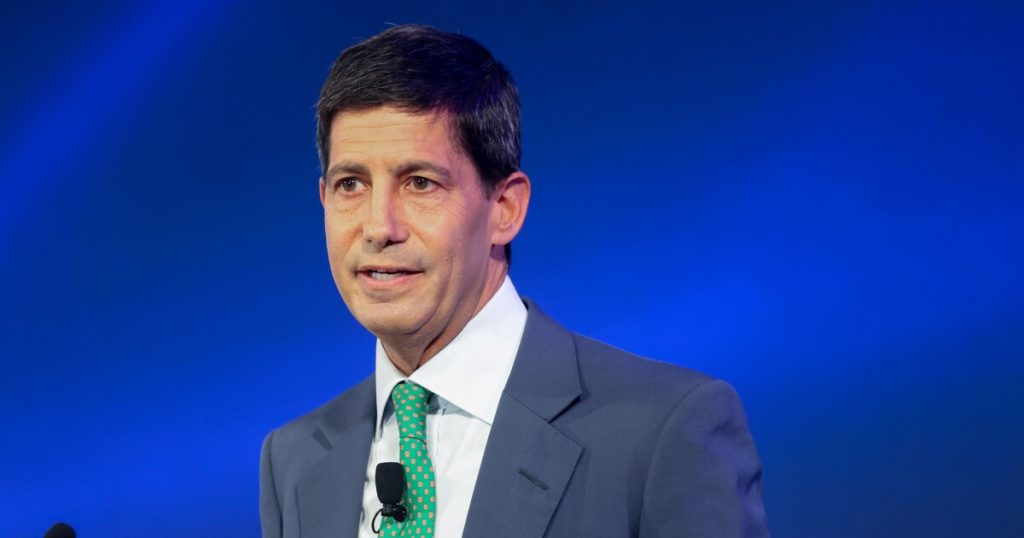
An immediate effort to unload some of the Federal Reserve’s assets could do more harm than good. Fed chair nominee Kevin Warsh should first turn his attention to problems affecting banks’ liquidity, writes Jill Cetina.

Tierney L. Cross/Bloomberg

There is no dispute that the Federal Reserve’s balance sheet has grown too large after the 2008 crisis. Years of quantitative easing, or QE, have contributed to income inequality, lack of budget discipline, and fanned concerns about dollar debasement, giving rise to bitcoin, gold trading and tether fancying itself a central bank.

Processing Content

So, Fed chair nominee Kevin Warsh’s diagnosis of a bloated Fed balance sheet is correct.

Where Warsh risks a misstep, though, is if he renews a push to shrink the Fed’s balance sheet without fixing the Fed’s and Treasury’s liquidity tools and strengthening banks’ Treasury operations. Within the Fed, the implications of quantitative tightening, or QT, for banks and, in turn, money markets in different market regimes remain understudied. Absent other policy changes, a push for a smaller Fed balance sheet is the wrong solution. The Fed’s attempts at QT since 2019 show why.

When the Fed first launched QT, officials framed it as “watching paint dry.” Interest rates would do the heavy lifting of tightening, and balance‑sheet runoff would happen in the background. Instead, QT negatively impacted bank liquidity and caused repo rates to spike in 2019. Again in 2023, QT strained banks’ deposits, contributing to costly bank failures. In a 2025 op‑ed, I argued that Fed Chair Powell was too late in ending QT. Subsequently, the secured overnight funding rate, or SOFR, began to spike and the Fed quickly introduced reserve management purchases in December.

See also  Big banks tally the gains from their stress-test successes

QT’s mechanism is straightforward but poorly understood. As the Fed lets securities roll off, its assets shrink. On the liability side, that shrinkage has to come from either the overnight reverse repo, or ON RRP, facility used by money funds, or banks’ reserve balances at the Fed. For most of the recent round of QT, its impact on banks was cushioned because balances at the ON RRP facility fell dramatically — a buffer that absorbed the first round of Fed balance sheet runoff. Once ON RRP was exhausted, further QT drained bank reserves to about $3 trillion, where SVB failed in 2023, and bank liquidity strains resumed.

Another problem is that Treasury’s decisions interact with the Fed’s balance sheet. For example, a government shutdown and a rising Treasury General Account, or TGA, balance at the Fed also drains bank reserves. Treasury’s shift toward greater reliance on T‑bill financing and a structurally higher TGA cash balance also lowers bank reserves. Every dollar in the TGA is a dollar that is not in bank deposits and not counted in bank reserves.

Shrinking the Fed’s balance‑sheet without other changes risks compounding prior errors. Cutting the Fed’s policy rate while running QT and maintaining a swollen TGA is like easing with one hand and tightening with two others. The net effect is tighter liquidity conditions for banks, less loan growth and higher odds of a jump scare in repo markets. The result is to put the main burden of adjustment on bank liquidity and repo market plumbing, areas where stress can spread fast.

See also  NMI offers embedded lending for small businesses | PaymentsSource

U.S. policymakers should begin by redesigning the Fed’s ON RPP and discount window tools and the Treasury’s cash management operations. They should do this while rejecting proposals to target SOFR, narrowing the primary budget deficit and resetting supervision of banks’ balance sheet management.

The first step is to close the ON RRP. ON RRP is destabilizing to bank reserves. When money funds shift out of T-bills and into ON RRP due to shifts in Fed expectations, liquidity drains abruptly from banks.

The second step is to strengthen the discount window by ensuring that knowledgeable staff are available and improving automated access, which some banks report does not work well.

The third step is to reactivate the Treasury Tax & Loan, or TT&L, program to lend excess TGA balances to banks, rather than Treasury cash sitting inert at the Fed.

The fourth step is to recognize that targeting SOFR instead of the Fed funds rate as recently proposed also has cons and probably should be rejected. Fewer than 50 banks are signed up for the Fed’s standing repo facility, or SRF. Transmission of SRF liquidity to smaller non-SRF banks could be challenging even as these banks are key to small-business lending.

The fifth step is recognizing that the Fed’s balance sheet, by providing ample liquidity to large banks, is facilitating hedge funds’ cash future basis trade and, in turn, smoothing rapid growth of the Treasury market. In a real sense, a smaller primary budget deficit is foundational to an orderly transition to less liquidity and a smaller Fed balance sheet.

Finally, a crucial step is to reset supervisory expectations on bank liquidity and interest rate risk management. Since the start of QE, some banks have lost core Treasury skills due to a relatively benign environment and weak supervisory and regulatory standards. The January failure of a small Illinois bank highlights ongoing challenges. Metropolitan Capital Bank & Trust’s unrealized AFS securities losses on Treasuries and agency MBS totaled 99% of Tier 1 capital and 21% of its deposits were brokered. Credit deterioration in its loan book was the final straw. This bank’s failure suggests that even after the 2023 U.S. bank failures, prompt corrective action on key financial risks remains weak.

See also  AI agents will complicate the Fed's ability to spot economic downturns

Banks still have approximately $337 billion in unrealized securities losses. Thus, reserves at the Fed are crucial to some banks’ liquidity buffers. Assuming banks can borrow their way out of a liquidity problem implicitly presupposes that inflation is not a concern and a Fed backstop will be cheap, a risky assumption. Recall that some $74 billion in borrowed Fed liquidity at 5% interest could not save First Republic from a 3% mortgage portfolio. Since Fed rate cuts began in 2024, long-term Treasury yields have not declined. Inflation remains above target. Year to date, 2-year TIPS inflation breakevens have risen about 50 basis points to 2.80%. Additionally, some calls for both a smaller Fed footprint and weaker bank liquidity regulation are inconsistent.

Instead, better supervision of interest rate risk would help. So would supervisors allowing banks’ liquidity buffers to be drawn in stresses, though that is very different than permitting banks to run with structurally thinner liquidity buffers.

After 2008, a large Fed balance sheet was the only choice. But this policy has costs. However, absent other changes, renewed QT poses risks to the financial system. Banks should take note, strengthen Treasury capabilities and plan for a world where liquidity could be less abundant.

Source link

balance Feds sheet shrinking Warsh Work
Share. Facebook Twitter Pinterest LinkedIn Tumblr Telegram Email
Previous ArticleVatican Bank makes first foray into equity indexes, setting stage for potential ETF launches
Next Article Alphabet set to raise over $30 billion in global debt sale: sources

Related Posts

Illinois judge rules in favor of swipe fee ban on sales tax and tips

February 11, 2026

Huntington takes $280M hit on Cadence deal accounting

February 11, 2026

Super savers: How much is too much to put in a savings account?

February 11, 2026
Add A Comment
Leave A Reply Cancel Reply

Top Posts

Stocks making the biggest moves midday: AMAT, NVO, CAVA, VST

May 17, 2025

‘Revenue opportunities everywhere’: BofA’s tech chief on AI

November 17, 2025

Dow: Is One Cut Enough for This 6.4% Yielder?

August 8, 2025
Ads Banner

Subscribe to Updates

Subscribe to Get the Latest Financial Tips and Insights Delivered to Your Inbox!

Stay informed with our finance blog! Get expert insights, money management tips, investment strategies, and the latest financial news to help you make smart financial decisions.

We're social. Connect with us:

Facebook X (Twitter) Instagram YouTube
Top Insights

Illinois judge rules in favor of swipe fee ban on sales tax and tips

February 11, 2026

Alphabet set to raise over $30 billion in global debt sale: sources

February 11, 2026

Before shrinking the Fed’s balance sheet, Warsh has other work to do

February 11, 2026
Get Informed

Subscribe to Updates

Subscribe to Get the Latest Financial Tips and Insights Delivered to Your Inbox!

© 2026 Smartspending.ai - All rights reserved.
  • Contact
  • Privacy Policy
  • Terms & Conditions

Type above and press Enter to search. Press Esc to cancel.