
Processing Content
Slightly more than a third of small businesses (35%) add a surcharge for customers paying by credit card. That’s according to a recent JD Power
The practice of surcharging also raises concerns for issuing banks’ credit card revenue, as JD Power’s U.S. credit card satisfaction
“There’s an increasing trend here. Now, a majority of cardholders are saying they have used an alternate payment method,” John Cabell, managing director of payments intelligence at JD Power, told American Banker.
Here’s what banks need to know about the latest trends related to surcharging:
Alternative payment methods gain ground
While consumers don’t like surcharging, credit cards remain a popular payment option. Notably, credit card use was higher in 2024 as a percentage than in 2023 — 35% compared with 32%, according to a Federal Reserve
Even so, many consumers are willing to use another payment method to avoid a surcharge. Case studies from payments technology company Stax Payments show 22% of transactions migrate to lower-cost debit or ACH rails once a credit surcharge is introduced, according to Adam Gray, the company’s chief transformation officer.
Banks make less on ACH transactions than they do on credit cards. Debit cards also yield significantly less in interchange fees than credit cards. “A bank can make seven to eight times on credit versus debit,” Eric Cohen, chief executive of Merchant Advocate, an advisor to merchants on processing-related issues, told American Banker.
Over time, and if the economy tightens, more consumers may shift to debit to avoid surcharges. A sizable shift to debit would be meaningful to a bank, Cohen said. Say a bank does a million transactions a month and receives $1.50 less revenue on each. That’s $18 million a year in lost revenue, Cohen said. “Even a 10% shift would be a large shift if they’re doing tens of millions of transactions,” he added.
Banks with $10 billion in assets have even more reason to be concerned because they have the strictest requirements for debit interchange rates. It could be more of an issue if the Federal Reserve’s attempts to lower debit card interchange fees take effect. It’s currently in regulatory and legal limbo, and several industry associations have
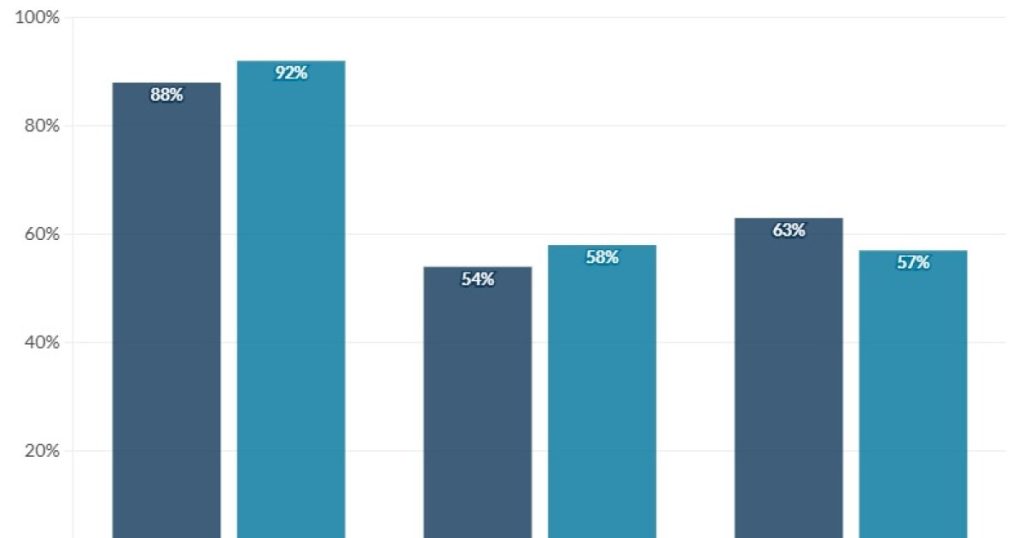
As surcharging becomes more prevalent, consumers could shift toward other up-and-coming payment options. Buy-now-pay-later offered by non-banks, for instance, is becoming a more viable alternative to credit cards. BNPL is accepted by 58% of U.S. small businesses, up from 54% in 2024, making it the fourth-most-accepted form of payment behind debit or credit cards, digital wallets and cash, according to JD Power.
Some consumers are also paying with cryptocurrency, though it’s still “a very small on-the-margin-type of payment,” JD Power’s Cabell said. Cryptocurrency adoption among U.S. small businesses stood at 19% this year, up 4 percentage points from 2025. Directionally, however, more merchants are showing interest. According to JD Power, 37% of merchants expressed a favorable view of cryptocurrency, and 33% of non-accepting merchants said they’d be likely to accept crypto payments if offered by their merchant services provider.
Opportunities for banks to boost credit card processing
Banks that sell credit card processing services have a vested interest in encouraging merchants to surcharge because they make more money on credit card processing by allowing surcharging, Cohen of Merchant Advocate told American Banker.
For these banks, encouraging surcharging is a smart business move, according to Gray of Stax Payments. This is especially true in historically cash-heavy verticals, such as professional and field services, where removing “the margin-eroding barrier of interchange” through surcharging allows banks to capture entirely new revenue streams that were previously locked in paper checks, Gray noted.
More regulation could be coming
Most states allow surcharging, though in recent years, several, including New York, Illinois, Colorado, Georgia, Texas, and California, have implemented rules or restrictions on it, such as caps on surcharge rates or customer disclosure requirements. It takes time for regulation to catch up to merchant practices, so more states could seek to regulate it, Cohen of Merchant Advocate told American Banker.
The question is: will these stricter surcharging rules and others that may come down the pike be enforced? Today, for example, many merchants impose surcharges on debit cards, which is illegal; however, they get away with it, partly because enforcement is lax and customers don’t know better, Cohen said. “Regulation means nothing if it’s not being policed.”