
Bank runs are the result, not the cause
The absolute, classic, all-time illustration of a bank run is the scene in “It’s a Wonderful Life” where Jimmy Stewart’s depositors are all racing in asking for their money and he doesn’t have it. But he delivers a great speech about what a bank is, calms their nerves, and saves his bank. The Bailey Bros. Building & Loan endures.
Processing Content
The bank run is one of the most mythological events in banking. It can be traced back as least as far as 33 AD. And the great terror of the bank run is the fear that it can take a healthy bank and destroy it in an instant. But that might not be the case.
A new research report says that
The takeaway, of course, is make good bets and run your bank conservatively.
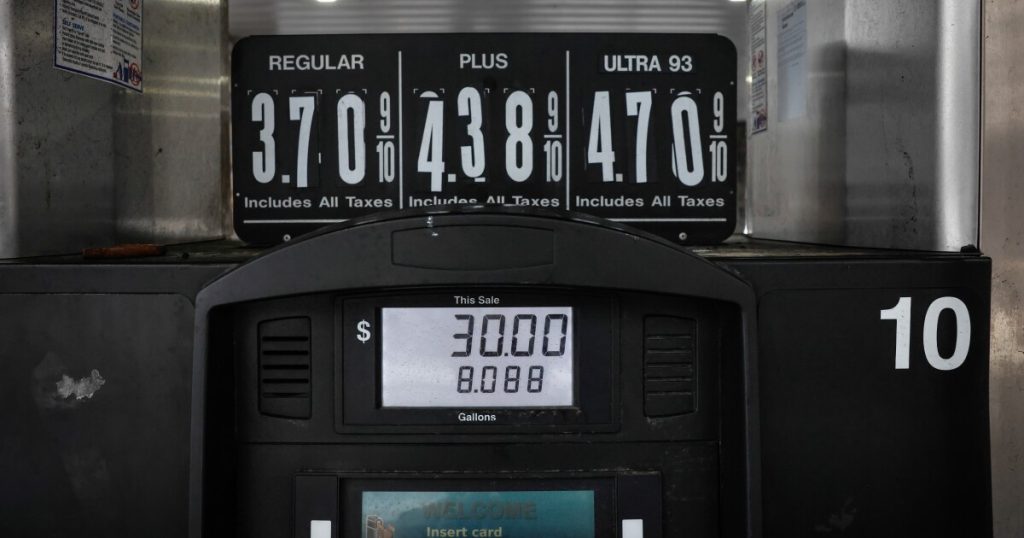
Can this jobs market afford this gas?
Friday was a bad day for the economy. The numbers, at least, were bad. What they actually add up to isn’t clear yet.
First there was the jobs report. The
Then there was the continuing news coming out of the Middle East and its effect on oil prices. John Adams pointed out that
And the real issue is the Strait of Hormuz, the narrow passage out of the Persian Gulf that Iran is trying to control. The Qatari energy minister said a prolonged blockage could drive the price of oil to $150 a barrel.
Some Bank of America analysts said they’d only worry about oil prices if they rose and stayed risen. A brief spike wouldn’t be such a concern. I’m not so sure about that. I remember the summer of 2008, when the price of oil very briefly hit a record $140 a barrel. The price at the pump hit $4 a gallon. And maybe if the economy had been stronger it wouldn’t have matter, but things were already on the downswing at that point. And I swear when gas hit $4 you could almost literally see the economy grind to a halt. Prices came down pretty quickly, but it didn’t matter. $4 gas was the first falling rock that started the avalanche. Six months later the economy was in the worst collapse since 1929. People don’t like to use the word depression anymore, but that’s really what it was. I don’t that $4 will be the same red line now that it was in 2008; the number might be higher. But there is a number.
And what does all this add up to? That’s actually a really squishy thing to define. Yes, there is an “official” arbiter of business cycles and recessions, the National Bureau of Economic Research. But there’s no hard and fast rule that defines a recession. And in a nation of 340 million people, some can be in the worst financial straits while others are doing fantastic. Harry Truman once defined a recession as when your neighbor loses his job and a depression as when you lose yours. So it’s very dependent upon your personal point of view.
There is a report I like to follow from the Chicago Fed called the National Activity Index. It’s not designed to show growth, or totals; it’s not gross domestic product or the inflation report. It’s designed to show momentum, how the overall conditions are in the economy (next update comes out March 23). The index is designed to anchor around zero and track deviations from that. Very high means the economy is humming, very low and you start parsing the meaning of recession and depression. And they report a three-month moving average that is an even better indicator. Right now, that three-month average is in very low negative territory, -0.06. And that’s an improvement. Meaning the economy isn’t great, but it’s okay. The Chicago Fed says its indicator points to a recession if it falls below -0.70. So we’re not near there.
Which means, for all the noise right now, the economy is doing okay. You can go about your business. Unless your boss