
- Key insight: We are entering the era of “programmable money” — where value is not just a digital entry, but a piece of code capable of executing its own behavior.
- Supporting data: While 90% of our money is already digital, it remains “inert.” It’s data that sits in a database, requiring manual instructions, clearinghouses and human oversight to move.
- Forward look: The coming decade will not determine whether money can be programmed — that threshold has already been crossed — but whether the existing banking industry will effectively adapt to participate in this new architecture.
Long before the goldsmiths of London began issuing the receipts that would eventually become modern banknotes, merchants in imperial China were already grappling with the physical limitations of wealth.
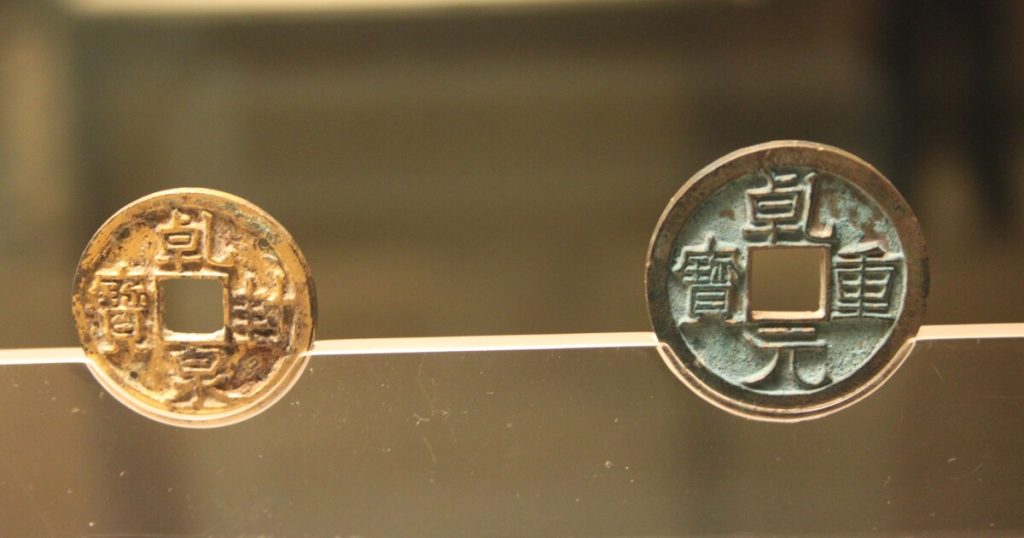
In the eighth century, during the Tang dynasty, copper coins became a victim of their own success: They were simply too heavy for the scale of a burgeoning silk and salt trade. To solve this, officials and merchants developed “feiqian,” which translates as “flying cash.” The money did not fly, but the paper did. A merchant could deposit metal in one city and receive a certificate redeemable elsewhere, allowing value to move faster than the weight of metal.
Processing Content
Two centuries later, the Song dynasty deepened this abstraction by issuing “jiaozi” — the world’s first true paper currency. For the first time at scale, value was decoupled from weight. Each of these major monetary leaps followed a distinct pattern: first, a workaround to ease friction; then, a structural redesign that removes a fundamental constraint.
Today, the global banking industry is on the precipice of a similar structural redesign. While 90% of our money is already digital, it remains “inert.” It is data that
For the modern commercial banker, the “friction of weight” has been replaced by the “friction of passivity.” In traditional finance, risk resides in the gap between a promise and its delivery. Trust is placed in the institutions — the banks, custodians and courts — that bridge this gap. Programmable money moves trust into the architecture itself. By
This shift is not merely about speed; it is about the changing nature of the global economy. As artificial intelligence begins to manage autonomous supply chains, optimize energy grids and negotiate logistics, these AI agents cannot rely on the T+2 settlement cycles of legacy banking. An AI agent operates on logic; it requires money that speaks the same language. For such systems to function, they require money that “thinks” — assets that can hold value, execute conditional transfers, and settle obligations instantly within defined code limits and without human intervention. As AI agents proliferate, money that cannot be programmed becomes a source of systemic friction.
The stakes for the banking sector are institutional and geopolitical. The International Chamber of Commerce estimates a global trade finance gap exceeding $2 trillion, much of it rooted in the administrative friction of documentation and settlement. When money, documentation and execution logic share a common digital substrate, these frictions compress sharply.
Currently, more than 130 jurisdictions are exploring digital currency initiatives. For American financial institutions, the lesson of the Song dynasty is clear: Credibility depends on governance. Just as jiaozi relied on clear regulation and public trust, the success of programmable money depends on whether the banking industry will embrace it and help provide the robust frameworks required to host it, rather than fight it.
History suggests that such monetary shifts are rarely optional. Systems that adapt become global infrastructure; those that hesitate become legacy back offices. The coming decade will not determine whether money can be programmed — that threshold has already been crossed — but whether the existing banking industry will effectively adapt to participate in this new architecture.
In the Tang dynasty, money learned to fly. In our century, it is finally becoming as dynamic as the human spirit it was designed to serve.