
Michael M. Santiago | Getty Images News | Getty Images
The labor market is currently in a frozen state, characterized by low hiring and turnover — and economists said the war in Iran could exacerbate the problem.
“It will chill the labor market even more,” Nicholas Bloom, an economics professor at Stanford University, said last week during a Harvard Kennedy School webinar on the war’s economic consequences.
If you have a job right now, “don’t leave it,” because things will get harder, Bloom said.
Job market hit by ‘superhero ice-blast’
A jobseeker fills out a form during a job fair hosted by Statue City Cruises at Liberty Landing Marina in Jersey City, New Jersey, on March 17, 2026. The US Department of Labor is scheduled to release initial jobless claims figures on March 19.
Michael Nagle/Bloomberg via Getty Images
The job market had already been on shaky footing before the U.S. and Israel started bombing Iran on Feb. 28, economists said.
Employers are hiring at their lowest rates since 2013, outside of the start of the Covid-19 pandemic, according to the most recent data from the U.S. Bureau of Labor Statistics, which is through January.
Meanwhile, employers are laying off workers at a historically low rate.
Workers are also quitting their jobs at the lowest sustained rates in about a decade. Quits are a barometer of how confident workers are in their ability to find a new job, since most workers who quit do so for another role, economists said.
The so-called “low-hire, low-fire” job market creates few opportunities for job seekers or new entrants to the labor market like recent graduates.
People who want to move jobs because they want more pay, want to change locations or don’t like their boss, for example, “are finding themselves trapped,” Bloom told CNBC in an e-mail.
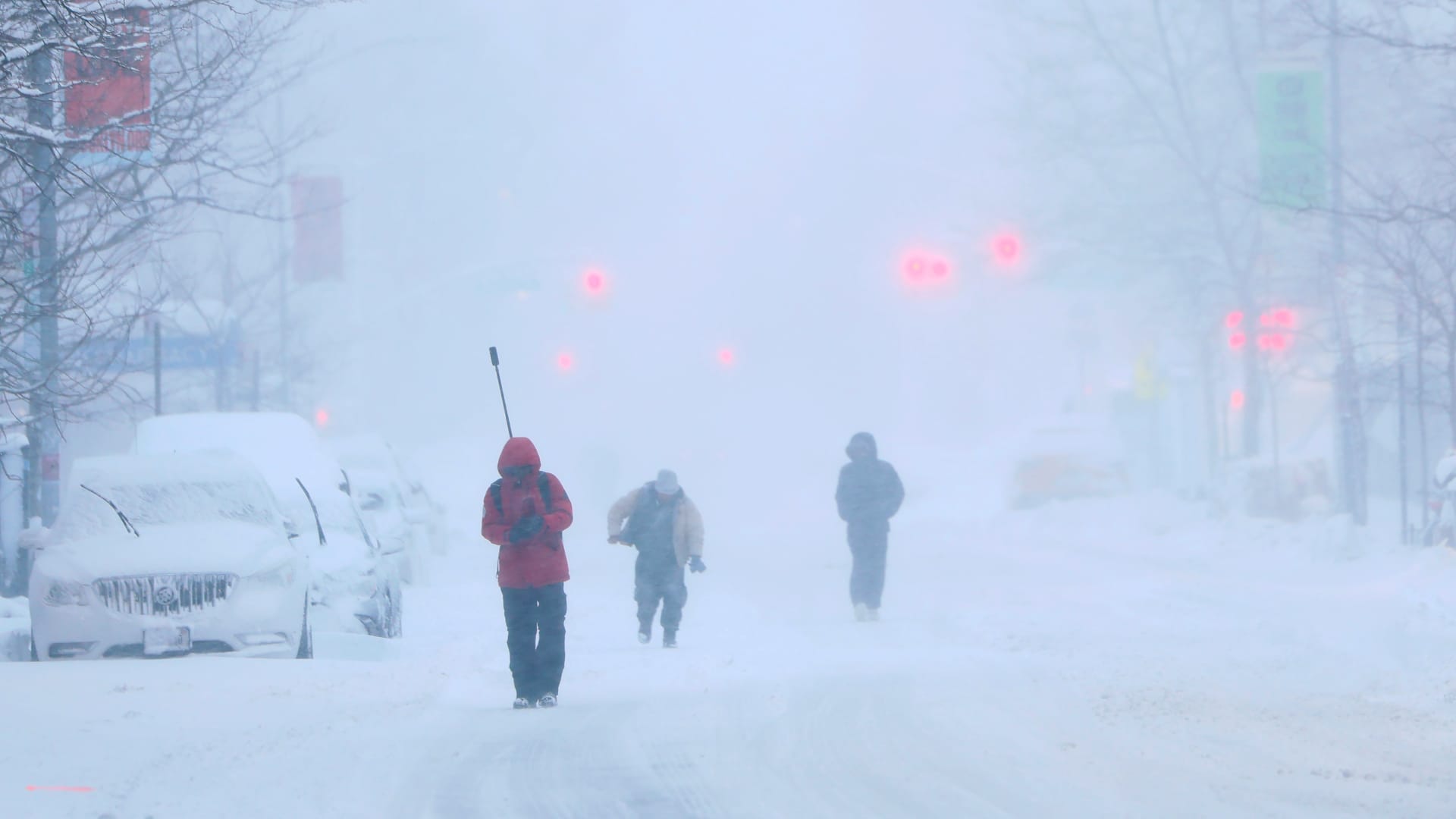
“It’s almost as if the entire economy got hit by some superhero ice-blast, with all hiring and firing slowed down,” he wrote.
Uncertainty chills the market
TOPSHOT – Smoke rises from the direction of an energy installation in the Gulf emirate of Fujairah on March 14, 2026.
AFP via Getty Images
The deep freeze is largely due to uncertainty among employers, economists said.
Bloom said it’s akin to holding off on buying a new car if you’re unsure whether you’ll need to drive to the office or work remotely for a new job.
These question marks lead people to put off making decisions, such as around hiring and investing, he said.
“Uncertainty slows hiring as firms don’t want to make an expensive mistake,” Bloom wrote. “It’s costly to hire somebody and if you then discover, say, demand is lower than you expected [it’s] hard to reverse. So when you are uncertain you pause.”
The war in Iran has injected additional uncertainty around energy prices, and whether that energy shock will tilt the global economy into a downturn, experts said.
Businesses also don’t know how long energy prices will remain relatively high or, for those that pay hefty transportation costs, how long those prices will eat into their bottom lines, said Cory Stahle, an economist at job site Indeed.
Heading into the year, employers had already faced uncertainty around a number of different policies, experts said.
In 2025, for example, President Donald Trump upended global trade with a barrage of one-again-off-again tariffs. Economists said the added cost of tariffs and the rapidly changing trade policies left employers unsure how their businesses would be impacted financially.
Interest rates have also remained relatively high, raising the cost of borrowing for businesses, while immigration policy is impacting the job market by reducing the supply of available workers, economists said.
“Right now, the labor market is being hit from multiple angles,” Stahle said. “As a business owner, I may be saying, ‘I don’t want to go out and hire right now if this [war] is going to turn into a global recession in the next couple months.'”
Employers have also been clinging to their workers due to scarring during the pandemic era, experts said.
Workers were hard to find during the so-called great resignation in 2021 and 2022, a period with a historically high rate of job hopping.
“As a result, many companies do not want to get caught short workers and have held on to staff,” Scott Wren, senior global market strategist at the Wells Fargo Investment Institute, wrote of that “job hugging” dynamic in a Sept. 10 market commentary. “And of course, uncertainty over tariff effects and economic growth has made many companies hesitant to expand their current workforce.”