
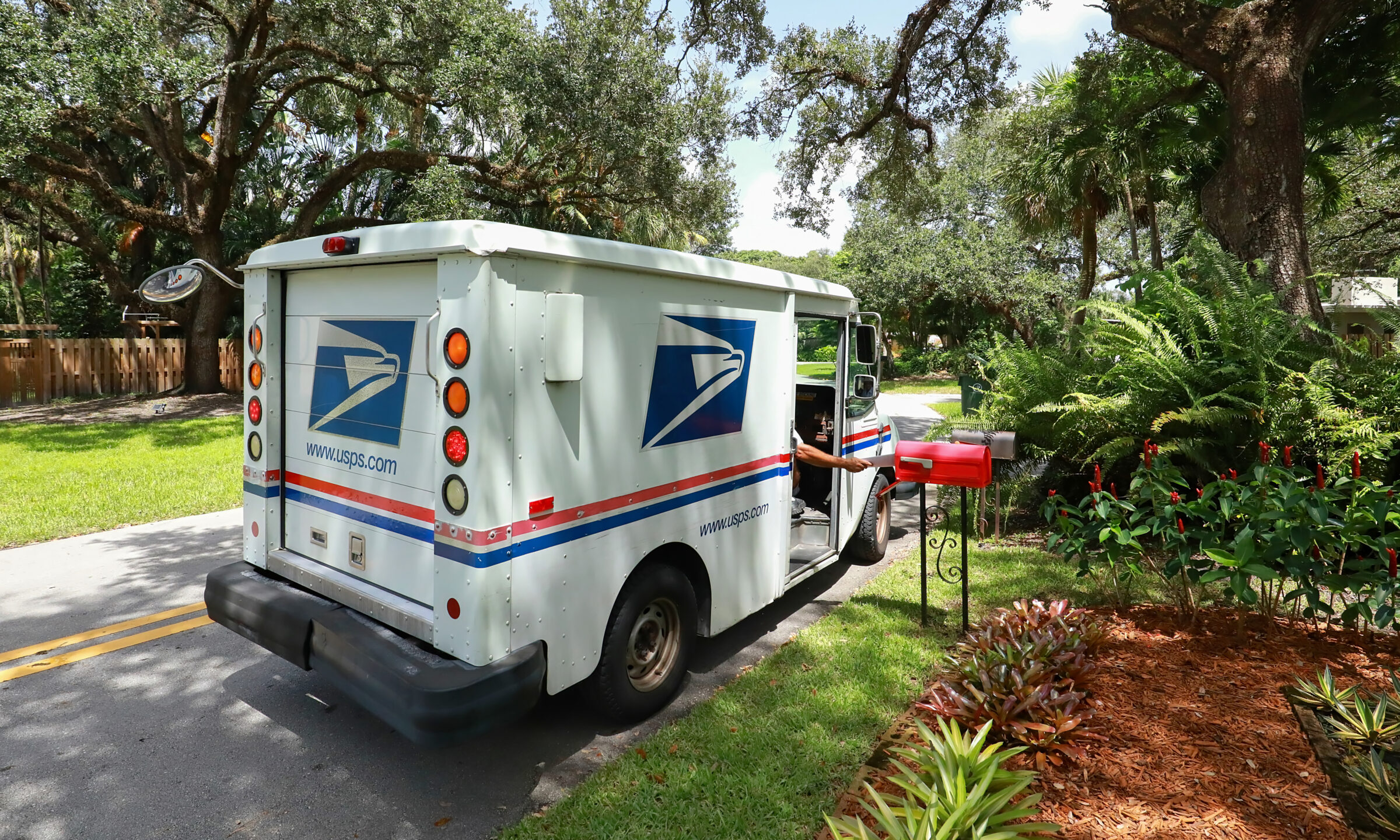
If you’re using the U.S. Postal Service less than you used to, you’re not the only one. Mail usage has fallen by nearly 50% over the past 20 years, according to USPS numbers.
Unfortunately, that means less money for the USPS, which could translate into fewer delivery days, higher postage prices or reduced access to local post offices.
“There are just too many other options for communicating,” says Kevin Kosar, a senior fellow who studies the USPS and other topics at the American Enterprise Institute, a public-policy think tank. “And most of what remains in the mail mix for now — it’s not high-margin first-class mail. It’s advertising mail.”
In mid-March, the head of the USPS notified Congress that without help, the agency will run out of funds as early as the fall of 2026.
“At our current rate, we’ll be out of cash in less than 12 months,” said David Steiner, postmaster general and CEO of the USPS, in testimony before a subcommittee of the House Committee on Oversight and Government Reform. “The Postal Service would be unable to deliver the mail.”
Why the Postal Service is losing money
Not only are there fewer pieces of mail being sent through the USPS, but the agency also is limited on both price increases and borrowing, and it’s required to deliver to every address in the U.S. six days a week.
“I’ve done tons of strategic plans across a number of businesses, and I’ve never had a strategic plan where they say so many options are not available to you,” Steiner said. “You have losing routes, can’t cut them. You have losing post offices, can’t cut them.”
Steiner pointed out that at 78 cents, the U.S. first-class stamp is the cheapest in the industrialized world. A first-class stamp in France, for instance, costs about $1.76, while an English first-class stamp costs about $2.25. “And the longest distance those letters have to travel is about 600 miles, smaller than the state of Texas,” Steiner said.
Oversight and reform committee members pointed out that the government has already offered aid to the USPS, specifically through the Postal Service Reform Act that passed in 2022.
“Everything that you’re talking about today, we did five years ago,” said committee chairman Rep. James Comer, R-K.Y. “What cost-cutting measures has the USPS implemented since the Postal Service Reform Act passed and became law?”
Comer also wondered whether the USPS has considered hiring freezes to reduce costs. “Based on the numbers, it looks to me like nearly 80% of the U.S. Postal Service’s costs are labor,” Comer said.
Without Congressional intervention, the USPS would likely have to scale back service, including dropping some delivery days or closing some post office locations — or both, Steiner said in the committee hearing.
Next steps depend on Congress
Will Congress act? It’s too soon to tell.
“It’s entirely possible that Congress will do nothing,” Kosar says. “Congress has a lot of other high-priority items that they’re working through. So it could be that we just see no action whatsoever until we get really close to the date of the liquidity crisis.”
It’s hard to imagine the USPS going under, given that it’s embedded in American society in multiple ways, Kosar says. Tens of millions of people vote by mail, for instance, and insurance companies and real estate agents use ZIP codes for business. Cities also send jury summonses through the mail.
“How are you going to stock juries if you don’t have a mail system?” Kosar says.
The question Congress needs to ask, Kosar says, is what do we need the Postal Service to do now, and how do we pay for it?
“They could shrink the size of the Post Office and have it deliver three days a week and put it on an annual appropriation — pay it for providing a public service,” Kosar says. “And then the Postal Service could still sell stamps and postage, and if it was radically downsized in that way, maybe you could make the books balanced.”
David Marroni, director of physical infrastructure at the U.S. Government Accountability Office (GAO), testified before the committee about the need to act, saying it was “highly unlikely that USPS will be able to fix its poor financial condition on its own.”
“To fix USPS’s business model for the long term, Congress will need to decide on the level of postal service the nation requires and determine a balanced approach to funding those services,” Marroni said.
For his part, Steiner stated that the USPS needs to be able to raise prices on packages and mail products, and that an increase in the ability to borrow money would buy it time to find the best path forward. The USPS also recently proposed a temporary 8% surcharge on priority mail and packages to offset rising fuel and transportation costs.
“If you want to have a discussion about reducing services, we can do that too,” Steiner said. “But there’s one thing we can’t do. And that is the status quo.”
If the USPS coffers run dry, you’d likely experience some pretty big disruptions to mail service. But lawmakers hinted that they hope to prevent a U.S. mail meltdown.
“I believe us working together can accomplish this,” said subcommittee chairman Pete Sessions (R-T.X.) in his closing remarks. “I think the system is better when it works together.”
Article sources
SS writers are subject matter authorities who use primary,
trustworthy sources to inform their work, including peer-reviewed
studies, government websites, academic research and interviews with
industry experts. All content is fact-checked for accuracy, timeliness
and relevance. You can learn more about SS’s high
standards for journalism by reading our
editorial guidelines.