
Close Menu
  • Home
  • Finance News
  • Personal Finance
  • Investing
  • Cards
    • Credit Cards
    • Debit
  • Insurance
  • Loans
  • Mortgage
  • More
    • Save Money
    • Banking
    • Taxes
    • Crime
What's Hot

JPMorgan CEO Jamie Dimon annual letter cites risks in geopolitics, AI, private markets

April 6, 2026

Consumers are watching their wallets

April 6, 2026

From Strength to Strength: The Smart Case for Retiring Earlier Than You Think

April 6, 2026
Facebook X (Twitter) Instagram
Smart SpendingSmart Spending
Subscribe
  • Home
  • Finance News
  • Personal Finance
  • Investing
  • Cards
    • Credit Cards
    • Debit
  • Insurance
  • Loans
  • Mortgage
  • More
    • Save Money
    • Banking
    • Taxes
    • Crime
Smart SpendingSmart Spending
Home»Banking»Consumers are watching their wallets
Banking

Consumers are watching their wallets

April 6, 2026No Comments4 Mins Read
Facebook Twitter LinkedIn Telegram Pinterest Tumblr Reddit WhatsApp Email
Consumers are watching their wallets
Share
Facebook Twitter LinkedIn Pinterest Email

The consumer is, okay
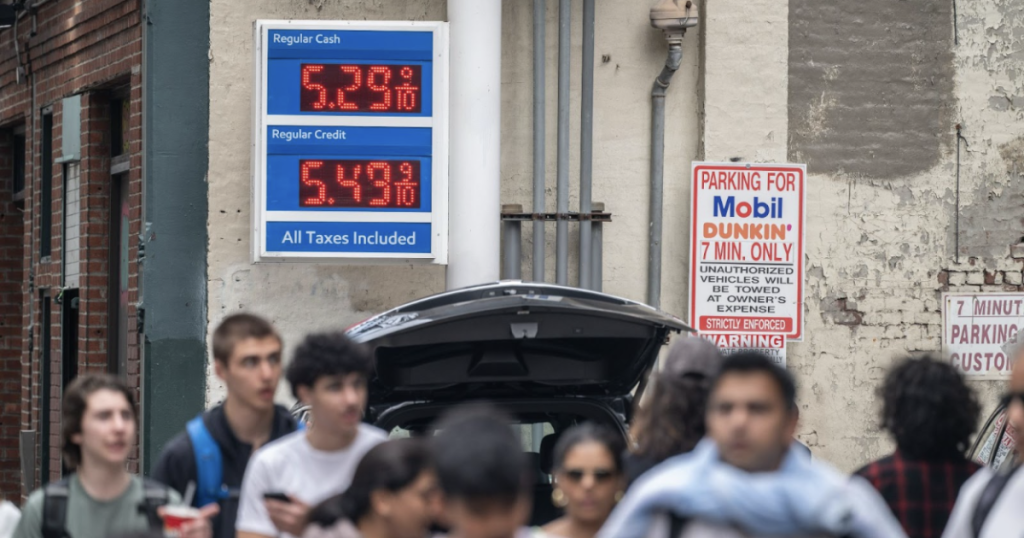
I am now paying more than $4 a gallon for gas. Now, part of this is that I buy my gas from a guy who’s also my mechanic, and a very good, honest mechanic, and a guy like that is worth a lot. So I don’t mind paying a bit more on the gas because he’s saved me tons over the years taking care of a variety of jalopies I’ve owned.

Processing Content

On the other hand, gas prices are going up everywhere. The national average has risen to $4.11, according to AAA. I don’t think that’s enough to break the economy, and so far it seems it isn’t. Friday’s jobs report came in hotter than expected, our Ebrima Santos Sanneh reported, though the details weren’t great. The biggest gains came in healthcare as a result of workers coming back from a strike. 

I’d been talking to some of the people at Method Financial, a fintech that collates consumer credit data, providing consumers and credit providers with a more comprehensive accounting of people’s spending and debt. They can look, essentially in real time, at millions of consumer accounts. I was thinking that they might be able to provide a more timely insight into how the consumer is faring right now than some other measures, like the New York Fed’s consumer data reports that come out quarterly. So I asked Method to pull some data for me.

Method looked at consumer credit-card data through the first month of the war, and it’s…I don’t know, mixed? The average credit-card balance fell to $7,488 from $7,929 and the median balance fell to $2,457 from $2,753. Is that good? Bad? Americans spending less sounds bad for GDP, especially if it’s because of higher gas prices, but good for people’s personal financial health. The consumer is watching their wallet I suppose is one way to put it. On the other hand, the rate of missed payments rose, to 2.91% from 2.67%. Overall the numbers don’t seem awful, is probably the best thing I can say about them. It’s only one month, of course.

See also  Academy Bank gives consumers digital budgeting help

Keep an eye on the Chicago Fed’s National Activity Index, too. The February reading came in at -0.11, which means economic activity is a bit below normal (the index is calibrated such that a reading of zero is considered as average economic growth.) Not great, but not alarming, either. We’ll get the March reading on April 23.

Have you heard of Pix?
The future of payments is happening in America, but not North America. It’s happening in Latin and South America, in Brazil and Mexico and other nations where digital-payment rails have been built and are becoming dominant.

A big part of the reason why, Finsus CEO Carlos Marmolejo writes in today’s BankThink essay, is because in many of these countries more people have cellphones than bank accounts and it’s easier to build a new mobile offering for them than it is to get, say, U.S. consumers to swap out their legacy banking services for new ones (I myself am still using the same savings and checking account I opened up when I was a kid, when my parents were trying to teach me how to use money.)

The poster child for this movement is Pix, the instant-payments system created by Brazil’s central bank. It is now used by 93% of adults in Brazil, after launching just six years ago. There are similar efforts in Argentina and Costa Rica, and Mexico may be next. Mexico has a significant “unbanked” population – the cash economy has long been dominant there – but almost everybody has a cellphone, and the Mexican central bank has built several digital-payments systems.

See also  WSFS sues over signage that plunged 500 feet to the ground

This is a marked contrast to the U.S., where we’re still trying to figure out whether stablecoin issuers can pay interest on deposits. I know we’ve got PayPal and Venmo and Zelle, but it feels like we are really dragging on the whole digitizing-money thing. You wonder when we’ll realize one centralized digital rail is the answer to this question.

Source link

consumers wallets watching
Share. Facebook Twitter Pinterest LinkedIn Tumblr Telegram Email
Previous ArticleFrom Strength to Strength: The Smart Case for Retiring Earlier Than You Think
Next Article JPMorgan CEO Jamie Dimon annual letter cites risks in geopolitics, AI, private markets

Related Posts

Mortgage rates hit a 5-week high, as buyers retreat

April 4, 2026

How Fifth Third grew embedded banking fee revenue 53% in 2025 | PaymentsSource

April 4, 2026

FCC hits telecom firm that enabled bank impersonation calls

April 3, 2026
Add A Comment
Leave A Reply Cancel Reply

Top Posts

Lebanon placed on global ‘grey list’ for money laundering

October 25, 2024

Best investing books for beginners

November 22, 2025

British watchdog investigates KPMG over Entain audit

January 20, 2025
Ads Banner

Subscribe to Updates

Subscribe to Get the Latest Financial Tips and Insights Delivered to Your Inbox!

Stay informed with our finance blog! Get expert insights, money management tips, investment strategies, and the latest financial news to help you make smart financial decisions.

We're social. Connect with us:

Facebook X (Twitter) Instagram YouTube
Top Insights

JPMorgan CEO Jamie Dimon annual letter cites risks in geopolitics, AI, private markets

April 6, 2026

Consumers are watching their wallets

April 6, 2026

From Strength to Strength: The Smart Case for Retiring Earlier Than You Think

April 6, 2026
Get Informed

Subscribe to Updates

Subscribe to Get the Latest Financial Tips and Insights Delivered to Your Inbox!

© 2026 Smartspending.ai - All rights reserved.
  • Contact
  • Privacy Policy
  • Terms & Conditions

Type above and press Enter to search. Press Esc to cancel.