
Close Menu
  • Home
  • Finance News
  • Personal Finance
  • Investing
  • Cards
    • Credit Cards
    • Debit
  • Insurance
  • Loans
  • Mortgage
  • More
    • Save Money
    • Banking
    • Taxes
    • Crime
What's Hot

China seeks to shield investments after U.S. attack jolts Venezuela

January 11, 2026

How job seekers can stand out in a hiring recession

January 10, 2026

What Trump’s plan to limit investors could change

January 10, 2026
Facebook X (Twitter) Instagram
Smart SpendingSmart Spending
Subscribe
  • Home
  • Finance News
  • Personal Finance
  • Investing
  • Cards
    • Credit Cards
    • Debit
  • Insurance
  • Loans
  • Mortgage
  • More
    • Save Money
    • Banking
    • Taxes
    • Crime
Smart SpendingSmart Spending
Home»Banking»As QT ends, bank regulators now hold the real growth lever
Banking

As QT ends, bank regulators now hold the real growth lever

January 10, 2026No Comments6 Mins Read
Facebook Twitter LinkedIn Telegram Pinterest Tumblr Reddit WhatsApp Email
As QT ends, bank regulators now hold the real growth lever
Share
Facebook Twitter LinkedIn Pinterest Email

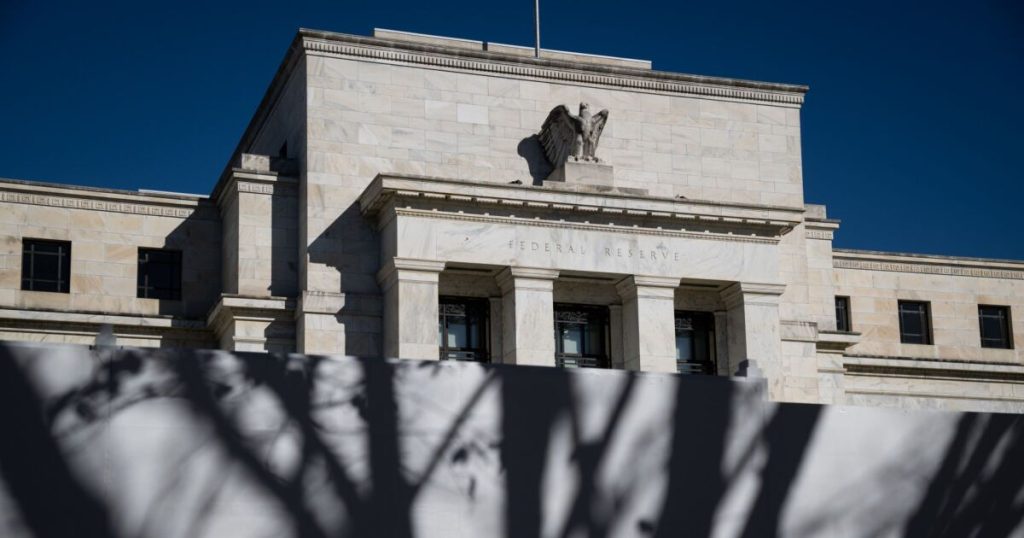
As the Federal Reserve’s quantitative tightening efforts fade into history, the major engine of economic growth in the U.S. will be bank lending. Regulators should keep a close eye on where those dollars are going, writes Emir Phillips, of Lincoln University.

Graeme Sloan/Bloomberg

As the Federal Reserve winds down quantitative tightening and brings the balance-sheet runoff it began in 2022 to an end, markets have already moved on to handicapping the next acronym. Will the Fed’s coming “reserve management purchases” of Treasuries amount to QE-lite? Will bill-buying quietly resume as soon as money markets creak?

Processing Content

Meanwhile, something arguably more important for the future of money has happened further up Pennsylvania Avenue. Executive Order 14178, “Strengthening American Leadership in Digital Financial Technology,” and the House’s CBDC Anti-Surveillance State Act, H.R. 5403 have effectively taken a U.S. central bank digital currency off the table, at least for now. For the foreseeable future, whatever “digital dollar” system the U.S. builds will still live on commercial bank balance sheets and private dollar-backed stablecoins, not on a Fed app.

If that is where digital dollars will live, one question matters more than any argument about QE versus QT: What exactly are banks lending for?

A decade ago, the Bank of England’s article “Money creation in the modern economy” laid out a now-familiar point: In modern systems, most money is created when commercial banks make loans, not when central banks buy securities. If that is true, then the way supervisors and standard-setters shape bank lending — through risk weights, capital rules, tax treatment and data requirements — does at least as much to determine growth and inequality as any tweak to the Fed’s balance sheet.

See also  Treasury's halt of paper checks likely to reduce fraud

One simple way to see the stakes is to recognize the three broad uses of bank credit.

Consumption credit finances spending that is gone tomorrow: card balances, overdrafts, buy now/pay later plans. In excess, it leaves households overleveraged with no corresponding rise in their earning power and no new capacity.

Asset-market credit finances the purchase of existing houses, commercial buildings and financial assets. A growing empirical literature, including recent Bank for International Settlements work on credit and resource allocation — for example, BIS Bulletin No. 91, “Credit and resource allocation in EMEs,” and Müller & Verner’s “Credit Allocation and Macroeconomic Fluctuations” — finds that when a rising share of credit is steered into real estate and markets, asset-price booms and busts become more severe and long-run productivity growth slows, even if total credit growth is unchanged.

Production credit finances new capital formation: plant, equipment, infrastructure and software that raise output per worker. When a manufacturer adds an assembly line, a utility modernizes its grid or a logistics firm upgrades its fleet, that is production credit at work. It is the unglamorous credit that underwrites future living standards.

Over the last several decades, advanced economies have slipped into a pattern in which ever more credit finances existing assets rather than new production. The visible symptoms are familiar: soaring house prices, stretched price-to-earnings multiples and sluggish productivity.

For regulators, the lesson is stark: Not all credit is created equal. The same dollar of bank lending can either fuel speculative bidding for the same stock of assets or expand the productive frontier.

See also  Seven Bank seeks to expand cash-machine network beyond 7-Elevens

Regulators do not sign loan documents. But they design the plumbing that nudges balance sheets in one direction or another. Under Basel-style frameworks, well-secured residential mortgage exposures and many real-estate loans attract significantly lower risk weights than unsecured or lightly collateralized loans to small and midsize firms with solid cash flows but little hard collateral.

The U.S. implementation of the so-called Basel III “endgame,” launched in the joint capital proposal by the Fed, FDIC and OCC (see the Federal Reserve press release of July 27, 2023), and now being reworked after industry pushback and political pressure, will reshape risk-weighted asset calculations. If that calibration is not done with credit composition in mind, it can unintentionally penalize lending to productive businesses relative to lending against property or securities.

Collateral, guarantees and the tax code lean in the same direction. Real estate and marketable securities are the easiest collateral to value, pledge and liquidate. Federal guarantees and credit enhancements are more readily available for loans that can be securitized than for bespoke productive projects. Mortgage-interest deductibility, capital-gains preferences for property and securities, and the way loss reserves are computed under Current Expected Credit Losses all tend to make asset-market credit more attractive at the margin.

Against that backdrop, QE and QT mostly change how much water is in the pipes. The direction of flow is being set somewhere else.

The decision to end QT, the new regime of reserve-management purchases and the effective rejection of a U.S. CBDC all point to the same reality: The real action is in bank regulation and private-sector digital money, not in another grand balance-sheet experiment. That gives banking regulators a rare opening to refocus on what they uniquely control.

See also  Ohio community bank strikes deal to expand in Columbus

First, they can measure loan purpose consistently and publicly. Call reports and supervisory data should capture, in a comparable way across institutions, how much of each bank’s book goes to consumption, asset-market purchases and productive capital formation. Regulators cannot redirect what they do not measure.

Second, they can publish simple credit-composition scorecards alongside capital and liquidity metrics. When supervisory agencies report on the health of the system, they should not only show headline capital ratios and stress-test losses; they should also show whether the system is leaning more toward mortgages and securities or toward production loans.

Third, as they revise Basel III endgame, U.S. agencies can review risk weights and capital buffers explicitly through a credit-composition lens. Where possible, they should eliminate mechanical advantages for asset-market credit that are not clearly justified by loss experience and make explicit in supervisory guidance that well-underwritten production credit is not inherently suspect.

Fourth, they can coordinate tax, accounting and prudential rules so they do not all lean in the same direction. Capital rules, tax incentives, loss-provisioning standards and government guarantees now interact in ways that stack incentives under mortgages and securities. A cross-agency review could identify where modest adjustments would make it more neutral to lend to productive capacity rather than just to property.

Safety and soundness rightly remain supervisors’ first obligation. But within a safe system, steering more credit toward productive activity and a bit less toward bidding up the same houses and securities may be the most powerful growth policy regulators already have in their hands.

Source link

Bank ends Growth hold lever Real regulators
Share. Facebook Twitter Pinterest LinkedIn Tumblr Telegram Email
Previous ArticleJPMorgan forms special advisory group to share some of bank’s ‘secret sauce’ with clients
Next Article These coverage gaps may surprise you

Related Posts

What Trump’s plan to limit investors could change

January 10, 2026

Labor market ends 2025 with weak December job growth

January 10, 2026

‘Chaotic web’ of tech keeps bank fraud victims in limbo

January 10, 2026
Add A Comment
Leave A Reply Cancel Reply

Top Posts

Fed’s Barr urges regulators to uphold standards

February 21, 2025

Top High-Yield Savings Accounts To Protect Your Money As Treasury Yields Rise

June 19, 2025

How to Save for Retirement From Your 20s to Your 60s

October 7, 2024
Ads Banner

Subscribe to Updates

Subscribe to Get the Latest Financial Tips and Insights Delivered to Your Inbox!

Stay informed with our finance blog! Get expert insights, money management tips, investment strategies, and the latest financial news to help you make smart financial decisions.

We're social. Connect with us:

Facebook X (Twitter) Instagram YouTube
Top Insights

China seeks to shield investments after U.S. attack jolts Venezuela

January 11, 2026

How job seekers can stand out in a hiring recession

January 10, 2026

What Trump’s plan to limit investors could change

January 10, 2026
Get Informed

Subscribe to Updates

Subscribe to Get the Latest Financial Tips and Insights Delivered to Your Inbox!

© 2026 Smartspending.ai - All rights reserved.
  • Contact
  • Privacy Policy
  • Terms & Conditions

Type above and press Enter to search. Press Esc to cancel.