
- Key insight: The longer the conflict in the Middle East lasts, the greater the negative economic consequences will be, bankers predicted Tuesday.
- What’s at stake: The war in Iran could drive up inflation, which would hurt consumers and corporations and ultimately have an adverse impact on banks’ businesses.
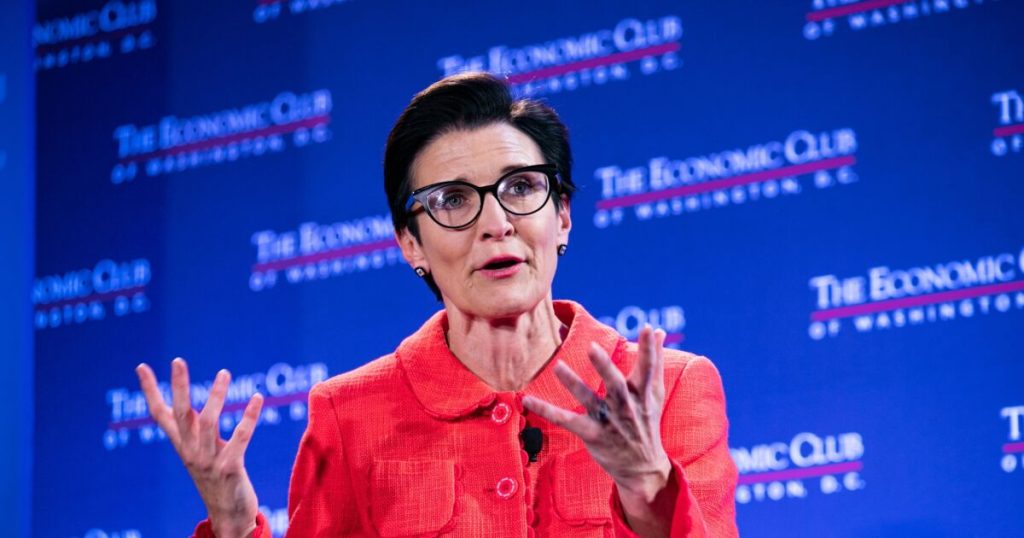
- Expert quote: “The big wildcard is obviously the Middle East.” — Citi CEO Jane Fraser
Bankers warned Tuesday that a prolonged conflict in the Middle East will lead to adverse economic conditions, as consumers and companies bear the burden of the war’s fallout.
Processing Content
Three months into the year, banks and their customers are largely well-positioned for growth, and will likely remain so if
Oil prices have surged since Israel and the United States first attacked Iran on Feb. 28. If prices were to exceed $100 per barrel for more than a few weeks, that would have “ramifications for inflation,”
“The big wildcard is obviously the Middle East,” said Fraser, whose bank operates in 94 countries. “And when we look at the big question, really it’s the duration and the containability … of particularly what’s going on in the strait, and we don’t know the answer on that one.”
The Strait of Hormuz is a narrow but crucial waterway between Iran and other Gulf countries through which about one-quarter of the global oil trade travels, according to a recent United Nations report. Since the war began, ship transits through the strait “have come to a near halt,” the UN report said.
Ripple effects “go far beyond the region, affecting energy markets, maritime transport and global supply chains,” the UN report said. An increase in energy, fertilizer and transportation costs, such as freight rates and insurance premiums, may drive up the cost of food, according to the report.
Those factors, and others such as the
Inflation risk, combined with the Iran conflict and the disappointing jobs report from the U.S. Labor Department, may encourage the Fed to “stay on the sidelines in terms of cutting rates,” Beth Ann Bovino, chief economist at U.S. Bank and the chair of the American Bankers Association’s Economic Advisory Committee, which made the economic forecast, said last week.
One lawmaker addressed the war-related uncertainty Tuesday during the American Banker Association’s summit in Washington, D.C. Sen. David McCormick, R-Pa., called the military action in the Middle East “a great success,” but he acknowledged that “there’s still lots of uncertainty.”
“I think the way to frame this mission is we had to take out the threat, but we don’t have to create [a] long-term solution for Iran,” McCormick said. “So my guess is weeks, not months. I think the bottom line here is that it’s going to be bumpy for the foreseeable future.”
Bankers appearing at Tuesday’s RBC Capital Markets conference expressed largely positive sentiments about business conditions. But similar to
At Canada’s Bank of Montreal, which
But whether the situation will stay that way remains to be seen, he cautioned.
“It’s still too early, from my perspective, to really gauge what impact the war in Iran is going to have on the closing of the Strait of Hormuz, on markets either medium-term or long-term,” Tannenbaum said. If it “goes away quickly, I will continue to be very positive. If this dynamic extends over a longer period of time, it will start to have a negative impact on our business.”
One possibility if there’s a protracted war is that corporate clients will become “less active,” Tannenbaum said.
“When I think about the impact of what’s happening in oil markets or equity markets or fixed-income markets, after a surge in activity where people are trying to reposition or exit positions, what ends up happening is that, candidly, people sit on their hands and they wait,” he said.
Corporate clients “are like, ‘We don’t know, let’s wait.'”
Michael Thomas, head of corporate and institutional banking at
“But there’s nothing right now that has popped up as a particular area of concern,” Thomas said. “It’s more … general shock to the system, and how do you model that through your portfolio.”
The Fed and other central banks “have a tough job at the moment” as they try to lower interest rates while addressing issues such as inflation and a softer labor market,
“If inflation is picking up because of the oil price, and you’ve got the labor market on the other side, where do they land?” she said.
Ebrima Santos Sanneh contributed to this article.