
Close Menu
  • Home
  • Finance News
  • Personal Finance
  • Investing
  • Cards
    • Credit Cards
    • Debit
  • Insurance
  • Loans
  • Mortgage
  • More
    • Save Money
    • Banking
    • Taxes
    • Crime
What's Hot

ETFs make it to invest in gold. Taxes may be the tricky part

December 4, 2025

Bessent floats residency rule for regional Fed presidents

December 4, 2025

Stocks making the biggest moves after hours: CRM, FIVE, AI

December 4, 2025
Facebook X (Twitter) Instagram
Smart SpendingSmart Spending
Subscribe
  • Home
  • Finance News
  • Personal Finance
  • Investing
  • Cards
    • Credit Cards
    • Debit
  • Insurance
  • Loans
  • Mortgage
  • More
    • Save Money
    • Banking
    • Taxes
    • Crime
Smart SpendingSmart Spending
Home»Banking»Bessent floats residency rule for regional Fed presidents
Banking

Bessent floats residency rule for regional Fed presidents

December 4, 2025No Comments6 Mins Read
Facebook Twitter LinkedIn Telegram Pinterest Tumblr Reddit WhatsApp Email
Bessent floats residency rule for regional Fed presidents
Share
Facebook Twitter LinkedIn Pinterest Email

  • Key takeaway: Treasury Secretary Scott Bessent said in an appearance Wednesday that the Federal Reserve should require regional Fed presidents to reside in their districts for three years going forward.
  • Supporting data: All 12 regional Fed presidents’ terms expire every five years and are reappointed as a bloc. The next vote on reappointing regional bank presidents comes in February.
  • What’s at stake: The Trump White House has engaged in a prolonged effort to exert greater control over the central bank, with the president preferring far lower interest rates than what are currently on offer.

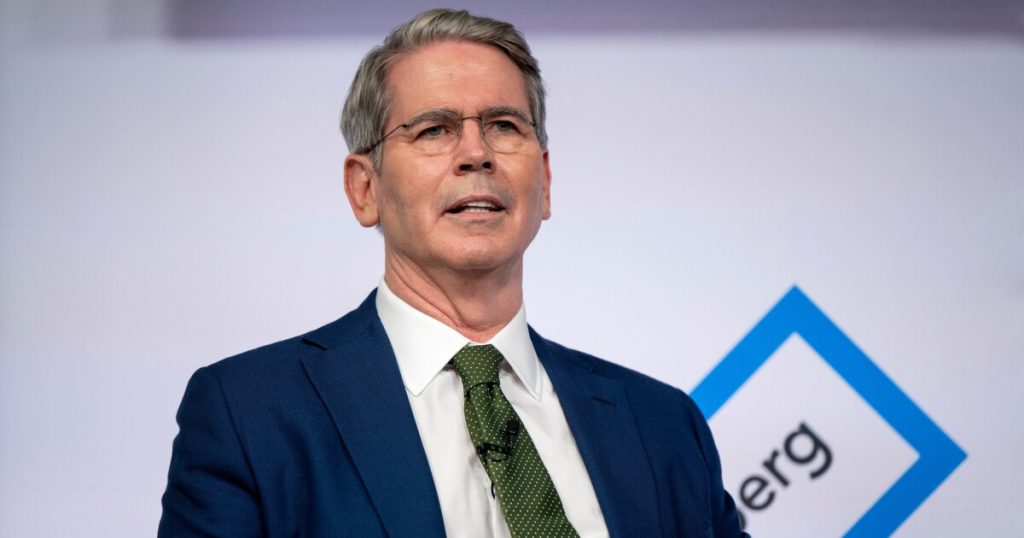
NEW YORK — Treasury Secretary Scott Bessent on Wednesday said the Federal Reserve Board should reject the appointment of regional Federal Reserve Bank presidents who have not resided in their districts for three years, potentially setting up a confrontation between the central bank and the administration when all 12 regional Fed reappointments come before the Fed board in February.

Speaking in a question-and-answer segment at the New York Times’ DealBook Summit Wednesday morning, Bessent said that the ultimate authority to approve regional Fed presidents resides with the board of governors, who approve the reappointment of all 12 regional Federal Reserve Bank presidents every five years. The next reappointment vote is slated for February. 

“The chair and the board have the final say on who … the regional bank boards can select,” Bessent said. “So I am going to start advocating — going forward, not retroactively — that regional Fed presidents must have lived in their district for at least three years.”

The Federal Reserve did not immediately respond to a request for comment. The board of governors has never rejected a regional Fed bank president’s reappointment, and the votes are typically a pro forma affair. But President Trump has waged a yearslong campaign to exert greater control over the central bank, an effort that had initially focused on Fed Chair Jerome Powell but has expanded in recent months. 

See also  How promotional (bonus) CD rates work

Trump took the unprecedented step of moving to fire Fed Gov. Lisa Cook in August, informing her via social media post that she had been terminated for cause, citing allegations of mortgage impropriety as his basis. Cook has since sued the president and Fed, arguing that the president cannot remove her under these specific circumstances and through this specific process. That case is expected to come before the Supreme Court in January, and could have broad implications for the future independence of the Fed. 

Bessent also said at the summit that the president had proved his past skepticism of tariffs wrong, arguing the strategy has been effective in reducing foreign trade barriers and will not lead to a meaningful rise in inflation. 

Speaking at the 2025 New York Times DealBook Summit, Bessent explained his change of heart on the effectiveness of trade barriers in an exchange with Times journalist Andrew Ross Sorkin. While Bessent is currently helming the administration’s maximalist tariff strategy, Sorkin pointed out, he himself had expressed fears that tariffs would lead to inflation and that Trump would not ultimately impose a sweeping tariff regime. Bessent said his views have changed since the beginning of the year.

“A big part of my investment career, and to the extent I was successful, was being able to evolve my thinking,” Bessent said. “Everyone likes the hysteria of prices and this and that, but what has gone unnoticed is U.S. [Trade Representative] Jameson Greer, with President Trump’s support, has done an incredible job of dropping the non-tariff trade barriers and the tariffs from other countries.”

See also  OCC scrubs reputational risk from exams amid debanking debate

Bessent likened the administration’s actions, which have involved imposing sweeping tariffs on a number of countries, to aggressive opening bids in a negotiation that allow the administration more leverage. 

“President Trump has been right on this — he told me early on, he said the United States is like a department store. Everyone wants to shop here, and only the United States can do what we’re about to do.” Bessent said. “President Trump has normalized the idea of a 15 to 20% tariff … [he] went in with a maximalist position and that is actually what gave us the leverage in the negotiations, by saying, ‘you get a 35% tariff,’ when Japan agrees to a 15% tariff … it’s ‘domo arigato.'”

Bessent said the most underappreciated shift has been abroad, where U.S. pressure has pushed countries to lower their own barriers, saying that trade for U.S. business is “actually flowing much better.”

He also rejected the premise that tariffs have fueled inflation and also later pushed back on the idea that tariffs operate as taxes. 

“You could get a one-time price adjustment, [but] inflation is a generalized price and persistent price increase, so there’s a big difference,” he said. “This hasn’t set off some inflationary mindset.”

Inflation increased 0.3% in September according to the Bureau of Labor Statistics’ Consumer Price Index report, a slight decrease from the 0.4% rate reported in August. CPI inflation rose 3% year over year in September, while core inflation — which excludes volatile food and energy prices — also rose 3%. Bankers and investors have repeatedly said that trade policy swings under the Trump administration continue to hinder investment decisions. The gradual increase in both unemployment and inflation in recent months has created a schism on the Federal Open Market Committee, leading members to take opposing views on whether interest rates should rise or fall in the short term. 

See also  Capital One seeks to kill two costly lawsuits with one stone

Federal Reserve officials like Governor Lisa Cook highlighted the tension regarding inflation in a speech last month, saying while in theory the price increases shouldn’t persist in the long term, she said she was “prepared to act forcefully” if inflation is more durable than expected. Fed Vice Chair for Supervision Michelle Bowman has argued that any inflationary effects will be transitory. Fed Governor Stephen Miran has predicted inflation should come down in the labor market, saying last month he’d like to see a 25 basis point rate cut approved by the Federal Open Market Committee meeting scheduled for next week. 

While inflation’s long-term trajectory is still unclear, there is some indication that consumers believe prices are moving up. The Bank of America Institute’s Holiday Spending report recently found consumers appeared to be starting their holiday shopping earlier this year, with over half purchasing gifts before October. More than one-third of those early shoppers said they started earlier because they anticipated tariffs causing price increases, according to the report.

John Heltman contributed to this report.

Source link

Bessent Fed floats presidents Regional residency Rule
Share. Facebook Twitter Pinterest LinkedIn Tumblr Telegram Email
Previous ArticleStocks making the biggest moves after hours: CRM, FIVE, AI
Next Article ETFs make it to invest in gold. Taxes may be the tricky part

Related Posts

EU banks plan stablecoin; Ripple gets permission to expand in Singapore | PaymentsSource

December 4, 2025

Nubank co-founder Cristina Junqueira sets sights on US market

December 4, 2025

Feds seize website used in massive crypto scheme

December 3, 2025
Add A Comment
Leave A Reply Cancel Reply

Top Posts

What Is the Downside of Getting a Mortgage?

January 10, 2025

Berkshire Hathaway (BRK.A) earnings Q1 2025

May 4, 2025

Use a Prepaid Travel Money Card to stick to your Budget on Holiday

June 27, 2025
Ads Banner

Subscribe to Updates

Subscribe to Get the Latest Financial Tips and Insights Delivered to Your Inbox!

Stay informed with our finance blog! Get expert insights, money management tips, investment strategies, and the latest financial news to help you make smart financial decisions.

We're social. Connect with us:

Facebook X (Twitter) Instagram YouTube
Top Insights

ETFs make it to invest in gold. Taxes may be the tricky part

December 4, 2025

Bessent floats residency rule for regional Fed presidents

December 4, 2025

Stocks making the biggest moves after hours: CRM, FIVE, AI

December 4, 2025
Get Informed

Subscribe to Updates

Subscribe to Get the Latest Financial Tips and Insights Delivered to Your Inbox!

© 2025 Smartspending.ai - All rights reserved.
  • Contact
  • Privacy Policy
  • Terms & Conditions

Type above and press Enter to search. Press Esc to cancel.