
Processing Content
This month, the lender plans to unveil new incentives for cardholders with higher account balances. Reworking the rewards program is one lever the firm is pulling in its effort to lift the annual profit of the consumer unit to $20 billion by the end of the decade, a feat that’s been achieved only twice in the history of the US banking industry.
As part of the broader consumer push, executives said in interviews that they’re deploying millions of dollars and using artificial intelligence in a bid to lure new customers and persuade existing ones to do more business with the bank.
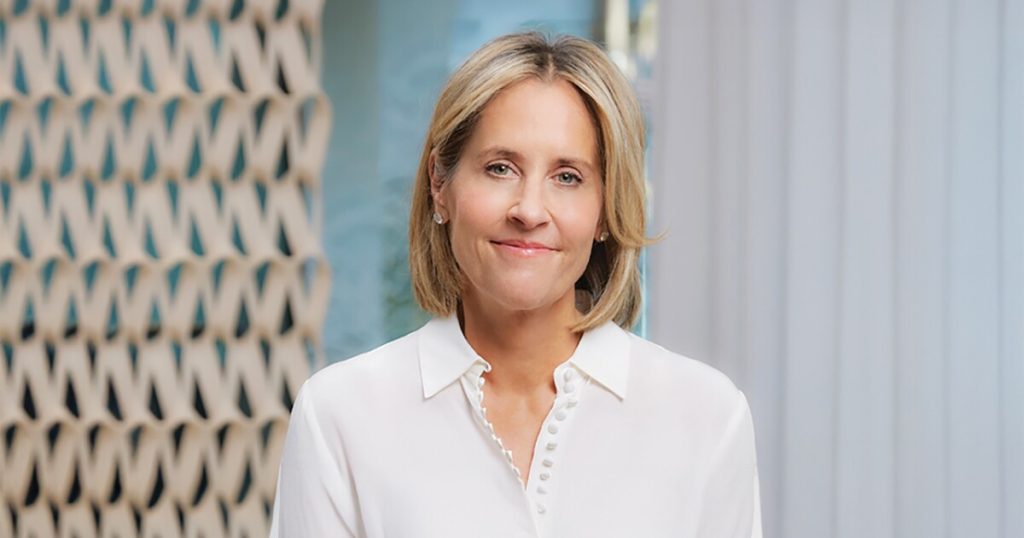
“The focus is on growth,” said Holly O’Neill, 54, head of
The lender has a multipronged approach for reaching its goals: expand the customer base, deploy technology to sift through more data to reach clients and trim expenses. The bank currently works with 69 million consumers and operates 3,650 branches across 39 states. It wants to increase the number to 75 million consumers by 2030.
Since the global financial crisis in 2008,
While players such as JPMorgan Chase & Co. and American Express Co. spent billions of dollars on rewards for premium cards and expanded their roster of co-brand credit cards across the travel and retail industries,
Over the past five years,
“While we have a high penetration, there is still the opportunity to deepen and make our products more attractive to clients,” said Mary Hines Droesch, head of consumer and small-business products and analytics. “We’re very successful with cash back, but we could do even more.”
That comes at a cost. It takes three to five years, on average, for a lender to break even after spending on marketing and incentives such as sign-on bonuses.
Technology is helping the bank sift through more sources of data to find consumers and tailor their outreach at an appropriate time, such as when potential clients are getting married or buying a home, according to Droesch.
That also applies to how the bank is evaluating borrowers for their potential to default. A customer with no credit history, who in the past would’ve had a hard time getting approved for a card, now stands a better chance even as the bank maintains its lending standards, O’Neill said. AI can help sift through additional consumer information to assess risk.
“As technology improves, and as you are able to better leverage data and analytics you have on your client base, it gives you better insight to underwrite within your risk parameters,” she said.
For more complex loan products, such as mortgages,
The lender is also gearing up for a potential resurgence in homebuying should borrowing costs continue to decline.
“That’s something we work on daily — to make sure we have got the elasticity in our mortgage capabilities, so that when rates do come down we’re ready to pick up,” O’Neill said.
The bank is also looking at new ways to engage with consumers in physical spaces. It added 50 sites last year — and closed nearly as many — while renovating 150 existing financial centers. It plans to open up to 100 more by the end of next year, all in locations it’s identified as high-growth areas.
Inside those branches, senior bankers are trained to handle both big tasks, such as assisting with mortgage applications and setting up investment accounts, as well as small, mundane activities like cash withdrawals, which some customers still prefer to be handled by a person rather than an ATM.
On the corner of 59th Street and Third Avenue in Manhattan, the changes are starting to show up.
“Directionally, this is the new model,” O’Neill said. “The question on my mind is at what point does the teller line go away?”
Roughly 55,000 employees currently work at
For now, the firm is adding its AI agent, Erica, to employee desktops at financial centers, which O’Neill says is like an extra “brain” for workers. Over time, that technology will help staff become more efficient and cut down on hiring, she said.
The degree to which digital tools can help the bank reach its forecast for efficiency and returns is the big question, Wells Fargo & Co. analyst Mike Mayo said in an interview. He described the goal as “a more blue-skies scenario.”
“We’d love to be pleasantly surprised if