
Close Menu
  • Home
  • Finance News
  • Personal Finance
  • Investing
  • Cards
    • Credit Cards
    • Debit
  • Insurance
  • Loans
  • Mortgage
  • More
    • Save Money
    • Banking
    • Taxes
    • Crime
What's Hot

Trump threatens to sue JPMorgan Chase for ‘debanking’ him

January 18, 2026

Community banks need compliance relief from Washington

January 18, 2026

Republicans want to expand the child and dependent care tax credit

January 17, 2026
Facebook X (Twitter) Instagram
Smart SpendingSmart Spending
Subscribe
  • Home
  • Finance News
  • Personal Finance
  • Investing
  • Cards
    • Credit Cards
    • Debit
  • Insurance
  • Loans
  • Mortgage
  • More
    • Save Money
    • Banking
    • Taxes
    • Crime
Smart SpendingSmart Spending
Home»Banking»Community banks need compliance relief from Washington
Banking

Community banks need compliance relief from Washington

January 18, 2026No Comments4 Mins Read
Facebook Twitter LinkedIn Telegram Pinterest Tumblr Reddit WhatsApp Email
Community banks need compliance relief from Washington
Share
Facebook Twitter LinkedIn Pinterest Email

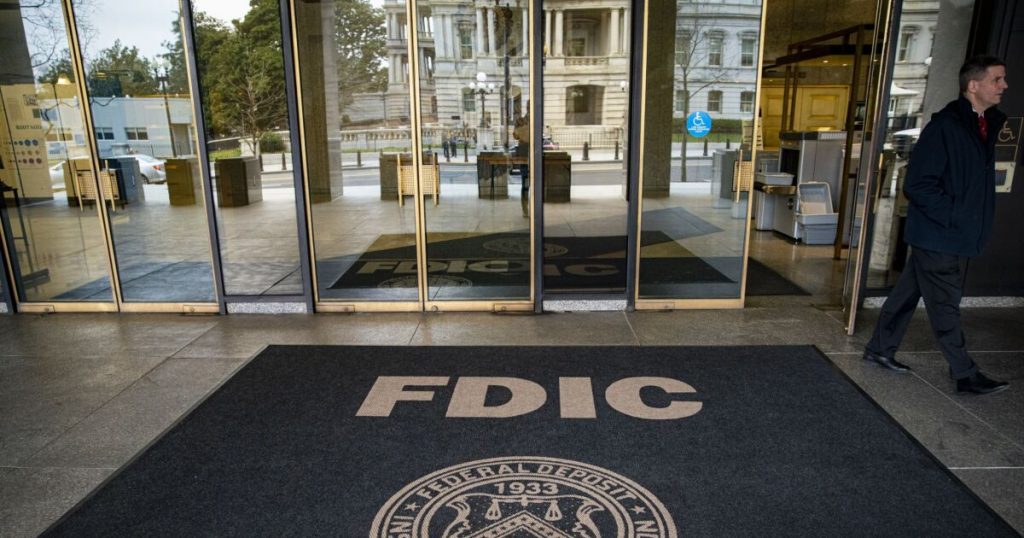
Data collected by the Conference of State Bank Supervisors demonstrates a huge disparity in compliance costs between large and small banks. Policymakers in Washington who claim to support community banks must act, writes Thomas Siems.

Al Drago/Bloomberg

Washington frequently professes its support for community banks, praising their role in sustaining local economies and providing relationship-based credit. Yet the regulatory structure continues to push the smallest institutions toward extinction. For the first time, 10 years of empirical evidence now confirms what community bankers have warned all along: Compliance costs fall hardest on those least able to absorb them.

Processing Content

Drawing on the Conference of State Bank Supervisors’ Annual Survey of Community Banks from 2015 through 2024, the data reveals that smaller community banks devote roughly double the share of their operating costs to regulatory compliance compared with their larger peers. Personnel expenses illustrate the burden plainly. While the smallest community banks spent between 11% and 15.5% of their payroll on compliance activities over the decade, the largest quartile of banks in the annual surveys spent only 6% to 10%. The pattern repeats for data-processing costs, where the smallest banks devoted between 16.5% and 22% of their budgets to compliance, compared with 10% to 14% at the largest institutions. Accounting and auditing expenses ran 5% to 17% higher at the smallest banks. Consulting costs provide the most dramatic evidence: Half to nearly two-thirds of those expenses at small banks stem from compliance, more than twice the share of the largest banks.

See also  OCC moves to formalize non-fiduciary activities for trust banks

The message across these expense categories is unmistakable. In banking today, compliance behaves like a fixed cost. It does not scale gracefully; it punishes smallness.

Community banks already operate with constrained economies of scale. Their balance sheets reflect mission rather than complexity — prioritizing local farms, homes and small businesses. They typically maintain higher capital ratios, use little noncore market funding and operate with an intimate knowledge of their customers. Yet these strengths also limit their ability to offset rising fixed costs, making it more difficult to maintain profitability, even in good years. Compliance may be the stiffest fixed cost of all.

The unintended consequence of this regulatory structure is accelerating consolidation. The United States continues to lose community banks at a steady clip, while new bank formation has all but disappeared. With each closure or merger, rural towns and small communities lose a critical artery of credit and financial access. Economic diversity declines. Entrepreneurship stalls. And risk becomes concentrated in fewer, larger institutions — the very opposite of what policymakers claim to desire.

Some policymakers argue that simplifying compliance would weaken consumer protection or financial stability. But this research does not advocate deregulation. It advocates proportional regulation — an alignment between oversight intensity and risk profile. A small community bank does not operate in the same universe as a large regional, nationwide or global institution, yet both are expected to manage regulatory complexity built for the larger firms. Rules designed for systemic giants should not be imposed wholesale on the smallest community lenders. Supervisors should be encouraged to streamline documentation for well-capitalized, low-risk banks, reduce unnecessarily frequent exams and reporting, provide clearer expectations that replace ambiguity with consistency, and actively support technology adoption that lowers compliance costs rather than raising them.

See also  What Are Debt Relief Programs and How Do They Work?

These steps would preserve safeguards while removing a structural penalty on relationship banking.

Financial stability rests on diversity — not homogeneity. A system dominated solely by large banks becomes more fragile, not less. Yet today’s regulatory framework strengthens the largest institutions while squeezing the smallest. Big banks absorb compliance costs and grow larger; small banks absorb compliance costs and disappear. When that dynamic persists long enough, communities lose choices and families lose opportunities. The damage is more than statistical. It is personal — the storefront shuttered for lack of funding, the family farm suddenly without a lender, the prospective first-time homebuyer unable to get a mortgage.

America’s banking system is strongest when it is most diverse — when local institutions stand alongside regional, nationwide and global ones, each serving distinct purposes and communities. If policymakers truly value community banks, they must finally align their regulatory posture with their rhetoric.

The time has come to stop forcing small banks to scale a regulatory mountain built for giants. The evidence is on the table. Whether Washington acts before community banks are regulated out of existence is now a test — not of economic understanding, but of political will.

Source link

Banks Community Compliance relief Washington
Share. Facebook Twitter Pinterest LinkedIn Tumblr Telegram Email
Previous ArticleRepublicans want to expand the child and dependent care tax credit
Next Article Trump threatens to sue JPMorgan Chase for ‘debanking’ him

Related Posts

Fed’s Bowman ‘continues to see downside risk’ to labor market

January 17, 2026

Improved credit quality at M&T helps push earnings higher

January 17, 2026

PNC’s Demchak vows to bring the fight from coast to coast

January 17, 2026
Add A Comment
Leave A Reply Cancel Reply

Top Posts

What is the Capital Asset Pricing Model (CAPM)?

November 29, 2025

What CFPB’s open banking rule does to advance payment innovation | PaymentsSource

October 23, 2024

Day trading crypto: 9 essential things to know before starting to buy and sell

November 12, 2024
Ads Banner

Subscribe to Updates

Subscribe to Get the Latest Financial Tips and Insights Delivered to Your Inbox!

Stay informed with our finance blog! Get expert insights, money management tips, investment strategies, and the latest financial news to help you make smart financial decisions.

We're social. Connect with us:

Facebook X (Twitter) Instagram YouTube
Top Insights

Trump threatens to sue JPMorgan Chase for ‘debanking’ him

January 18, 2026

Community banks need compliance relief from Washington

January 18, 2026

Republicans want to expand the child and dependent care tax credit

January 17, 2026
Get Informed

Subscribe to Updates

Subscribe to Get the Latest Financial Tips and Insights Delivered to Your Inbox!

© 2026 Smartspending.ai - All rights reserved.
  • Contact
  • Privacy Policy
  • Terms & Conditions

Type above and press Enter to search. Press Esc to cancel.