
- Key insight: The U.S. financial system’s banking and trade linkages to Venezuela were already scant prior to the capture of Nicolás Maduro, since the South American country is subject to U.S. sanctions.
- Supporting data: Venezuela’s current oil production accounts for less than 1% of global oil demand, and experts say companies will be averse to investing in an unstable country.
- Forward look: National security experts argue that immediate gains in oil supply are unlikely.
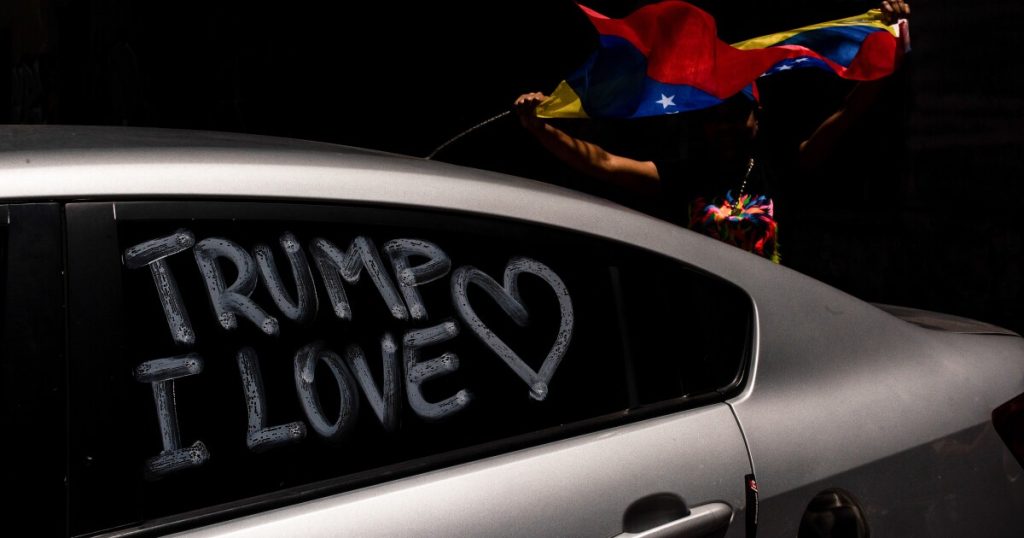
The capture of Nicolás Maduro and the Trump administration’s announced plan to “run” Venezuela has sparked political controversy, driven up oil stocks and could alter energy prices in the long term, but the impact on the U.S. financial system will be minimal for some time, banking experts said.
Processing Content
Banks were already very limited in their ability to work with the long-sanctioned nation, noted Mark M. Zandi, the chief economist at Moody’s Analytics.
“The indirect exposure U.S. banks have is largely through global oil markets, but this should be limited, as Venezuela’s oil production accounts for less than 1% of global oil demand,” Zandi wrote in an email. “If Venezuela’s political situation stabilizes and foreign investment in the country resumes, then there may be some opportunities for U.S. banks to help finance that investment, but that is a big if, and it will at best take years to play out.”
Michael Pearce, chief U.S. economist at Oxford Economics, said that even though the move further clouds the geopolitical outlook, the financial linkages between the United States and Venezuela were minimal to begin with.
The arena to watch is the stock market, which so far is showing strength in the face of uncertainty, he said. The S&P 500 closed up 0.64% on Monday, bolstered by oil company stocks.
“US exports to Venezuela were just [$3.6 billion] over the past 12 months, or less than 0.2% of total exports, and imports are similarly small, while the banking-sector exposure is low,” Pearce wrote in a policy note. “The more important linkages are through the stock market, which drives consumer spending via the wealth effect, but equity markets have shrugged off the news so far.”
Reactions to the operation in Venezuela were largely split on partisan lines. Senate Banking Committee member Mark Warner, D-Va., expressed concern that the move will draw the U.S. into a protracted conflict, reminiscent of Iraq.
“We have many urgent needs here at home and President Trump’s statement that ‘we are not afraid of boots on the ground,’ begs for clarity on the risks he plans to take with the lives of American service members,” Warner, the ranking Democrat on the Senate Intelligence Committee, said in a
Republicans like Senate Banking Chair Tim Scott, R-S.C., largely supported the move. Scott called Maduro “a crook [and] narcoterrorist.”
“Any ousting of an illegitimate regime is a serious decision by any administration, and this one will now reside where it belongs: with the people of Venezuela,” Scott said. “I hope this action sends a clear message that killing thousands of Americans through fentanyl will have legal and lethal consequences.”
Venezuela is not a significant source of fentanyl in the U.S., according to
The road forward for Venezuela remains unclear. While U.S prosecutors are officially charging Maduro with drug-related crimes, the president’s rollout of the military incursion focused mainly on the economic and natural resource benefits it could foster.
Trump said major U.S. oil companies would move into Venezuela and spend billions to rebuild the country’s oil infrastructure. But the plan for stabilizing the political situation remains unarticulated.
Prior to the operation, the U.S. Treasury Department was already tightening the screws on the South American nation, sanctioning four additional oil traders operating in Venezuela’s oil sector.
“President Trump has been clear: We will not allow the illegitimate Maduro regime to profit from exporting oil while it floods the United States with deadly drugs,” Secretary of the Treasury Scott Bessent said in last week’s sanctions announcement. “The Treasury Department will continue to implement President Trump’s campaign of pressure on Maduro’s regime.”
Chevron is currently the only major U.S. oil firm operating in Venezuela, using special licenses that exempt the company from sanctions. Its stock price rose by more than 5% on Monday.
Bill Turenne, head of public policy communications at Chevron, declined to speculate on future investments, but said the company is currently focused on ensuring the safety of its personnel.
“Chevron remains focused on the safety and wellbeing of our employees, as well as the integrity of our assets,” Turenna wrote in an email. “We continue to operate in full compliance with all relevant laws and regulations.”
Trump’s decision to explicitly call for the utilization of Venezuelan oil, with plans to install a friendly regime, is an unusually blunt approach, but the United States has previously intervened in the region for similar economic or ideological reasons.
During the 1930s, U.S. lawmakers
Minneapolis Federal Reserve Bank President Neel Kashkari told CNBC that the capture of Maduro could impact oil prices, but he did not “see it so far.”
Oil prices inched higher following the military action on Monday. Oil price movements could have an especially pronounced impact on smaller firms engaged in auto lending.
Kashkari contrasted the outlook today with the situation of nearly four years ago, when Russia invaded Ukraine.
“When Russia invaded Ukraine, it sent a commodity shock wave around the world,” Kashkari
Former U.S. National Security Advisor John Bolton said Monday in an
“This idea that everything is going to be fine, that American oil companies are so desperate to get back the money that they lost when their Venezuelan investments were expropriated 50 years ago, that they will now pour additional billions into reviving the decrepit Venezuelan oil infrastructure, and much more Venezuelan oil will emerge on the international markets … and keep oil prices [and] gasoline prices … down is absolutely fantasy,” Bolton said.
“No American oil company, or certainly no board of directors of an American oil company, is going to want to put tons of money into Venezuela in an uncertain political environment [and] it will take years to get back up to anything like production levels they’re capable of.”