
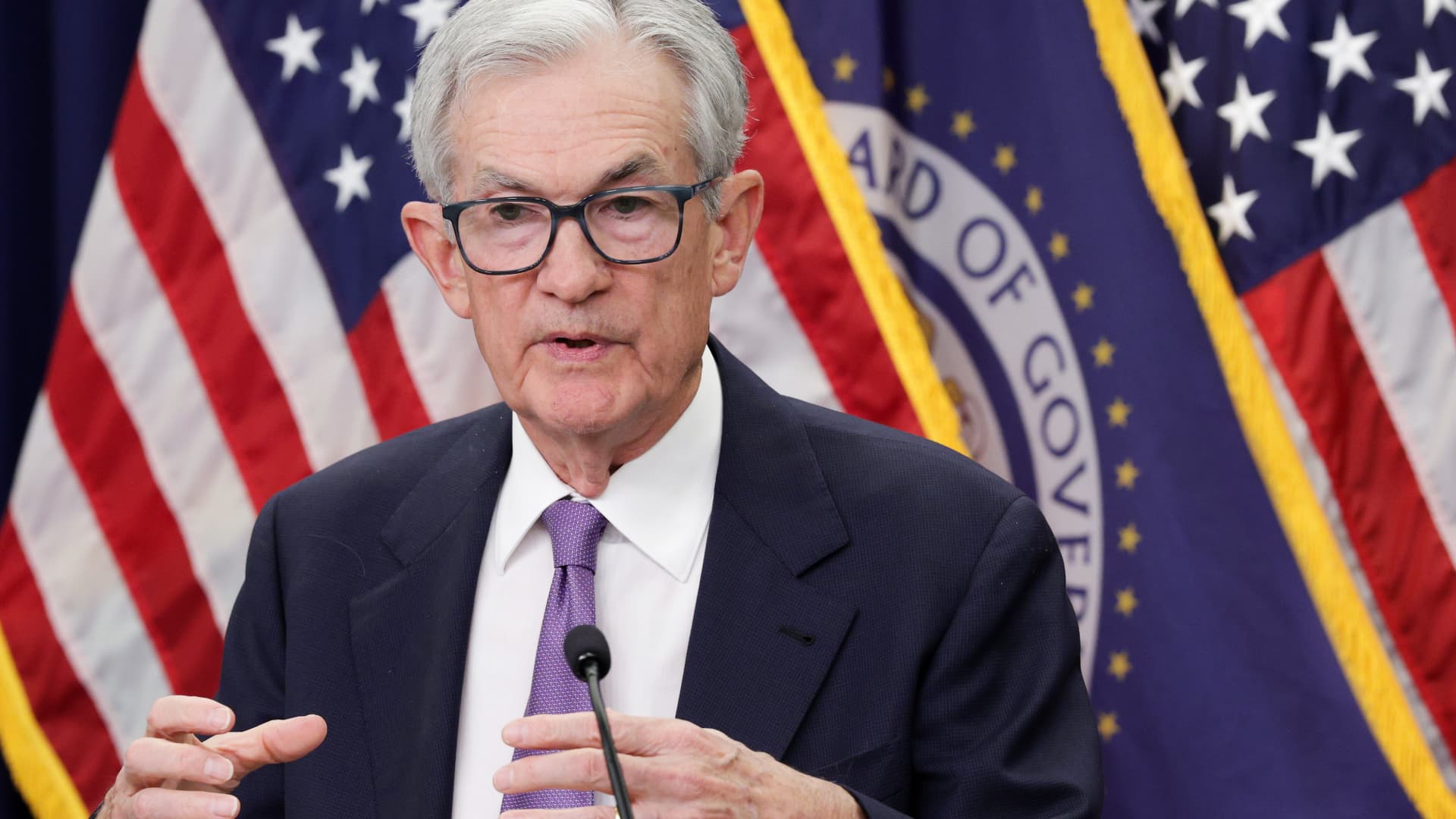
The Federal Reserve cut its benchmark rate by a quarter point at its last meeting of the year.
December’s move marks the third time in a row the central bank has lowered interest rates, shaving three-quarters of a point off the federal funds rate since September to a range of 3.5% to 3.75%.
The cuts could have an effect on many of the borrowing and savings rates consumers see every day.
Although the federal funds rate, set by the Federal Open Market Committee, is the interest rate at which banks borrow and lend to one another overnight and not the rate that consumers pay, the Fed’s actions still influence many types of consumer products.
Many shorter-term consumer rates are closely pegged to the prime rate, which is typically 3 percentage points higher than the federal funds rate. Longer-term rates are also influenced by inflation and other economic factors.
From credit cards and car loans to mortgage rates, student loans and savings accounts, here’s a look at the ways the Fed rate cut could affect your finances.
The Fed’s impact on credit card APRs
Most Americans have at least one credit card, and the majority of cardholders carry a balance from month to month, which means they are likely paying around 20% a year in interest on those short-term loans.
But since credit cards have a variable rate, there’s a direct connection to the Fed’s benchmark. With a rate cut, the prime rate comes down and the interest rate on your credit card debt should follow within a billing cycle or two.
Cavan Images | Cavan | Getty Images
Although a quarter-point change doesn’t mean much when credit card APRs are sky high, the collective effect of consecutive cuts could add up to a noticeable difference, especially compared to last year’s record high rates, according to Matt Schulz, LendingTree’s chief credit analyst.
“The reductions could mean hundreds of dollars in savings for debtors,” he said.
Less of an effect on mortgage rates
Mortgages are most Americans’ most significant debt burden, but those longer-term loans are less impacted by the Fed. Both 15- and 30-year mortgage rates are more closely tied to Treasury yields and the economy.
As the 10-year Treasury yield continues to climb amid worries about persistent inflation, the average rate for a 30-year, fixed-rate mortgage has edged higher too, and is currently about 6.35%, according to Mortgage News Daily as of Dec. 9.
“Given that mortgages are benchmarked off of 10-year yields, we may well see an increase in mortgage rates following a cut,” as the stock market and investors react, said Brett House, economics professor at Columbia Business School.
But since most people have fixed-rate mortgages, their rate won’t change unless they refinance or sell their home and buy another property.
Other home loans are more closely tied to the Fed’s moves. Adjustable-rate mortgages, or ARMs, and home equity lines of credit, or HELOCs, are pegged to the prime rate. Most ARMs adjust once a year, but a HELOC adjusts right away, so borrowers could see lower rates.
New car loans could change with a rate cut
Beyond mortgages and credit card debt, auto loans also make up a significant share of household budgets. But auto loan rates are fixed and won’t adjust with the Fed’s cut.
Still, shoppers in the market to buy a car may benefit as rates continue to fall. The average auto loan rate for a new car is now down to 6.6%, according to Edmunds.
And yet, “car shoppers still face a challenging marketplace as seen by record high monthly payments and record loan balances on financed new-vehicle purchases,” said Joseph Yoon, Edmunds’ consumer insights analyst.
According to Edmunds, even as the average annual percentage rate, or APR, for a new vehicle fell in November, the average monthly payment for a new car reached an all-time high of $772. The average amount financed toward a new car also hit a new record, nearing $44,000.
Federal student loans only reset once a year
At a time when many student loan borrowers are struggling with repayment, there won’t be much relief from rate cuts. Federal student loan rates are also fixed for the life of the loan and reset annually for new borrowing, based on the 10-year Treasury note auction in May.
However, if you have a private loan, those loans may be fixed or have a variable rate tied to the Treasury bill or other rates. As the Fed cuts interest rates, the rates on those private student loans will come down over a one- or three-month period, depending on the benchmark, according to higher education expert Mark Kantrowitz.
Still, a 25 basis point cut would reduce the monthly loan payments on a $10,000, 10-year loan by about $1.25 a month, Kantrowitz said. “Multiply those figures by three if you add in the previous two rate cuts as well,” he added. “It won’t cover the cost of a cup of coffee.”
Savings rates fall with a Fed cut
It’s more important than ever for savers to take matters into their own hands. While the central bank has no direct influence on deposit rates, the yields tend to be correlated with changes in the target federal funds rate.
On the heels of the Fed’s previous rate cuts, top-yielding online savings account rates are down to around 4%, according to Bankrate, from close to 5% a year ago.
“Savings rates are going to be drifting lower,” said Stephen Kates, a certified financial planner and financial analyst at Bankrate.
“For people who have high-yield savings accounts who want or need a certain rate of return, you need to be on the ball,” he said.
That could mean locking in a longer-term certificate of deposit, he advised. One-year CDs average 1.93%, but top-yielding CD rates pay more than 4%, according to Bankrate.
“If you find you are not keeping up with inflation, that is absolutely the time to make a move,” Kates said.
The effect of a new Fed chair
Wednesday’s Fed decision also comes amid pressure from President Donald Trump, who has repeatedly argued that rates should be significantly lower, suggesting that would make it easier for businesses and consumers to borrow and boost the economy.
Trump has hinted he may choose National Economic Council Director Kevin Hassett to succeed Fed Chair Jerome Powell in 2026. Hassett is believed to be in favor of additional rate cuts, although he has also said he will not bow to political pressure.

“Consumers who have delayed borrowing may find this environment more favorable,” said Michele Raneri, vice president and head of U.S. research and consulting at TransUnion. “Lower borrowing costs can begin to ease household budgets, providing relief from inflationary pressures and reducing financial stress.”
However, if the Fed continues to ease monetary policy in the year ahead, that does not guarantee lower borrowing costs across the board.
“It’s likely that a doveish Fed chair would cause medium- and longer-run yields to go up, not down, because it indicates they will be less likely to get inflation under control,” Columbia Business School’s House said.
“It is not obvious that this economy needs further stimulus in the form of a cut by the Fed,” he said. “It is not a slam-dunk necessity, particularly when inflation is still high.”