
Close Menu
  • Home
  • Finance News
  • Personal Finance
  • Investing
  • Cards
    • Credit Cards
    • Debit
  • Insurance
  • Loans
  • Mortgage
  • More
    • Save Money
    • Banking
    • Taxes
    • Crime
What's Hot

It’s all on the line for the CFPB in 2026

December 25, 2025

Consumers take on more credit card debt this holiday

December 25, 2025

Visa, Fiserv partner to boost agentic commerce | PaymentsSource

December 25, 2025
Facebook X (Twitter) Instagram
Smart SpendingSmart Spending
Subscribe
  • Home
  • Finance News
  • Personal Finance
  • Investing
  • Cards
    • Credit Cards
    • Debit
  • Insurance
  • Loans
  • Mortgage
  • More
    • Save Money
    • Banking
    • Taxes
    • Crime
Smart SpendingSmart Spending
Home»Banking»It’s all on the line for the CFPB in 2026
Banking

It’s all on the line for the CFPB in 2026

December 25, 2025No Comments8 Mins Read
Facebook Twitter LinkedIn Telegram Pinterest Tumblr Reddit WhatsApp Email
It’s all on the line for the CFPB in 2026
Share
Facebook Twitter LinkedIn Pinterest Email

  • Key Insight: Acting Consumer Financial Protection Bureau Director Russell Vought claims the CFPB will run out of money in early January, an issue that may be moot if the Federal Reserve System returns to profitability. 
  • Supporting Data: The Trump administration’s strategy of eliminating the bureau is at odds with the agency’s aggressive regulatory agenda.
  • Expert Quote: “I think that you’re seeing a hollowing out of the CFPB,” said one banking expert. “But the shell remains.”  

The Consumer Financial Protection Bureau is hanging by a thread, with the bureau’s continued existence being called into question in three separate legal cases that could take up to six months to play out. 
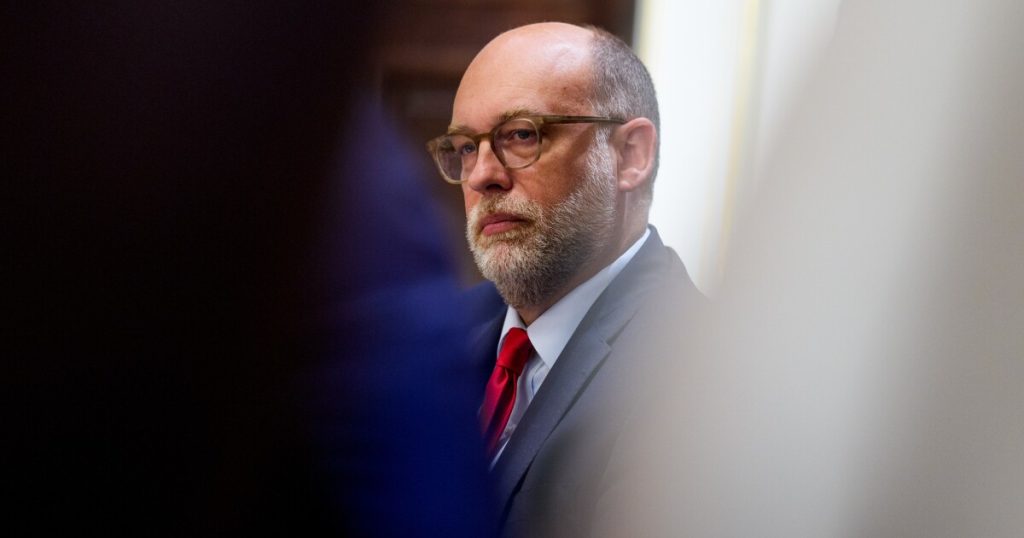
Acting CFPB Director Russell Vought and President Trump have made no secret about wanting to shut down the agency, which was created after the 2008 financial crisis to enforce 18 specific consumer protection laws previously overseen by other agencies. 

Processing Content

Last week, the CFPB’s roughly 1,400 employees won a significant legal reprieve in their ongoing litigation to curb the administration’s efforts to eliminate the bureau. A majority of the judges in the U.S. Court of Appeals for the District of Columbia Circuit agreed to rehear the National Treasury Employees Union’s case alleging that Vought hatched a plan in February to fire up to 90% of the agency’s staff, which the union claims was an unlawful effort to override congressional authority.

Vought claims he has the authority to fire staff. For now, Vought has been prohibited by a temporary injunction from issuing a reduction in force at the agency. Oral arguments are set for Feb. 24.

Even as the CFPB’s union fights for the agency’s survival, many banking and legal experts question Vought’s actions, which contrast sharply with how the other prudential banking regulators are operating. Vought has told a court that the CFPB can fulfill its legally required function with just 200 employees — an assertion that is seen as a crucial test of the limits of President Trump’s power. Policy experts question whether Vought has the authority to shut down an agency created by Congress and transfer its powers to other agencies. 

Norbert Michel, vice president and director at the Cato Institute’s Center for Monetary and Financial Alternatives, said he doesn’t support many of the CFPB’s rules and regulations or the Dodd-Frank Act that created the bureau. Even so, he questioned the wisdom of the Trump administration’s legal strategy.

See also  Elon Musk wants to 'delete' the CFPB. Could he?

“I don’t see any legal path for truly shutting the CFPB down — that has to come from Congress, and that’s just not happening,” Michel said. “I really don’t see how they do anything like transfer the authority or shut it down, I don’t see how that stands up. You can’t just decide to shut the judicial system down. It doesn’t work like that.”

In its brief 15-year existence, the CFPB has survived two Supreme Court challenges and roughly 100 attempts by lawmakers to change the agency’s structure and funding. This year, Republicans slashed the maximum amount the bureau can request from the Federal Reserve to fund its operations, with the maximum requested draw dropping from $785 million in fiscal year 2024 to $446 million in fiscal 2025, according to the Congressional Research Service.  

Last month, Vought raised a fresh legal argument in the union litigation, claiming he is not required to ask for funding from the Federal Reserve System. Without funding, the CFPB will potentially run out of money early next year. As a result, Vought transferred enforcement authority and the CFPB’s remaining litigation to the Department of Justice last month.

In response, the NTEU went back to the district court, asking Judge Amy Berman Jackson of the U.S. District Court for the District of Columbia, to clarify whether Vought’s refusal to request funding for the CFPB is impacted by an injunction barring him from mass firings. Vought told the courts that he is relying on an opinion from the Department of Justice’s Office of Legal Counsel that he cannot request funding because the Fed is unprofitable. That issue could be resolved soon since the Fed has returned to profitability, former Fed officials say.  

The CFPB is at a critical juncture, said Mike G. Silver, a partner at the law firm Spencer Fane. 

In the short-term, it appears that it will take a court order or a response from the Federal Reserve saying they have sufficient “combined earnings,” for Vought to relent on current efforts to wind down the bureau based on the funding issue. 

“They’ve left some wiggle room, strategically, for determining when the funds from the Fed are exhausted,” said Silver, a former longtime CFPB senior counsel in the Office of Regulations.

See also  The average American household budget

Longer-term, he sees the litigation taking four to six months to come to some resolution. 

“They’re at a fork in the road, and like Yogi Berra said, ‘Take it,'” said Silver, quoting the legendary New York Yankees catcher. “The CFPB has to decide whether they want to power up the agency and go through the process of actually writing these rules, or choose the dissolution of the agency.”  

The CFPB has put forth an aggressive rulemaking agenda — with 24 items up for consideration, double the number in 2023 — just as Vought is taking steps to wind down the agency. He recently announced a possible furlough of enforcement attorneys and staff based on the lack of funds.

“It seems like all year they’ve been trying to have their cake and eat it too, in terms of taking all these steps to undermine the structure of the agency and their operations day-to-day, while at the same time promising a very ambitious policy agenda where you actually need live humans who are experts to write those rules, that in many cases will benefit industry stakeholders based on their current posture,” Silver said. “Those things seem fundamentally at odds with one another.”

Since Vought’s main job is director of the Office of Management and Budget, some bank experts say he is using employees on detail from OMB and political appointees to write some CFPB’s rules along with agency staff. 

Other experts and consumer advocates point to the long list of legal requirements in Dodd-Frank, including the requirement to conduct periodic examinations of nonbanks, as proof that Vought is not fulfilling the bureau’s statutory mandates. Banking experts are privately cheering that there will be little to no supervision or enforcement of financial firms for the next three years, with examinations primarily conducted by prudential regulators. 

“The market can and will disagree on policy choices. But having experts on staff, with an in-depth understanding of the history behind the agency’s rules and capacity to analyze feedback, is important to balance competing interests,” said Adam Maarec, a regulatory attorney at the law firm McGlinchey Stafford. “The agency is sending mixed messages. The acting director says he wants to shut the agency down and has dramatically reduced its headcount, but at the same time, the agency has one of the largest rulemaking agendas in its history.” 

See also  Visa and Mastercard push mobile wallet strategies | PaymentsSource

Banks are increasingly concerned about the lack of oversight of fintechs at a critical time when the CFPB is quickly rewriting the 1033 open banking rule, without going through the full notice-and-comment process or a small business review, which is almost guaranteed to invite further litigation. The CFPB has said it intends to issue an interim final rule on open banking in the near future, before the agency runs out of money. 

Maarec said he doesn’t know how the CFPB will read the nearly 14,000 comment letters on open banking, which takes time and expertise.

“Hastily drafted revised rules aren’t likely to satisfy the market and could risk continued litigation,” he said. “I can help summarize those comments, but considering the facts and arguments they made, the world of possible alternatives, and the impact of those alternatives takes time, expertise, and analytical rigor.” 

Earlier this month, three nonprofits — Rise Economy, Woodstock Institute and the National Community Reinvestment Coalition — sued Vought in his capacity as acting director for refusing to request funding for the CFPB. The lawsuit, filed in the U.S. District Court for the Northern District of California, claims Vought has acted in an arbitrary and capricious manner and is violating the Administrative Procedure Act that governs how agencies operate.

Banks and their trade groups have long called for a CFPB reboot due to the seismic shifts under Democratic versus Republican administrations. Bankers were particularly outraged by the Biden administration’s campaign targeting banks for so-called “junk fees.” Many see Vought’s policies, including cutting nonbank supervision, as a backlash to the rules and policies promulgated under former CFPB Director Rohit Chopra.

Yet many legal experts say that Vought is required by law to perform certain duties that he isn’t performing. 

Steve Ornstein, a partner at Alston & Bird, who co-leads the firm’s consumer financial services team, said many in the financial services industry want effective regulators to handle new products and technologies like AI and crypto.

“These industries at some level need to be regulated,” said Ornstein.

Source link

CFPB line
Share. Facebook Twitter Pinterest LinkedIn Tumblr Telegram Email
Previous ArticleConsumers take on more credit card debt this holiday

Related Posts

Visa, Fiserv partner to boost agentic commerce | PaymentsSource

December 25, 2025

Office of the Comptroller of the Currency eyes escrow change

December 25, 2025

With pennies scarce, Treasury weighs in on rounding prices

December 24, 2025
Add A Comment
Leave A Reply Cancel Reply

Top Posts

Best high-yield savings rates today – September 10, 2025

September 13, 2025

Complex ETFs offering big rewards amp up market risks

December 3, 2025

How to apply for the Best Places to Work in Fintech 2026

November 21, 2025
Ads Banner

Subscribe to Updates

Subscribe to Get the Latest Financial Tips and Insights Delivered to Your Inbox!

Stay informed with our finance blog! Get expert insights, money management tips, investment strategies, and the latest financial news to help you make smart financial decisions.

We're social. Connect with us:

Facebook X (Twitter) Instagram YouTube
Top Insights

It’s all on the line for the CFPB in 2026

December 25, 2025

Consumers take on more credit card debt this holiday

December 25, 2025

Visa, Fiserv partner to boost agentic commerce | PaymentsSource

December 25, 2025
Get Informed

Subscribe to Updates

Subscribe to Get the Latest Financial Tips and Insights Delivered to Your Inbox!

© 2025 Smartspending.ai - All rights reserved.
  • Contact
  • Privacy Policy
  • Terms & Conditions

Type above and press Enter to search. Press Esc to cancel.