
Close Menu
  • Home
  • Finance News
  • Personal Finance
  • Investing
  • Cards
    • Credit Cards
    • Debit
  • Insurance
  • Loans
  • Mortgage
  • More
    • Save Money
    • Banking
    • Taxes
    • Crime
What's Hot

Iran war may ‘chill’ the frozen job market: economist

March 25, 2026

New earned wage access schemes are worsening the affordability crisis | PaymentsSource

March 25, 2026

Moody’s cuts rating on private credit fund run by KKR and Future Standard to junk

March 25, 2026
Facebook X (Twitter) Instagram
Smart SpendingSmart Spending
Subscribe
  • Home
  • Finance News
  • Personal Finance
  • Investing
  • Cards
    • Credit Cards
    • Debit
  • Insurance
  • Loans
  • Mortgage
  • More
    • Save Money
    • Banking
    • Taxes
    • Crime
Smart SpendingSmart Spending
Home»Banking»New earned wage access schemes are worsening the affordability crisis | PaymentsSource
Banking

New earned wage access schemes are worsening the affordability crisis | PaymentsSource

March 25, 2026No Comments4 Mins Read
Facebook Twitter LinkedIn Telegram Pinterest Tumblr Reddit WhatsApp Email
New earned wage access schemes are worsening the affordability crisis | PaymentsSource
Share
Facebook Twitter LinkedIn Pinterest Email

  • Key insight: A new, slick breed of payday loan app is working to extract profits from people struggling with the affordability crisis.
  • What’s at stake: Lending through apps instead of storefronts facilitates far heavier repeat use and manipulative “dark patterns” that multiply fees.
  • Supporting data: According to a lawsuit filed by the state of New York, one in five borrowers using the payday loan app MoneyLion regularly incur fees and tips totaling $57 a month.

A new, slick breed of payday loan app is working to extract profits from people struggling with the affordability crisis. The potential profits are apparent from the huge sums these new payday lenders spend lobbying Congress and states to convince lawmakers that loans are not loans. But many companies offering so-called earned wage access have the same basic business model as traditional payday lenders: putting people in a debt trap with depleted paychecks, a vicious cycle of re-borrowing and mounting costs. 

Processing Content

These new payday lenders are luring cash-strapped workers into a downward spiral of payday loans. They shouldn’t lure lawmakers into preempting or eviscerating state rate caps or Military Lending Act protections for service members. Even traditional payday lenders could walk through the loopholes by rebranding themselves as “earned wage access” providers.

In fact, these apps are payday loans on steroids. Lending through apps instead of storefronts facilitates far heavier repeat use and manipulative “dark patterns” that multiply fees. A variety of data from researchers, regulators and the industry itself shows that while promoted as “no interest,” 90% of loans have fees. These apps drive workers into paying fees by making free options slow, inconvenient and difficult to access. 

See also  Fed seeks public input on 'skinny' master account concept

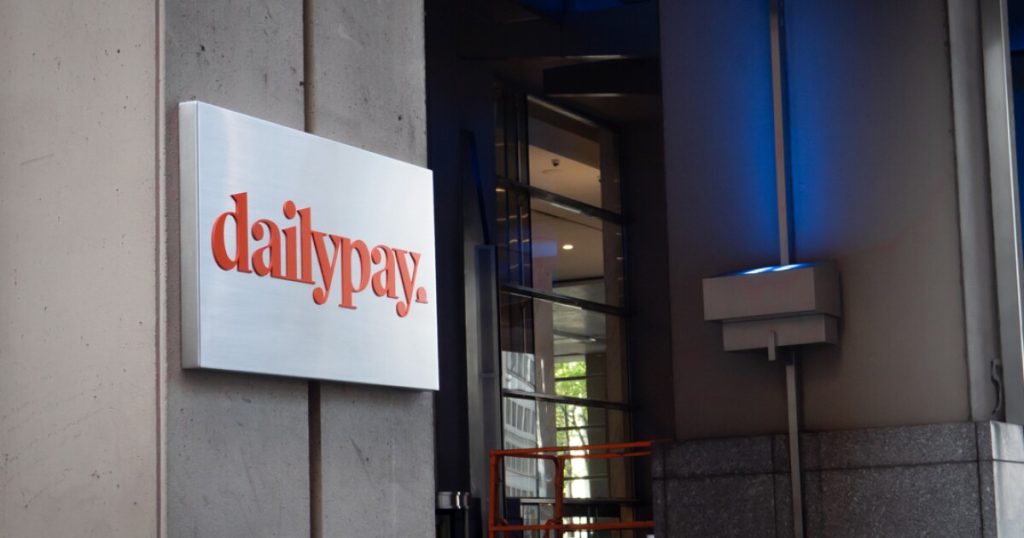
One lender, DailyPay, promotes “tremendous benefits to the employer … all for a price tag of $0 to the business.” But it boasts to investors about the $300+ a year it extracts from low-wage workers. One worker paid almost $1,400 on 450 loans over two years. And, according to a lawsuit filed by the state of New York, 80% of DailyPay’s most recent revenue comes from workers who took out over 100 loans a year. Worse, nearly half of all fees are paid by workers who, on average, take out a loan every other day.

According to a separate lawsuit filed by the state of New York, one in five borrowers using another payday loan app, MoneyLion, regularly incur fees and tips totaling $57 a month. The complaint also claims that MoneyLion limits the size of individual loans, forcing workers to take out multiple loans within minutes of each other, with multiple fees, to get instant access to advertised amounts. 

A third lender, EarnIn, required users trying to get an advance without a fee to make 14 additional clicks and suffer through 17 messages about why they needed to tip. The costs paid to individual lenders are only part of the picture, as loan stacking from multiple apps, along with increased use of traditional payday loans, is common.

And it’s not just the fees from the apps. Overdraft fees increase after people start using the apps. One study found that half of users had no overdraft fees in the three months before starting to use the apps, but an average of 2.3 and as many as 35 in the following three months. At $35 apiece, that could be $322 a year in overdraft fees alone. A study EarnIn  sponsored found that nonsufficient funds, or NSF, fees also increase at a rate of one fee for every 13 loans. For those taking out 100 loans a year, that could be $269 a year in NSF fees.

See also  American Express integrates with Alipay | PaymentsSource

Yet Congress is considering a bill from Representative Bryan Steil, R-Wis., that would preempt any state law capping interest rates or fees for these payday loan apps. It would also exempt them from the Military Lending Act’s 36% rate cap and other protections for service members. If this bill passes, service members will suffer. Unfortunately, state lawmakers are considering similar bills. 

The industry bills would also allow regular payday lenders to exploit broad loopholes in state    and federal lending laws. They can require authorization to debit bank accounts or payrolls – a powerful repayment method that secures a 97% to 99% collection rate for apps that  disingenuously claim people have no obligation to repay.

The only way to limit exploding costs on payday loan apps is obvious: firm limits on costs – annual percentage rate limits or comprehensive monthly fee caps as in many state laws and the Military Lending Act. The argument that these earned wage payday loans are not loans has already been rejected by eight out of the eight courts it has been raised in. 

The disclosures and vague, weak protections in these bills do nothing to prevent unaffordable fees. With no cost limits, the sky is the limit.

Source link

Access affordability Crisis earned PaymentsSource schemes Wage worsening
Share. Facebook Twitter Pinterest LinkedIn Tumblr Telegram Email
Previous ArticleMoody’s cuts rating on private credit fund run by KKR and Future Standard to junk
Next Article Iran war may ‘chill’ the frozen job market: economist

Related Posts

Western Union has big plans for stablecoins | PaymentsSource

March 25, 2026

Community bank with national ambitions hires new management

March 25, 2026

Fed’s Barr: No interest rate cuts until inflation is tamed

March 25, 2026
Add A Comment
Leave A Reply Cancel Reply

Top Posts

Israel-Iran attacks and the 2 other things that drove the stock market this week

June 14, 2025

Last Chance for Letters to Santa!

December 5, 2024

Investor protection during market volatility through tactical fund

April 19, 2025
Ads Banner

Subscribe to Updates

Subscribe to Get the Latest Financial Tips and Insights Delivered to Your Inbox!

Stay informed with our finance blog! Get expert insights, money management tips, investment strategies, and the latest financial news to help you make smart financial decisions.

We're social. Connect with us:

Facebook X (Twitter) Instagram YouTube
Top Insights

Iran war may ‘chill’ the frozen job market: economist

March 25, 2026

New earned wage access schemes are worsening the affordability crisis | PaymentsSource

March 25, 2026

Moody’s cuts rating on private credit fund run by KKR and Future Standard to junk

March 25, 2026
Get Informed

Subscribe to Updates

Subscribe to Get the Latest Financial Tips and Insights Delivered to Your Inbox!

© 2026 Smartspending.ai - All rights reserved.
  • Contact
  • Privacy Policy
  • Terms & Conditions

Type above and press Enter to search. Press Esc to cancel.