
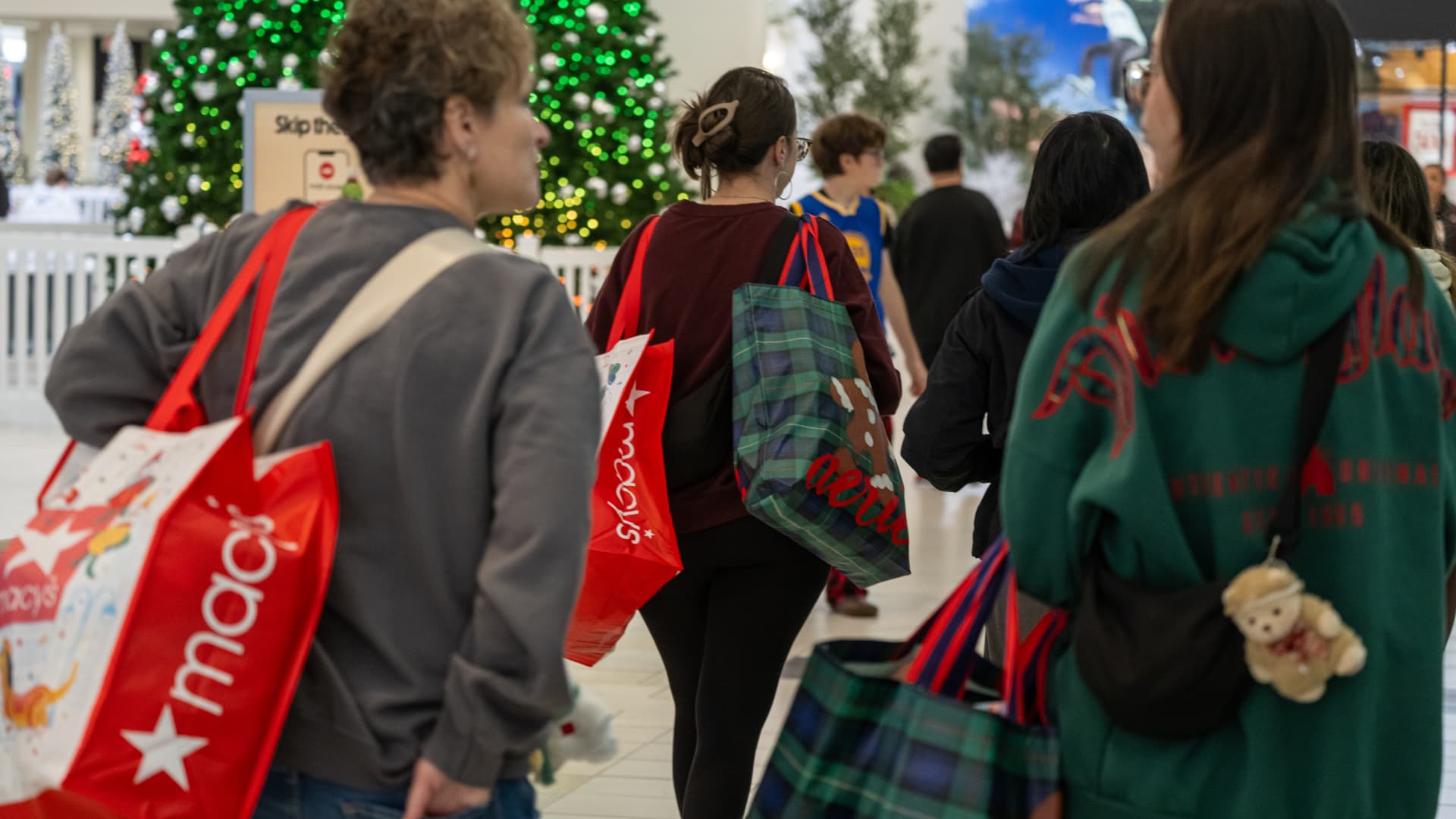
After a strong holiday shopping season, many consumers are now hitting the stores again — this time to return their purchases.
Consumers spent $257.8 billion online between Nov. 1 and Dec. 31, jumping 6.8% year over year to a fresh record for e-commerce, according to a new report from Adobe Analytics.
However, returns then spiked 4.7% compared to last year in the days immediately following Christmas Day, from Dec. 26 to Dec. 31. Returns are expected to increase in the first few weeks of January, as well, Adobe found.
“It’s a pretty predictable uptick post-Christmas,” said Vivek Pandya, lead analyst at Adobe Digital Insights. “That’s a part of the overall experience.”
In 2025, returns were expected to amount to 16% of all merchandise sales, totaling $849.9 billion in returned goods, according to an October report by the National Retail Federation.
With the explosion of online shopping since the pandemic, the online return rate is even higher, amounting to as much as 19%, the NRF found.
For consumers, returning has become a key component of the shopping experience. In fact, a growing share of shoppers buy products they never intend to keep.
Nicole Pearl, 47, says she often orders clothing in multiple sizes for her children — ages 14, 12 and 8 — to hedge her bets on the best fit, particularly when apparel is heavily discounted. “The Black Friday holiday season is definitely where I do more shopping than normal and more returning than normal,” said Pearl, who lives in Chicago.
According to a 2024 report by Optoro, 56% of consumers purchase goods in multiple sizes or colors, some of which they then send back, a practice known as “bracketing.”
Other shoppers go a step further: 69% admit to “wardrobing,” or buying an item for a specific event and returning it afterward, according to Optoro.
Almost half of shoppers said it’s acceptable to “bend the rules” when returning items, the NRF also found.
Shoppers focus on return policies
Now, 82% of consumers say free returns are an important consideration when shopping online, according to the NRF, up from 76% a year earlier.
Roughly 81% of shoppers check the return policies before buying, and 71% said that a bad returns experience will make them less likely to shop at a particular retailer again, the NRF found.
Lindsay Goffman, founder of Refundly, a return-tracking app, said consumers want more transparency when it comes to return windows, return fees and refunds. “It doesn’t need to be this much of a black box,” she said.
“For the brand, it’s very important that they continue to generate ongoing value for the consumer,” said Adobe’s Pandya. “Once you have captured these new consumers, they have to continue to keep that relationship going.”
But behaviors like bracketing and wardrobing also present major challenges for retailers, not only in terms of inventory management but for lost revenue, experts say.
“That combination is turning returns from a back-office function into a front-line profitability issue,” said Gaurav Saran, CEO of ReverseLogix, a returns management company.
To help curb the amount of inventory that is sent back, 72% of all merchants have started charging a return or restocking fee or limiting return options in the last year, according to the NRF.