
- Key insight: St. Louis fraudster combined a decades’ old scam with modern technology to abscond with $6 million from banks.
- What’s at stake: Bank fraud works because the fraudsters move faster than banks can track them; modern tools turbocharge that advantage.
- Forward Look: Regulators are weighing changes to check-processing policies to better address fraud.
Last Tuesday, a federal judge sentenced a St. Louis man to six years in prison for orchestrating a check-fraud ring that stood to defraud banks and customers of $6 million.
Processing Content
The court for the Eastern District of Missouri also ordered the fraudster, Terron T. Brown, 23, and his co-conspirators — Justyn M. Boyd, Aaliyah A. Jones, Haiden Williams and Jalen Wright — to pay restitution to Commerce Bank, U.S. Bank, PNC Bank, First Community Credit Union and Bank of America.
The case is small in scale compared to the billion-dollar world of check fraud powered by mail theft. However, the case offers a close look at the mechanics of check fraud and provides an example of how criminals use money mules, steal mail, exploit float times on checks and leverage social media.
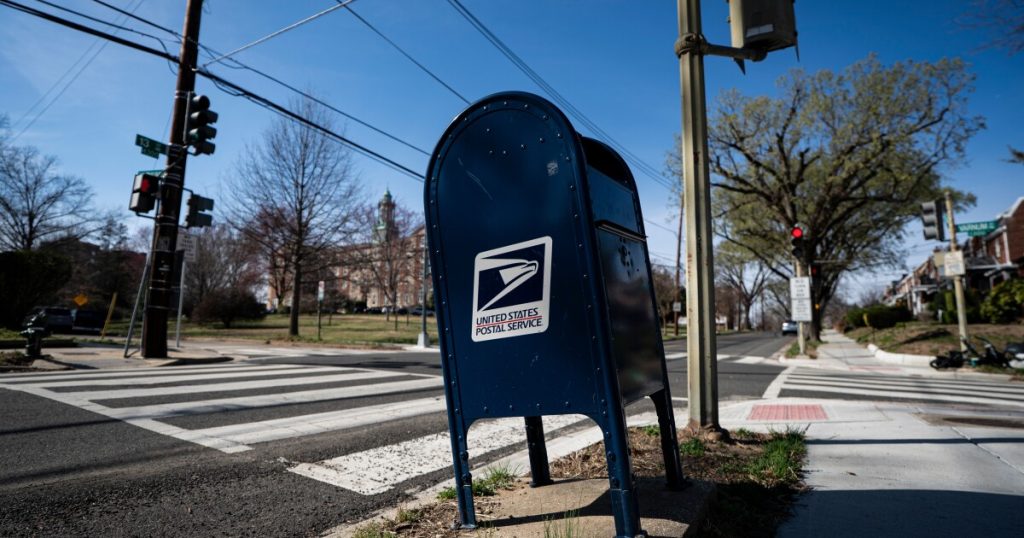
Brown’s scam followed the traditional contours of check fraud. Brown used stolen mail from the U.S. Postal Service, or USPS, to run the operation, which he and his co-conspirators (all of whom also pled guilty) took from blue collection boxes around St. Louis, according to court records.
In many mail-theft cases, criminals bribe postal workers for access to so-called arrow keys that open collection boxes. However, court records do not detail how exactly Brown and his co-conspirators stole the mail they took.
Once Brown got checks from these honeypots, he would either alter the payee and dollar amount on the original stolen check, or he would use the victim’s routing and account information to print counterfeit checks using blank stock and printers.
Law enforcement found $6 million in stolen and counterfeit checks in Brown’s possession, which he admitted in his plea agreement he intended to cash in.
Brown and his co-conspirators attempted to deposit only a fraction of that value: at least $116,834, according to prosecutors. In the end, the group actually extracted $51,933, which a judge ordered them to pay back as restitution.
To cash in on these fake checks without exposing his own identity, Brown turned to social media. He recruited check walkers on Instagram and gave them some of the stolen money in exchange.
“Brown used his social media accounts and other methods to recruit people who would provide him with their debit cards and banking information and allow him to deposit fraudulent checks into their accounts,” prosecutors said in a press release.
This reflects a trend that the Financial Crimes Enforcement Network, or Fincen, identified in
Exploiting the float
After Brown or a recruit of his deposited the altered or counterfeit check into a compromised account — often via an ATM or branch — they would withdraw the funds as soon as they became available, before the bank could detect fraud.
When a customer deposits a check at any U.S. bank, the first $225 must generally be available to them the business day after they make the deposit,
Federal regulators are currently
A persistent threat
After learning about the indictment against him in January 2024, Brown fled to Los Angeles, assumed the alias “Amiri Leonard,” and set up a new check-fraud operation.
When federal agents searched his new house in September 2024, they found check-printing software, blank stock and $1.2 million in stolen and counterfeit checks, according to court records.
Investigators found images of at least $4.7 million worth of counterfeit checks on Brown’s devices. In total, Brown admitted to intending to cause a loss of at least $6 million.
“This sentencing represents the hard work and dedication by USPS Office of Inspector General special agents working with the U.S. Attorney’s Office to bring charges on this significant mail theft investigation,” said Dennus Bishop, special agent in charge at the USPS OIG.
Industry implications
This case reinforces the data from Fincen that suggests mail theft remains a primary driver of check fraud. While the industry develops new technologies to combat this wave, such as the American Bankers Association’s
“The ICBA is seeing a significant amount of mail theft occurring,” Scott Anchin, a payments expert with the Independent Community Bankers of America,
“These checks that are stolen end up on the underground market and can be used as a basis for either alteration or creating new counterfeit checks.”
Despite check-fraud liability falling to banks, bank customers also feel the disruption.
“To this day, I will never use a blue box to mail my letters and bills,” one victim wrote in an impact statement filed with the court. “Since I am on a fixed income, I don’t have magic money to keep paying bills twice.”
How banks can prevent check fraud
The speed with which Brown’s network moved illicit funds — often withdrawing cash before the bank identified the fraud — demonstrates the critical need for real-time detection capabilities.
To combat these sophisticated workflows, financial institutions often rely on advanced software. Vendors such as Nasdaq Verafin, Mitek Systems, NICE Actimize and others offer check-fraud detection and prevention services that use machine learning and image analysis to spot anomalies that human reviewers might miss.
Also crucial is preventing fraudsters from monetizing fraudulent checks. Specifically, banks can prevent money mules from opening accounts into which fraudsters can deposit checks by implementing robust identity verification at onboarding.
“First and foremost, strengthening identity verification during the account onboarding process is crucial,” according to
Once accounts are active, banks can deploy behavioral models to flag the specific transaction patterns Brown utilized, such as a sudden influx of high-value check deposits followed by rapid withdrawals.
“Instead of simply trusting or not trusting a user, these models allow banks to analyze patterns and behaviors over time,” according to the Prove report.
For business clients, the industry standard remains positive pay services, which allow commercial customers to submit issuance files that the bank compares against presented checks.
“Check Positive Pay with Payee Name Verification can help confirm that a check’s details — including account number, serial number, dollar amount, issue date and payee name — match the business’ records,” according to a