
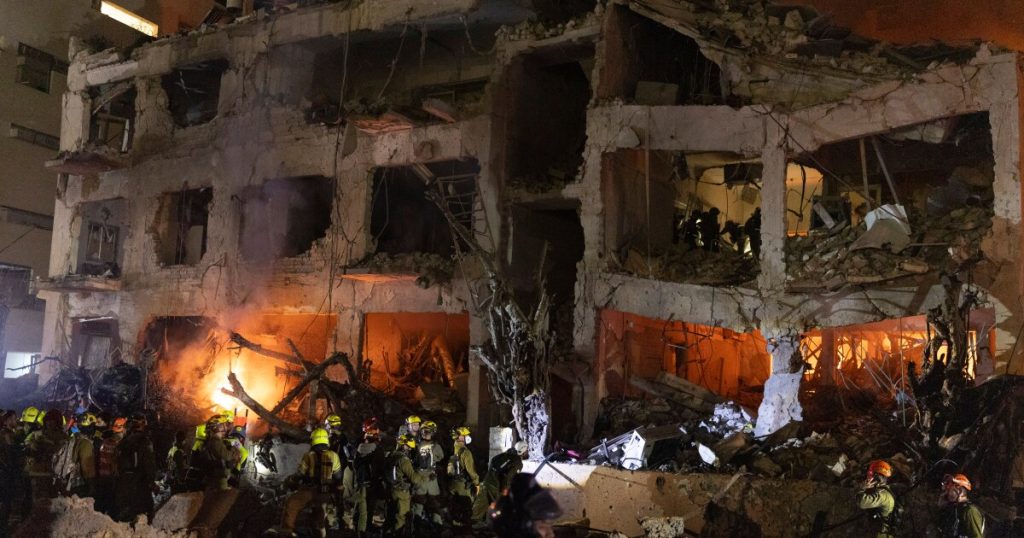
Markets are just starting to digest and react to the events unfolding across the Middle East after this weekend’s attack on Iran by the U.S. and Israel.
Processing Content
The most recent attacks are an escalation of the military exchange between the U.S and Israel against Iran last summer. But while those attacks were focused relatively narrowly on Iran’s nuclear program and lasted only about two weeks, this weekend’s attack appear far more widespread and open-ended. Targets across a wide swath of Iran came under attack and the country’s ruler, Ali Khamenei, was killed on Sunday. Iran has responded with missile attacks against several countries in the region.
The direct effect on the U.S. banking industry, at least in the near-term, will likely be narrow, experts said. Iran was already under heavy sanctions, so there is little direct contact between U.S. banks and the nation, though indirect or inadvertent relationships between banking customers and Iran have posed
Market view
So far, the market reaction is muted. Futures on Sunday evening for the major U.S. stock indexes were all down less than 1%. Shares of JPMorganChase, Bank of America and Citi were down more than 1%. Gold was up about 2% at $5,360; bitcoin was down more than 2%. In bonds, the yield on the U.S. 10-year Treasury note was up slightly at 3.97%. The US Dollar Index rose slightly. US crude oil was up nearly 5% at $70 a barrel; Brent crude, the European benchmark, was also up about 4%, at $75.
If the conflict persists its effect will likely be felt across markets, especially in terms of how risk assets perform, Adam Hetts, global head of multi-asset at Janus Henderson, wrote in a note to clients. Uncertainly over the course of the conflict would likely suppress sentiment and in turn risk assets. That would result in U.S. Treasuries and safe-have currencies more attractive. Uncertainly could also drive up oil prices and spark an inflationary scare that could reduce the odds of the Federal Reserve cutting interest rates, as was previously expected. “However, such large shifts in market dynamics would require a long-running escalation of the conflict,” Hett wrote. “At this stage, this is not our base case.”
But as with many other
Global oil prices
The most obvious and immediate effect of the war is the impact on global commodity prices, particularly for crude oil. The Strait of Hormuz, a 25-mile wide bottleneck in the Persian Gulf bordered by Iran to the north and a non-contiguous province of Oman to the South, is a critical choke point for global oil prices, with roughly 20% of the world’s oil and liquified natural gas passing through on its way to market.
The world’s largest shipping companies have already closed off shipping through the Strait as of Sunday morning because of the conflict, according to Bloomberg, and DP World suspended operations at its main Dubai port. Oil prices, which had been declining for months, had been rising in recent days, with Brent crude settling at over $70 a barrel on Friday.
On Sunday, the OPEC+ nations agreed to boost production by 200,000 barrels a day.
Nigel Green, founder and chief executive of advisory firm deVere Group, said in a statement Sunday that even the threat of closing the Strait of Hormuz could drive energy prices higher.
“When close to one-fifth of global crude flows transit a single maritime corridor, even a marginal probability of disruption demands a higher structural risk premium,” Green said. “Oil doesn’t need to be physically halted for prices to move sharply. Insurance costs, shipping reroutes and precautionary stockpiling alone can tighten supply expectations.”
Higher global oil prices, however, could have a beneficial effect on U.S. banks that are
But the U.S. is also the largest global consumer of crude oil, meaning that any gains from rising commodity prices could also be offset by rising costs — and thus lower demand — from other bank clients and customers. Jennifer Qiu, a global market strategist for JPMorganChase based in Singapore, wrote in an analyst note from June ahead of last summer’s conflict between the U.S. and Iran that the effect of prolonged oil supply disruptions would be “uneven” across the globe.
“Asia will be disproportionately impacted, as most oil traffic from the Gulf is destined for Asian markets,” Qiu wrote then. “Conversely, the U.S., as a net energy exporter, could be less impacted compared to previous oil crises when it relied more on oil imports. However, the U.S. is entering this period from a vulnerable state of increasing risks of inflation and an economic slowdown. It’s estimated that a USD 10 increase in oil prices could add 0.3-0.4% to inflation, exacerbating current stagflationary risks given the surge in tariffs.”
Rising cybersecurity risks
One direct risk to banks of an attack on Iran is that
These more sophisticated attacks are also highlighting how most banking infrastructure is not keeping up with new and evolving threats. “The fight against financial crime has become one of the most strategically exposed functions in the financial system, and one where banks are least prepared to evolve at the speed the threat environment now demands,” Obsidian Risk Advisors managing principal Brett Erickson
Less attention from Washington
The reaction to the conflict in Washington has thus far been largely partisan, with Republican leadership in the
Senate minority leader Chuck Schumer, D-N.Y., said in a statement Saturday evening that minority members had been inadequately briefed on the operations. He demanded a vote on a resolution to curb the White House’s unilateral ability to wage war under the War Powers Act of 1973.
“The administration must brief Congress, including an immediate all senators classified briefing and in public testimony, to answer … vital questions” about the scope of operations and the immediacy of the threat Iran posed to U.S. interests, Schumer said. “The Senate should quickly return to session and reassert its constitutional duty by passing our resolution to enforce the War Powers Act.”
The resolution is unlikely to hem in Trump, however. Republicans have majorities in both houses, and even if a vote were held and passed, there would almost certainly not be enough votes in both chambers to override a Presidential veto.
The greater risk to banks is if the Iran conflict sops up more of Congress’ already-short attention and dwindling supply of legislative days with which to pass legislation that banks care about.
Senate Majority Leader John Thune, R-S.D., filed a motion last Thursday to
Congress is also running out of time to iron out
If the Iran conflict drags on and spurs Democrats to dig in and press their case, that could result in other unrelated legislation falling by the wayside in the critical first months of the year, before the 2026 election cycle makes corralling votes nearly impossible.
And, a new market?
It seems way too early to contemplate, but there could actually be an opportunity here for banks. If the Trump administration does succeed in maneuvering in a new Iranian government friendly to the U.S., it could open up the nation’s markets.
“I don’t think decapitating the Iranian regime or degrading its nuclear and missile infrastructure will have any immediate impact on US banks, payment networks, processors, or fintechs,” said Eric Grover, principal at Intrepid Ventures. “It’s already illegal for U.S. companies to do business there. However, if a pro-West opposition were to take power and sanctions were lifted — a massive ‘if’ — the region would instantly become a new frontier for U.S. payments firms.”