
Close Menu
  • Home
  • Finance News
  • Personal Finance
  • Investing
  • Cards
    • Credit Cards
    • Debit
  • Insurance
  • Loans
  • Mortgage
  • More
    • Save Money
    • Banking
    • Taxes
    • Crime
What's Hot

5 Things to Know About the U.S. Bank Split Credit Card

December 18, 2025

Should you lease or buy an electric car? Top 9 considerations

December 18, 2025

Options terms every investor should know

December 18, 2025
Facebook X (Twitter) Instagram
Smart SpendingSmart Spending
Subscribe
  • Home
  • Finance News
  • Personal Finance
  • Investing
  • Cards
    • Credit Cards
    • Debit
  • Insurance
  • Loans
  • Mortgage
  • More
    • Save Money
    • Banking
    • Taxes
    • Crime
Smart SpendingSmart Spending
Home»Banking»The stablecoin yield fight still rages, but on a new battlefield
Banking

The stablecoin yield fight still rages, but on a new battlefield

December 18, 2025No Comments6 Mins Read
Facebook Twitter LinkedIn Telegram Pinterest Tumblr Reddit WhatsApp Email
The stablecoin yield fight still rages, but on a new battlefield
Share
Facebook Twitter LinkedIn Pinterest Email

Banks are unlikely to get the language of the GENIUS Act amended to better defend deposits. But Noelle Acheson explains how that doesn’t mean they won’t get what they want.

Bloomberg

Competition sounds great as an equalizing principle — until it starts to eat your lunch.

Processing Content

And this can happen fast, given the modern age’s acceleration of technological innovation, barring regulatory roadblocks.

At times, regulatory roadblocks are necessary to preserve market stability — this is especially relevant in a sector as systemic as banking. But often, the line between protection of stability and protection of incumbent positions can get blurry as well as contentious.

The growth of stablecoins has triggered heated debate over just how much leeway financial innovation should have. On the one hand, we have the uplifting objective to widen America’s lead in technology and finance, attracting new investment while stimulating further exploration. On the other hand, we have the regulatory imperative to prevent the existing web of financial connections from unravelling and hurting both market confidence and the broader economy. Both hands are currently duking it out for dominance as crypto regulation takes shape in the U.S.

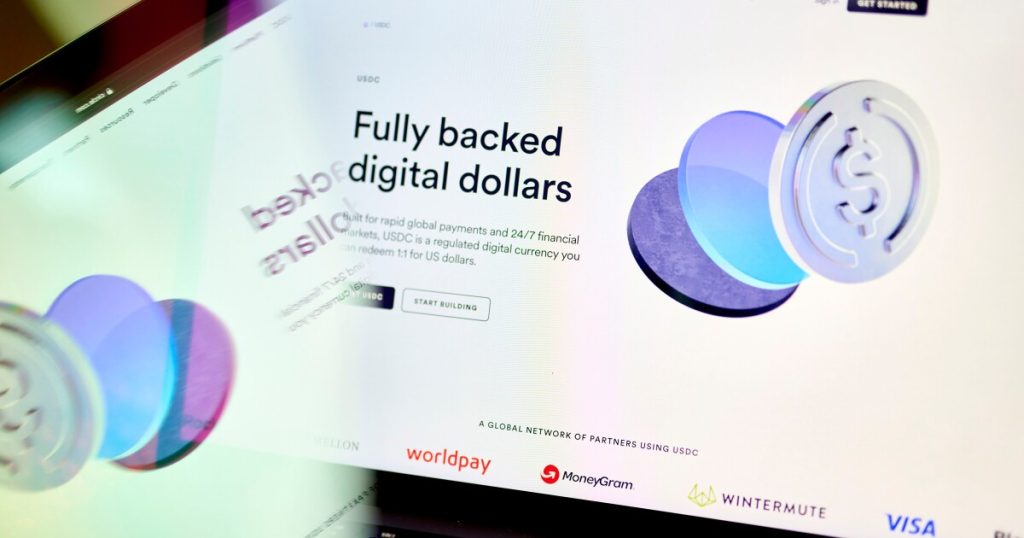
Of particular interest is whether or not stablecoins can earn interest. The GENIUS Act forbids the payment of interest or yield by stablecoin issuers. The crypto industry views this as an impediment to fair competition. But the act’s language does not mention a prohibition of rewards on stablecoin balances paid by third parties. The banking industry is unhappy about this.

See also  Experian releases new score with credit and cashflow data

In September, the Treasury Department issued an advance notice of proposed rulemaking, calling for public comment.

A joint letter was submitted by a group of banking associations, insisting that the GENIUS Act language is broad and comprehensive and bans any form of interest, yield or other forms of reward. What’s more, it argues, the intent of Congress is clearly to extend that ban to all parties as nowhere does the act mention that stablecoins can be a “store of value.” The signatories point out that allowing stablecoins to earn yield would confuse users, blurring the boundaries between a payment asset and an investment product. They also remind the Treasury that the purpose of the interest prohibition is to protect banks and, by extension, the financial system and the economy — what some supporters call a “loophole” undermines that.  

The counterarguments, however, are strong.

Seen through nonbanking eyes, this line of argument looks like yet another attempt at regulatory capture that puts profit before innovation. Banks could compete by paying higher interest rates on deposit and savings accounts — instead, they pressure regulators to deprive users of greater choice and better returns.

As for the alleged threat to financial stability, it’s not hard to argue that the risk of a stablecoin run is lower than that of a bank run, given the tokens are backed 1:1 by government debt and related assets. The most recent major fiat-backed stablecoin de-peg, when USDC dropped to less than $0.90 in March 2023, was due to bank mismanagement, not doubts as to the issuer’s reserves.

See also  Top fintech startups disrupting payments with AI, stablecoin | PaymentsSource

What’s more, extending the no-rewards ban to all stablecoin platforms would be interfering in business marketing decisions, tantamount to forbidding the distribution of loyalty points, which could be interpreted as regulatory overreach.

And many have pointed out that, had Congress meant to include third parties in its stablecoin interest ban, it would have made that explicit in the language. Anyway, including other platforms is out of scope, as GENIUS is a framework for stablecoin issuers, not the ecosystem as a whole.

Plus, over the years banks have faced a steady onslaught of competing financial products and services: money market funds, ETFs, brokerage cash management accounts, peer-to-peer lending platforms and the relatively high yield on Treasuries are just a few. Despite all this, most banks are still thriving, and the exceptions have been more due to lax risk controls than deposit flight.

Yet perhaps the most compelling argument for why the banking groups will not get an interest ban written into the rules is that they are protesting to Treasury Secretary Scott Bessent, a vocal advocate of the potential of stablecoins to ensure continuous global demand for the U.S. dollar, and to drum up additional demand for U.S. Treasuries. He is unlikely to support efforts to hinder uptake of what he sees as a key tool of fiscal policy.

But the banking lobby is strong and is unlikely to give up.

While attempts to tweak the GENIUS Act will most likely be unsuccessful, the banking industry could win this particular battle via a different avenue, aided by a still-strong mistrust of crypto among lawmakers.

See also  Survey: Market pros see 10-year Treasury yield flat one year from now

Congress is currently debating the CLARITY Act, which would create a broad framework for the crypto ecosystem. It’s a more ambitious undertaking than the GENIUS Act, which was hard enough — and there are many more competing interests at work.

The markup has been repeatedly delayed, in part because the banking industry is insisting it include a blanket ban on stablecoin rewards.

Last week, senators met with the CEOs of Bank of America, Citi and Wells Fargo to discuss, among other issues, stablecoin yield. State and local bank presidents no doubt have the ear of their elected representatives.

And crypto supporters in Congress could decide to concede stablecoin incentives in exchange for allowing other important provisions through, such as protection for the builders and users of decentralized finance. What’s more, that would not be a devastating trade-off, as there are workarounds for a broad stablecoin yield prohibition. Tokenized money market funds are one: For now, access for retail investors is restricted, clunky or both, but this is evolving. Creative design of incentives is another: It would be tough to draft language prohibiting all types of marketing promotions.

So, a loss to get a win? For both the banking and crypto industries, the net outcome (a lesser threat for deposits, and a legal framework for digital asset markets) would be a strong positive in exchange for an unfortunate but digestible negative.

There is still much that could go wrong for either side in the fraught negotiations. But, while competition must be relentless, progress recognizes that compromise is a strong card to play.

Source link

battlefield fight rages stablecoin Yield
Share. Facebook Twitter Pinterest LinkedIn Tumblr Telegram Email
Previous ArticleStocks making the biggest moves midday: ORCL, JBL, PSKY, TPL
Next Article Inflation pain varies by income level, other factors

Related Posts

Bessent: Fannie, Freddie offering hinges on MBS spreads

December 18, 2025

Despite a tough year, SBA’s popularity with lenders endures

December 18, 2025

Bipartisan agreement emerges on bank resolution reform

December 17, 2025
Add A Comment
Leave A Reply Cancel Reply

Top Posts

How the CFPB’s 1033 rule changes data security for banks

October 23, 2024

Inside the New Chase Sapphire Lounge Las Vegas: Champagne and Momofuku

December 3, 2025

Best Citi balance transfer cards

April 21, 2025
Ads Banner

Subscribe to Updates

Subscribe to Get the Latest Financial Tips and Insights Delivered to Your Inbox!

Stay informed with our finance blog! Get expert insights, money management tips, investment strategies, and the latest financial news to help you make smart financial decisions.

We're social. Connect with us:

Facebook X (Twitter) Instagram YouTube
Top Insights

5 Things to Know About the U.S. Bank Split Credit Card

December 18, 2025

Should you lease or buy an electric car? Top 9 considerations

December 18, 2025

Options terms every investor should know

December 18, 2025
Get Informed

Subscribe to Updates

Subscribe to Get the Latest Financial Tips and Insights Delivered to Your Inbox!

© 2025 Smartspending.ai - All rights reserved.
  • Contact
  • Privacy Policy
  • Terms & Conditions

Type above and press Enter to search. Press Esc to cancel.