
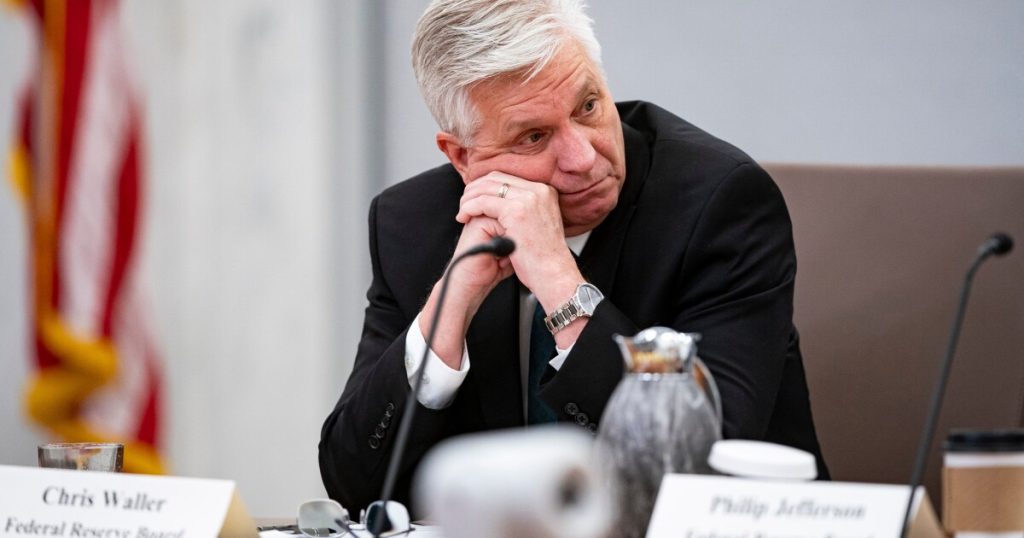
- Key Insight: Feedback from representatives of the fintech and crypto industries warn that access restrictions and balance caps could curb the innovation and independence the account is meant to enable.
- Expert Quote: “While we support the intent of the prototype, the current proposed design includes certain restrictions that would inadvertently undercut key policy objectives and instead could be addressed through more tailored risk management measures.” — Penny Lee, CEO of the Financial Technology Association.
- What’s at stake: Federal Reserve Gov. Christopher Waller has said the skinny master accounts could be finalized by the fourth quarter of 2026, suggesting that the central bank is eager to finalize the rule quickly.
WASHINGTON — Responses from industry stakeholders to the Federal Reserve’s proposed “skinny” master account are beginning to emerge, reflecting a generally positive sentiment but also raising concerns about the proposal’s limitations.
Fintech and cryptocurrency trade groups say the proposal is too restrictive, while banking groups are asking the Fed to extend the public comment period by 30 days.
Processing Content
The proposal initially drew support from fintech and crypto firms, but in submitted
The skinny master account, an idea first introduced by Federal Reserve Gov. Christopher Waller
The Financial Technology Association, which represents companies including eBay, Klarna and Amazon Pay, submitted comments Feb. 6 saying a payment account could serve as a catalyst to “supercharge the benefits of fintech innovation,” but only if the proposal is expanded.
The association said the proposal would block access to the Fed’s automated clearing house, or ACH, payment rail, which is used to process electronic debits and credits including payroll, bill payments, direct deposits and some converted check transactions. As a result, fintech firms would continue to rely on banks for a significant share of their payment activity.
That reliance would undermine “the efficiencies, cost-reduction and risk-reduction benefits that direct access is intended to achieve,” Penny Lee, the association’s CEO, wrote in the comment letter.
The FTA also criticized the suggested overnight balance limit, which currently caps firms at the lesser of $500 million or 10% of total assets, calling it “unduly restrictive for major payment processors handling billions in daily volume.” The association proposed a cap tied to payment activity rather than balance sheet size.
Crypto firms have also flagged the overnight limit, but from a different perspective. A letter from the Blockchain Payment Consortium, or BPC, argues the cap “severely underestimates the scale of the $4 trillion digital asset market.” The trade group proposes raising the overnight limit by 30% to 40%, saying that without it, most stablecoin reserves would remain in the banking system.
“Commercial banks lack the proper economic and commercial incentives to be honest actors in a competitive market that includes the stablecoin economy,” BPC wrote in a letter filed Jan. 29. “We see this today as banks continue to lobby against competitive stablecoin interest rates for everyday people.”
The BPC also said stablecoin issuers should have access to Fedwire Securities, known as transfer against payments, so they can buy and settle U.S. Treasuries directly.
“Denying access to Fedwire Securities (Transfer Against Payments) denies stablecoin issuers, systemically important buyers of U.S. Treasuries, from direct participation in the wholesale Treasuries market,” the BPC letter reads. “This means issuers must acquire reserve assets via a third party, reintroducing the settlement risk that Fedwire Securities was designed to solve.”
Under the proposal, skinny account holders would have access to the Fedwire Funds Service, the National Settlement Service, FedNow and Fedwire Securities for Free Transfers only. The Fed said limiting services reduces credit risk to reserve banks.
Meanwhile, seven banking trade groups, including the American Bankers Association, Bank Policy Institute and Independent Community Bankers of America, urged a 30-day extension, saying the current timeline “doesn’t allow them to perform the level of analysis that the RFI warrants.”
The central bank wants to move quickly to establish a narrower payments account for certain eligible institutions, with Waller suggesting the plan could be completed by the fourth quarter of 2026.
“The timeline for what we have in mind is, we’ll put out a request for information, for comment, from the industry and everybody around … very quickly, maybe a 45-day comment period,” he said
“The goal here, assuming nothing goes haywire, is to have these up and operationalized by the fourth quarter of 2026, so we’re moving at startup speed on this — we’re not screwing around like federal regulators,” he added.