
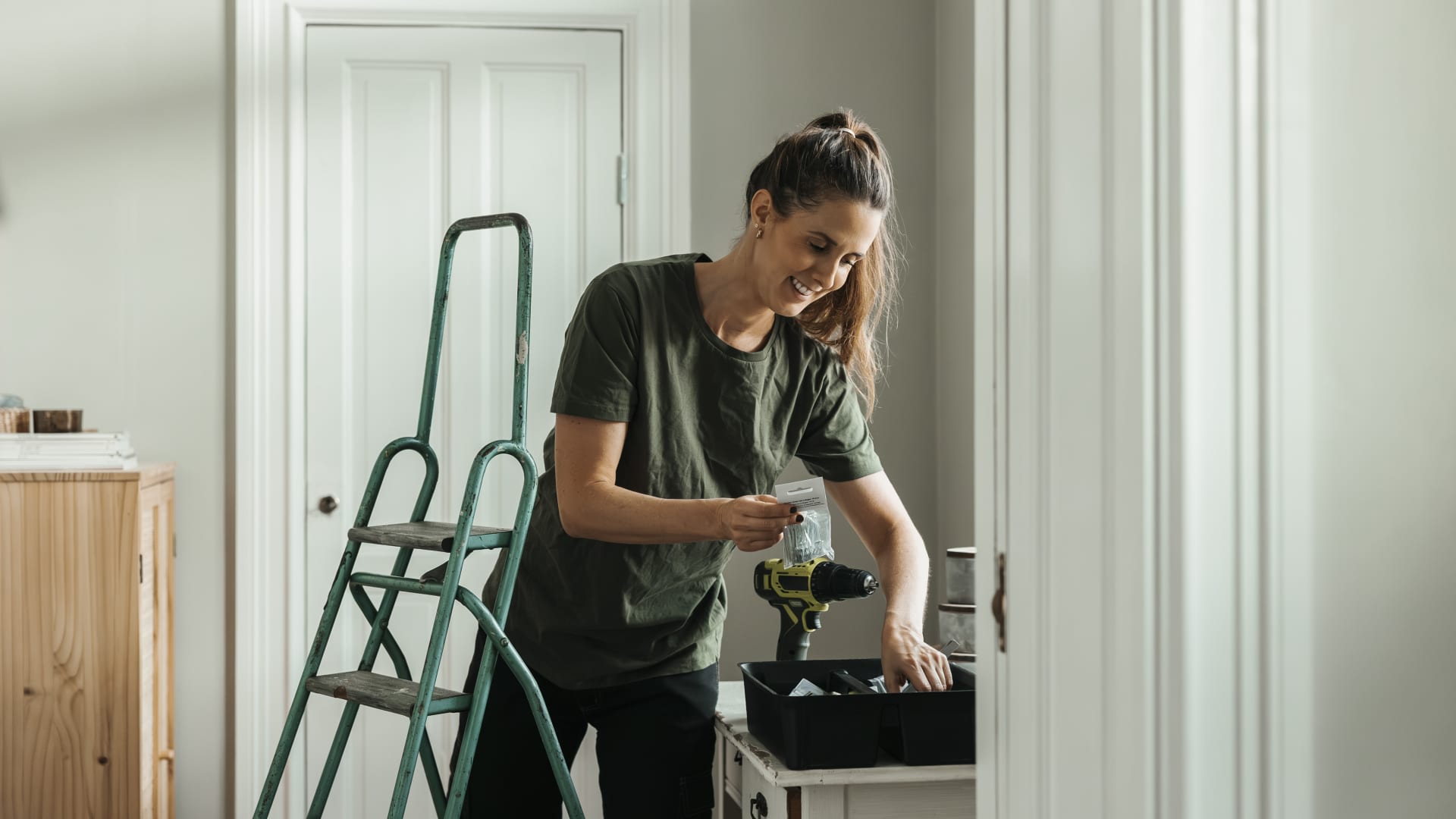
Maskot | Maskot | Getty Images
Women in their 20s are buying homes in growing numbers, according to a new study. They may want to consider pairing the purchase with another financial task: Creating an estate plan.
More than a third, 35%, of Gen Z home buyers are single women, according to the National Association of Realtors’ 2026 Home Buyers and Sellers Generational Trends report, which is based on transactions made between July 2024 and June 2025. The Gen Z buyers were ages 18 to 26.
The share is up from 30% the prior year and is the highest of any age group, the study shows. It is also nearly twice the 18% of Gen Z buyers who are single men.
Despite purchasing what might now be their largest asset, these new homeowners may not yet have taken steps to protect it, financial advisors say.
An estate plan is part of that consideration. In simple terms, it is a set of legal documents that spell out both what you want to happen to your assets — including your house — at death, as well as who is authorized to make decisions for you if you end up incapacitated at any point before then.
“You get the rare person who thinks about it … but the overwhelming majority buy the house and then are thrust right back into their 40- or 50-hour work week,” said certified financial planner Jeff Judge, a managing partner with Chesapeake Financial Planners in Forest Hill, Maryland.
60% of women have no estate plan
Single women have long made up a larger share of homeowners than single men, although the gap is narrowing, according to the Pew Research Center. In 2022, women owned 58% of the nearly 35.2 million homes owned by unmarried Americans, compared with 42% for men, according to the group. That compares with 64% and 36%, respectively, in 2000.
Yet 60% of women have no estate planning documents in place, versus 50% of men, according to Trust & Will’s 2026 Estate Planning Report. And among all singles, the share who have a will — a key estate planning document — is 16%, compared with 37% of married individuals.
At the same time, homeownership may help spur estate planning: 40% of homeowners have a will, compared with 16% of renters, according to the Trust & Will report.
Options for how to leave your house to an heir
For single homeowners, a will is generally the document where you’d specify who should inherit your house if you die. If you die without a will — called dying intestate — or you don’t name an heir for your house, state law would dictate who inherits the property.
“Make sure you have at least a will in place,” Judge said. “That ensures that if something happens, the house goes to the person you wanted it to go to.”
Be aware that assets passing through the will generally are subject to probate. That’s the process of settling someone’s estate and involves the will being validated by the court, taxes and debt being paid, and assets getting distributed to heirs.
Make sure you have at least a will in place.
Jeff Judge
Managing partner at Chesapeake Financial Planners
Any accounts that allow you to name a beneficiary — i.e., retirement accounts, health savings accounts, life insurance, annuities — typically go directly to those beneficiaries and bypass probate, Judge said.
For houses, you can title the house in more than one name, a move that can help joint buyers, but would mean sharing ownership if you are single. However, in some states, you may be able to attach a legal document to the deed that allows for the house to pass directly to the heir and avoid probate, he said.
Or, depending on your situation, a trust may make sense. Some people put their house — and other assets that may be subject to probate — in a revocable living trust. This allows you to manage your assets while alive and then pass them directly to the intended beneficiary without going through probate.
Either way, trying to leave your home to multiple heirs may not be wise.
“I highly recommend not passing the home to more than one person,” said CFP Alex Caswell, founder of Wealth Script Advisors in San Francisco. “It’s an asset that’s hard to split, and if there is disagreement on how it should be handled, it can be a mess.”
You also can indicate in your will that you’d like the house to be sold and the proceeds to go to the heir or heirs, Caswell said.
Considerations long before death
Some parts of an estate plan are about non-death considerations, but still help to protect your house. For example, you should give a trusted person powers of attorney to handle your finances in case an accident or illness leaves you incapacitated at any point.
This person would be able to access your bank account and pay your bills, including your mortgage.
“They won’t have access unless you have a legal document that says they have access,” said CFP Eric Roberge, founder of Beyond Your Hammock in Boston.
Giving someone powers of attorney for health care is also wise, he said, so that they can make medical decisions on your behalf if you are unable to.
Additionally, it’s worth having long-term disability insurance to protect your income, Roberge said. Typically, these policies provide a percentage of your income if you’re unable to work for an extended period due to injury or illness.
“It’s the most underrecognized yet super important insurance for a working-age person,” he said. “If you can’t work … having that insurance in place so you can pay your bills is significant, especially if you own a house.”