
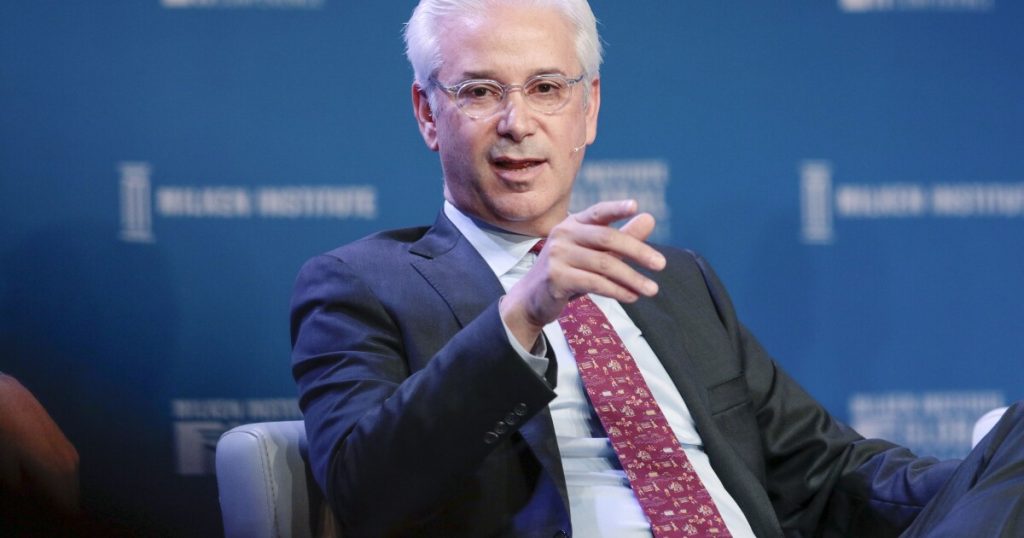
- Key insight: Wells Fargo, which once faced more than a dozen regulatory orders, is now down to a single remaining public enforcement action.
- What’s at stake: Six years into CEO Charlie Scharf’s tenure as CEO, Wells is moving on from its wide-ranging compliance problems.
- Forward look: The bank has outlined plans to grow across different lines of business that had been hamstrung by parts of the Fed’s order.
Processing Content
When the Federal Reserve
On Thursday, the Fed announced the termination of the rest of the order, saying that the bank has met requirements for governance and risk-management remediation, including two third-party reviews.
“This remediation work spanned nearly a decade,” the Fed said in a written statement.
Nine months ago, when the Fed gave Wells permission to grow above $1.95 trillion of assets, CEO Charlie Scharf said the asset cap’s removal was “a pivotal milestone in our journey.” He added that the bank was “a different and far stronger company today because of the work we’ve done.”
But Fed Gov. Michael Barr said at the time that while the bank had made noticeable improvements, it still had more work to do.
The Fed’s
The unprecedented order stemmed largely
With the Fed’s announcement Thursday, Wells has exited all 12 of the enforcement actions that it racked up in the 2010s.
Most of those exits have come since the start of the second Trump administration. Last year, Wells broke
Chief Financial Officer Michael Santomassimo said shortly after the asset cap was removed that the bank had stronger growth opportunities, including the expansion of its branch network, but it
The company’s stock price has risen about 9% since it got over the asset cap hump last June, but it was down more than more than 3% on Thursday, trailing the KBW Nasdaq Bank Index, which is up more than 23% since June and was down about 2% on Thursday.
Wells does still have one last regulatory hurdle to clear, but it’s more recent than the others.
In September 2024, the bank entered into a formal agreement with
The OCC said at the time that the bank needed to make changes to its suspicious activity reporting protocols, along with enhancements to its customer due diligence and customer identification practices.