
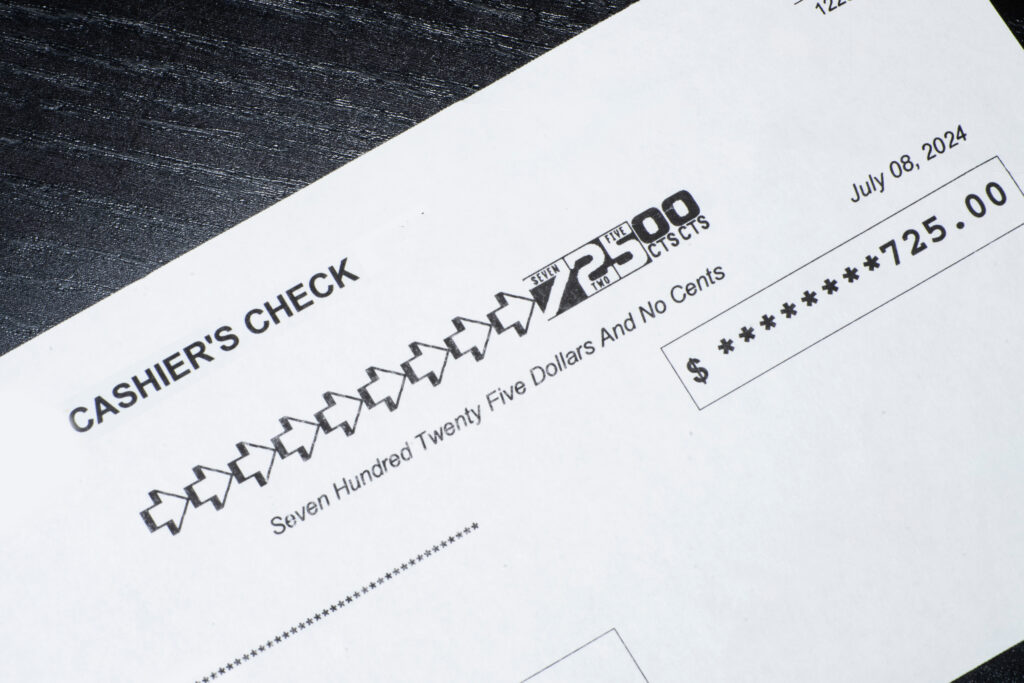
If you’ve ever tried to rent an apartment or buy a used car, you might have been asked for a cashier’s check. But what is a cashier’s check? Isn’t it good enough to write a normal check from your bank and call it good?
Probably not.
A cashier’s check offers a level of security that personal checks and cash can’t match, which is why it’s often required for larger or higher-stakes transactions. Because the funds are backed by the bank, both parties can move forward with more confidence.
Understanding how cashier’s checks work can help you use them correctly and avoid unnecessary delays or risks when it matters most.
What Is a Cashier’s Check, and How Does It Work?
A cashier’s check is a type of guaranteed payment. Instead of the money coming directly from your personal account when the check is deposited, the bank withdraws the funds upfront and issues the check using its own money. Because the bank guarantees the payment, cashier’s checks are generally more secure than personal checks.
Banks and credit unions can issue cashier’s checks, but some gas stations can, too (usually for smaller amounts). If you received a cashier’s check, you don’t sign it like you would a normal check. Instead, the bank prints it and adds an authorized staff member’s signature.
What Is a Cashier’s Check Used For?
Few people use cashier’s checks on a daily basis. You’ll probably only use them with high-dollar or important transactions like:
- Buying a car: Private sellers and car dealers may ask for payment with a cashier’s check.
- Renting: Some landlords want a cashier’s check for your security deposit.
- Official transactions: It isn’t as common, but some government fees require a bank-backed payment.
- Large payments: Regardless of what you’re buying, some sellers want that extra layer of confidence for high-dollar transactions.
How To Get and Cash a Cashier’s Check
Here’s how the process works:
- Request a check: When you request a cashier’s check, the bank or credit union withdraws the funds immediately from your account. Alternatively, you can provide cash directly. Those funds are then held by the bank and used to create the check. In most cases, you can’t buy a cashier’s check with a credit card, so you must offer either cash or funds from your checking account. When it’s time to cut the check, provide the amount, the recipient’s name, and your ID to the bank. You’ll probably pay the bank a small fee to issue the check.
- Account for clearing time: Cashier’s checks are generally trusted more than personal checks, but they don’t always clear instantly. Many banks make some or all of the funds available quickly, often within one business day, but the full verification process can still take a little time.
- Cash the check: Whoever is being paid with the check will then need to cash it. You can do that at a bank or credit union, or at a check-cashing service (which usually charges higher fees).
- Payment goes through: Banks sometimes place short holds on cashier’s check funds while they verify everything, but they don’t take long.
What to Keep in Mind With Cashier’s Checks
Cashier’s checks can be a great way to guarantee a transaction, but like any financial tool, there are some things you need to keep in mind before using them.
Be Safe
No transaction is risk-free. Scammers sometimes use cashier’s checks to process fraudulent transactions. If you receive a cashier’s check, you may want to:
- Call the issuing bank directly to verify the check’s legitimacy
- Avoid sending money or refunding someone before the check fully clears
- Avoid rushed or unusual payment requests
Losses and Cancellations Are Hard
You can usually cancel a personal check fairly easily, but it’s more complicated with a cashier’s check. If the check is lost or stolen, the bank may require you to complete additional paperwork—such as a declaration of loss—and you may have to wait before the funds are reissued. That’s because the money is already withdrawn and tied to the check.
For that reason, treat a cashier’s check like cash: store it securely and only hand it over when you’re ready to complete the transaction.
Cashier’s Checks vs Certified Checks
The terms sound similar, but they aren’t the same. A certified check is like a personal check, but the bank confirms that the funds are available and sets them aside. The big difference is that you’re still the signer on the check, while you aren’t the signer on a cashier’s check.
In practice, a cashier’s check offers more of a guarantee, while a certified check only verifies that you have the money to cover the transaction.
What to Remember About Cashier’s Checks
From buying a car to renting an apartment, you may need a cashier’s check to back up your payments with a bank guarantee. You can’t cut a cashier’s check on your own, so be mindful of your bank’s requirements before requesting one. Treat all cashier’s checks like cash to protect your finances. While a cashier’s check might sound like any old check, knowing how it differs (and when to use it) will put more clarity and control in your hands.
The content provided is intended for informational purposes only. Estimates or statements contained within may be based on prior results or from third parties. The views expressed in these materials are those of the author and may not reflect the view of SmartSpending. We make no guarantees that the information contained on this site will be accurate or applicable and results may vary depending on individual situations. Contact a financial and/or tax professional regarding your specific financial and tax situation. Please visit our terms of service for full terms governing the use this site.